Ibrahim Mahama has topped the Power 100 list, placing him at the centre of global conversations around art, influence, and African representation.
Question:
Why is Ibrahim Mahama’s Power 100 ranking important?
Answer:
Because it reflects a shift in global art influence toward Africa, recognising both artistic impact and long-term institution building in Ghana.
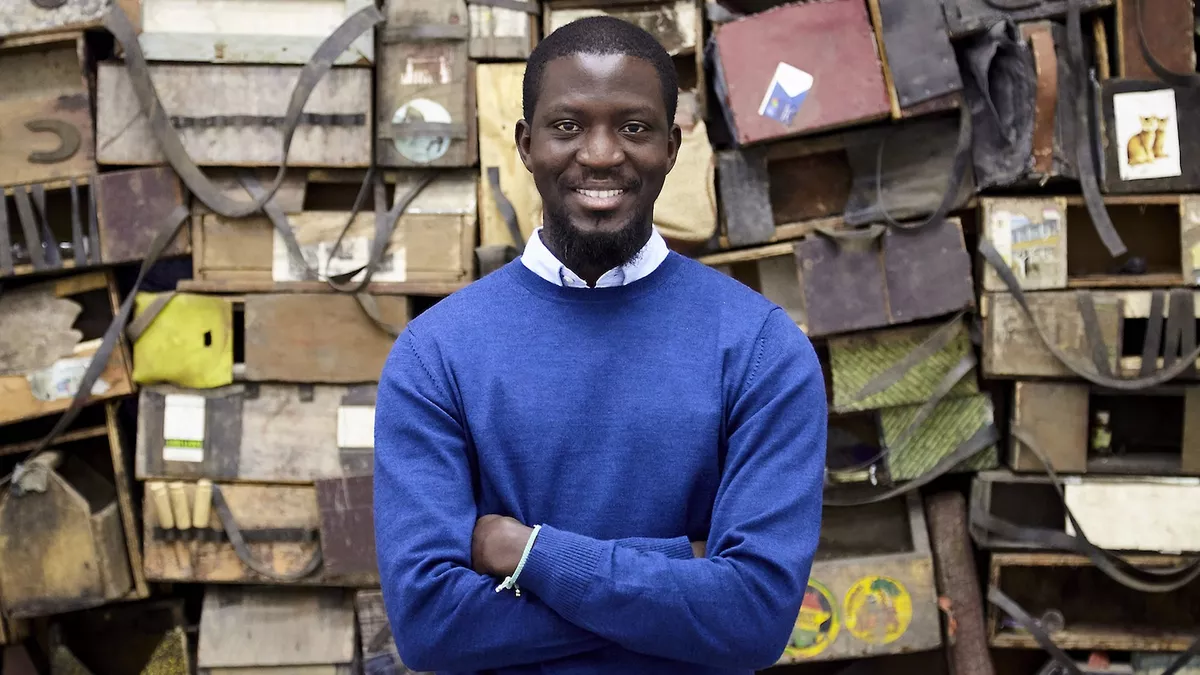
The recognition marks a major moment for contemporary African art. It shows how artists working from the continent are now shaping global cultural power, not just participating in it.
Table of Contents
Who Is Ibrahim Mahama?
Ibrahim Mahama was born in 1987 in Tamale, in northern Ghana. He is best known for large-scale installations made from stitched jute sacks, wood, metal, and other found materials.
His work often explores:
- Global trade systems
- Labour and migration
- Economic inequality
- The lasting effects of colonialism
Many of the jute sacks he uses once carried cocoa, charcoal, or food across borders. By reusing them, Mahama turns everyday trade materials into visual records of global movement and labour.
Ibrahim Mahama’s Rise on the Power 100 List
In 2025, Ibrahim Mahama moved from 14th place to number one on the ArtReview Power 100 list.
The Power 100 is published annually by ArtReview and ranks the most influential figures in the global art world. It includes artists, curators, collectors, institutions, and patrons.
According to ArtReview, Mahama’s ranking reflects:
- Major international exhibitions
- Large-scale public art projects
- His growing influence on how and where global art conversations happen
This jump to the top position signals a broader shift. Influence in contemporary art is no longer centred only in Europe or North America.
Ghanaian Culture and Traditions You Should Know and Celebrate
How Ibrahim Mahama Is Reshaping the Global Art Conversation
Mahama’s influence goes beyond gallery spaces.
Critics and curators point to three key factors behind his global impact:
- Scale
His installations often cover entire buildings, rail yards, or public spaces, making art unavoidable and public. - Context
His work is deeply rooted in African economic and social realities, yet speaks to global systems. - Infrastructure
He invests in long-term art spaces rather than one-off exhibitions.
This combination has helped shift attention toward Ghana and the wider Global South in international art discussions.
Building Art Institutions in Ghana
Beyond his studio work, Ibrahim Mahama has founded and funded several major cultural spaces in northern Ghana.
These include:
Savannah Centre for Contemporary Art (SCCA), Tamale
- Hosts exhibitions, talks, and research projects
- Runs education programmes with local schools
- Maintains a public library and archive
Red Clay Studio
- Repurposes old trains, planes, and industrial objects
- Functions as a space for experimental learning and art production
Nkrumah Volini
- Converts a former grain silo into a cultural centre
- Anchors contemporary art within everyday community life
These spaces support artists, students, researchers, and local communities, not just visiting audiences.
Why Ibrahim Mahama’s Power 100 Ranking Matters
This recognition matters for several reasons:
- It confirms that global art influence can grow from Africa
- It challenges the idea that power only comes from Western institutions
- It highlights the value of building local infrastructure alongside global success
Mahama’s career shows that artists can shape global conversations while investing directly in their communities.
Ultra-Shareable Quote
“Global art power is no longer centred in one place, Africa is shaping the conversation.”
Key Facts at a Glance
- Born: 1987, Tamale, Ghana
- Medium: Large-scale installations using found materials
- 2025 Power 100 ranking: No. 1 (up from No. 14)
- Focus: Art, labour, trade, and post-colonial systems
- Major contribution: Building long-term art institutions in Ghana
Final Thoughts
Ibrahim Mahama topping the Power 100 is not just a personal milestone. It reflects a wider change in how global culture recognises influence, value, and leadership.
His work shows that contemporary African art is not emerging, it is already central.
And increasingly, the world is paying attention.