
Plan your Accra to Cape Coast trip without a tour company. Visit Cape Coast Castle, Elmina and Kakum National Park on a budget with this DIY guide.
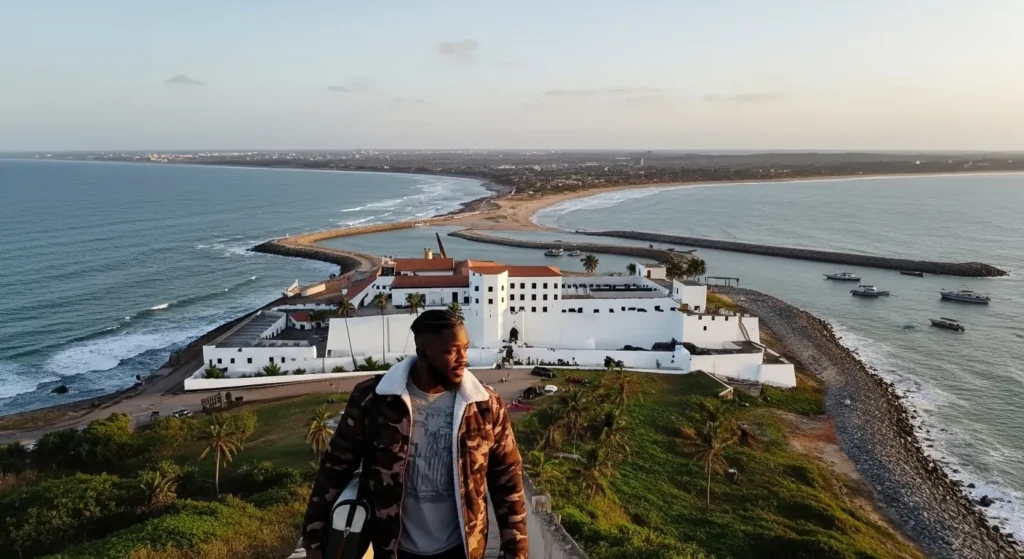
Table of Contents
Accra to Cape Coast: DIY Weekend Trip Guide on a Budget
Accra to Cape Coast is one of the most important trips you can take in Ghana and you do not need to pay a foreign tour company hundreds of dollars to do it right.
Cape Coast and Elmina are non-negotiables if you want to understand Ghana’s history, especially as a Black diaspora visitor. The castles, the Door of No Return, the fishing communities, and Kakum National Park all sit within one compact stretch of the Central Region.
Packaged day tours from Accra regularly cost between $120 and $336 per person. With a bit of planning, you can do a full 2 to 3 day DIY trip for a fraction of that, using local transport, choosing your own guesthouse, and moving entirely at your own pace.
What You Need to Know Before You Go
Distance and travel time: Accra to Cape Coast is roughly 140 to 150 km by road. Expect 2 to 3 hours depending on traffic and stops.
Why it matters historically: Cape Coast and Elmina castles are UNESCO-recognised sites tied directly to the transatlantic slave trade. Guided tours take you through dungeons, memorial points, and museums documenting how enslaved Africans were held and shipped through these forts. For many diaspora Ghanaians and Black travellers, this is a deeply emotional roots journey.
What else is nearby:
- Kakum National Park with its famous canopy walkway and rainforest trails
- Beaches and coastal resorts from Cape Coast through Elmina and Anomabo
- Fishing communities, markets, and local food across the Central Region
Tour vs DIY: Packaged tours from Accra bundle transport, entry fees, and guides at $140 to $336 per adult. A DIY trip using intercity minibuses and a mid-range guesthouse can come in significantly cheaper while putting more money directly into the local economy.
Day Trip vs Weekend: Which Is Better?
Day trip (very packed):
- Leave Accra at 5:00 to 6:00 a.m.
- Arrive Cape Coast by 9:00 to 10:00 a.m.
- Visit Cape Coast Castle, Elmina Castle, and Kakum if you move fast
- Return to Accra by evening
The drive alone is 2 to 3 hours each way, so day trips are exhausting on public transport. Most experienced travellers recommend at least one night to absorb the weight of the history properly.
Weekend (recommended):
- Day 1: Travel Accra to Cape Coast, tour Cape Coast Castle, walk the town or beach
- Day 2: Visit Elmina Castle and Kakum National Park, stay in Elmina or return to Cape Coast
- Day 3 (optional): Beach time, local markets, then return to Accra
For Detty December or diaspora homecoming trips, a weekend gives you the emotional space the experience deserves.
Getting from Accra to Cape Coast
Option A: Intercity Minibus (Ford/VIP-style) — Best Value
This is the option most Ghanaians and experienced travellers recommend. The Ford minibuses from Accra to Cape Coast are the sweet spot between price and comfort.
Where to board: Kaneshie area in Accra, commonly known as Kaneshie Ford Station.
Fares: Around 70 to 100 GHS one way depending on fuel prices and the operator.
Travel time: Roughly 2.5 to 3 hours, more with traffic.
Tips:
- Go early, around 5:00 to 7:00 a.m., so the bus fills quickly and you avoid peak traffic
- Buy your ticket at the booth and avoid unofficial agents asking you to pay outside
- Buses leave when full, not by strict timetable
- At Cape Coast, take a local taxi from the drop-off point to your hotel or the castle
Option B: Coach Buses (STC and Others) — More Structured
Long-distance coach buses like STC run the Accra to Cape Coast route and offer a more formal ticketing experience. These can be slightly slower and less frequent but are comfortable. Check their latest schedules before travelling.
Option C: Private Taxi or Hired Car — Most Flexible
Private taxi fares from Accra to Cape Coast run upwards of 1,600 GHS one way. Expensive solo, but worth it if you are splitting costs in a group or want to combine Cape Coast, Elmina, and Kakum in one tight day without worrying about bus schedules.
Where to Stay: Cape Coast or Elmina?
Base in Cape Coast if you want walkability, direct access to the castle, markets, and beach spots.
Base in Elmina if you prefer a quieter, more resort-style experience. You can still visit Cape Coast as a day trip.
Some travellers split one night in each town, but for a short weekend, pick one base and move around from there.
What to look for in accommodation:
- Walking distance or a short taxi ride to the castle you want to visit
- Access to the beach or lagoon if that matters to you
- Reliable reviews mentioning consistent water, electricity, and secure rooms
Both towns have options ranging from budget guesthouses to mid-range hotels and beachfront resorts.
Sightseeing: What to Visit and How Long to Allow
Cape Coast Castle
A UNESCO World Heritage Site and former slave-trade hub.. Guided tours are mandatory and for good reason — local guides provide historical context and personal stories that no audio guide can replicate.
What you will see:
- Dungeons and holding cells
- The governor’s quarters and courtyard
- The Door of No Return and Door of Return
- On-site museum with shackles, drums, old weapons, and cultural artefacts
Allow 2 to 3 hours including time to sit with what you have just experienced.
Elmina Castle
Another major slave-trade fort with its own distinct history, set against the backdrop of one of Ghana’s most active fishing communities.
What you can do:
- Take a guided tour inside the castle
- Walk the town to see the fish market, Dutch Cemetery, and St. Joseph’s Minor Basilica with panoramic views over Elmina
Kakum National Park
Famous for its canopy walkway suspended high above the rainforest. A must for nature lovers and families.
DIY plan for Kakum:
- Take a taxi from Cape Coast or Elmina early in the morning
- Do the canopy walk and a short forest trail and allow 1.5 to 3 hours
- Return by early afternoon for the beach or your bus back to Accra
Weekend Budget Breakdown
Your main cost drivers are transport, accommodation, entry fees, and food.
Transport:
- Ford minibus one way: 70 to 100 GHS per person
- Private taxi one way: 1,600+ GHS total
Accommodation:
- Budget guesthouses to mid-range hotels depending on comfort level
Entry and tours:
- Castle guided tour fees at Cape Coast and Elmina
- Kakum entry plus canopy walkway ticket
Food:
- Street food, chop bars, and beachside restaurants vary widely
For context, packaged tours from Accra including transport, guides, and entry fees typically run $140 to $336 per adult. A DIY weekend on public transport with local accommodation easily comes in lower while giving you more time and flexibility on the ground.
Safety and Health Tips
Research on the Cape Coast to Elmina to Kakum tourism corridor shows that most visitors rate the area as generally safe. Standard travel awareness is enough for most people.
Practical tips:
- Travel the Accra to Cape Coast highway during daylight hours as night driving on this route carries higher risk due to speeding and poor visibility
- Keep your passport and large amounts of cash locked in your hotel or in a money belt
- At markets and bus stations, apply the same pickpocket awareness you would use in central Accra
Health:
- Drink bottled water throughout the trip
- Use mosquito repellent, especially in the evenings
- Consider anti-malarial medication where appropriate
- Carry your yellow fever card if travelling from abroad
For a detailed health and safety checklist, check the Ghana Travel Safety Guide on DeBesties.
Emotionally: The castle tours are heavy. Plan something grounding afterwards — quiet beach time, a meal by the ocean, or simply sitting with your thoughts. Do not rush straight back onto a bus.
Why This Trip Matters
For Accra residents, Cape Coast is the easiest way to decompress from city life without leaving Ghana.
For the diaspora, whether visiting for Detty December, a roots pilgrimage, or just curiosity, Cape Coast and Elmina offer something rare: a space where history and personal identity meet. Academic work on roots tourism in this area consistently highlights how visits to the castles shape Pan-African consciousness and a deeper connection to Ghana’s story.
Doing it DIY rather than through a packaged tour means:
- Direct contact with local drivers, guesthouse owners, and market women
- More of your money stays in the local economy
- You control the emotional pace of your visit entirely
Final Word
An Accra to Cape Coast trip does not have to be complicated or overpriced. Once you know it is just a 2 to 3 hour road journey and you know where to board the right bus, everything else is manageable.
Use this as your checklist:
- Decide between a day trip or a weekend
- Choose your transport: Ford minibus, coach, or private car
- Book a well-located guesthouse in Cape Coast or Elmina
- Plan your itinerary around the castles and Kakum with room to breathe
You will leave with a powerful historical experience, a real taste of Central Region culture, and a proper break from Accra, all on your own terms.




Comments are closed.