

Crypto trading is now legal in Ghana, but safety still depends on you. Here’s how to choose platforms, avoid scams, and understand basic tax implications.
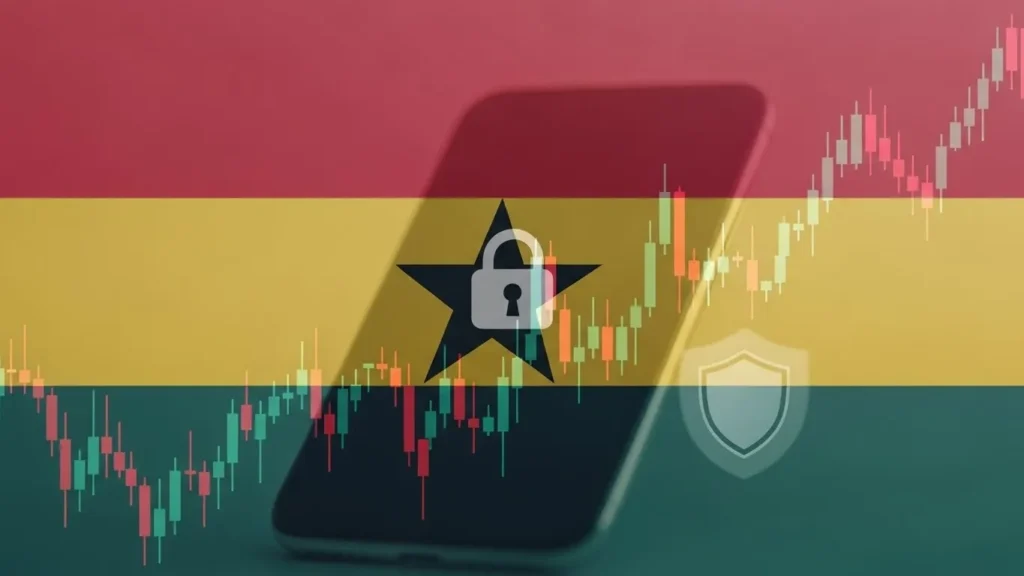
Ghana has officially confirmed that crypto trading is legal, and the Bank of Ghana Governor says “no one is going to be arrested for engaging in crypto.” That’s a huge shift, but it doesn’t mean every platform or opportunity is safe. This guide shows how to move smart now that crypto’s legal.
If you missed the full story behind the law itself, catch up here: Crypto's Now Legal in Ghana – Parliament Makes It Official.
1. Use Platforms That Will Register With Bank of Ghana
The Bank of Ghana has released a virtual assets policy framework and is rolling out licensing for Virtual Asset Service Providers (VASPs). Any serious platform that lets you:
- Buy or sell crypto
- Hold your coins in a hosted wallet
- Offer crypto brokerage, payments or investment products
must register or obtain a license from the Bank of Ghana or the Securities and Exchange Commission, depending on what it does.
Before trusting a platform with your money, check whether:
- It clearly states it will comply with the VASP regime in Ghana.
- It lists a real company name and address, not just a Telegram nickname.
- It has transparent fees, terms and support contacts.
BoG’s virtual asset documents say all VASPs operating in or from Ghana will be brought under risk-based oversight to protect users and the financial system. If a platform behaves as if these rules don’t exist, that’s a red flag.
2. Expect KYC and AML Checks – They’re Now Normal
With legalization comes Know Your Customer (KYC) and Anti-Money Laundering (AML) compliance as standard. You should be ready to provide:
- A valid ID (for example, Ghana Card or passport)
- Proof of address
- Sometimes, proof of source of funds for larger transactions
Ghana’s framework is being aligned with FATF global standards, which means VASPs must monitor suspicious activity and follow rules around tracking certain transfers. It reduces anonymity, but it’s what allows the central bank to say crypto is now legal and supervised, not just tolerated.
If a platform allows big deposits and withdrawals but never asks who you are, it is likely sitting outside the environment BoG is building.
3. Avoid ‘Too Good To Be True’ Crypto Deals
Legalization has already become a buzzword for scammers. The Governor has been clear: virtual asset trading is legal now, but legality does not mean lawlessness.
Be very careful with offers that:
- Promise guaranteed daily, weekly or monthly returns
- Push you to recruit friends and family to earn more
- Promote tokens that appear on no reputable exchanges or news sites
Ghana’s virtual asset policy and oversight plan were created because more than three million Ghanaians are now in the crypto ecosystem, and authorities want to crack down on fraud and abusive schemes as the market grows. If the main selling point is “crypto is now legal in Ghana, so you can’t lose,” walk away.
4. Remember: Your Crypto Profits Can Be Taxed
Bringing crypto into Ghana’s regulated space also puts it on the radar of the Ghana Revenue Authority (GRA). Current guidance and specialist summaries point to three basic angles:
- Capital gains tax: Crypto treated as an asset can attract 15% capital gains tax for individuals when you sell at a profit.
- Business income: If you run a trading, brokerage or crypto service business, profits can fall under corporate or business tax, often around 25%.
- Personal income: If you are paid in crypto for work, that income may be taxed within the normal 0–35% personal income tax bands, depending on your total earnings.
External explainers already give real examples, such as a GH₵50,000 profit leading to GH₵7,500 capital gains tax at 15%. Practically, this means you should:
- Keep a simple record of what you buy, when, and for how much
- Track what you sell and at what price
- Be ready for GRA to issue more direct crypto tax guidance
5. Double-Check Big Claims Through Trusted Sources
There will be a lot of noise about “new laws” and “fresh opportunities.” Ground yourself with credible, Ghana-focused sources:
- Bank of Ghana Virtual Assets page (overall framework and principles):
https://www.bog.gov.gh/virtual-assets/ - BoG’s virtual asset framework and policy position, reported by outlets like NewsGhana and GhanaWeb, which explain the risk-based approach and multi-agency oversight.
- Coverage confirming the Governor’s message that crypto trading is now legal and there will be no arrests for engaging in it, carried by GhanaWeb, NewsGhana and others.
Use TikTok, X and IG to discover stories, but always cross-check rules, deadlines and warnings through BoG or a reputable Ghanaian news site before you move money.
If you want a refresher on how Parliament and the Bank of Ghana changed the rules in the first place, go back to the main explainer on Debesties:
Crypto's Now Legal in Ghana – Parliament Makes It Official.
Related: the tax guide for traders.



Discussion 0 comments
You must be logged in to write a comment.
Log In Sign UpNo comments yet. Be the first to start the conversation!