

Ghana Highlife UNESCO heritage listing honours a 100 year old sound and opens fresh doors for culture, tourism and proud Ghana identity.
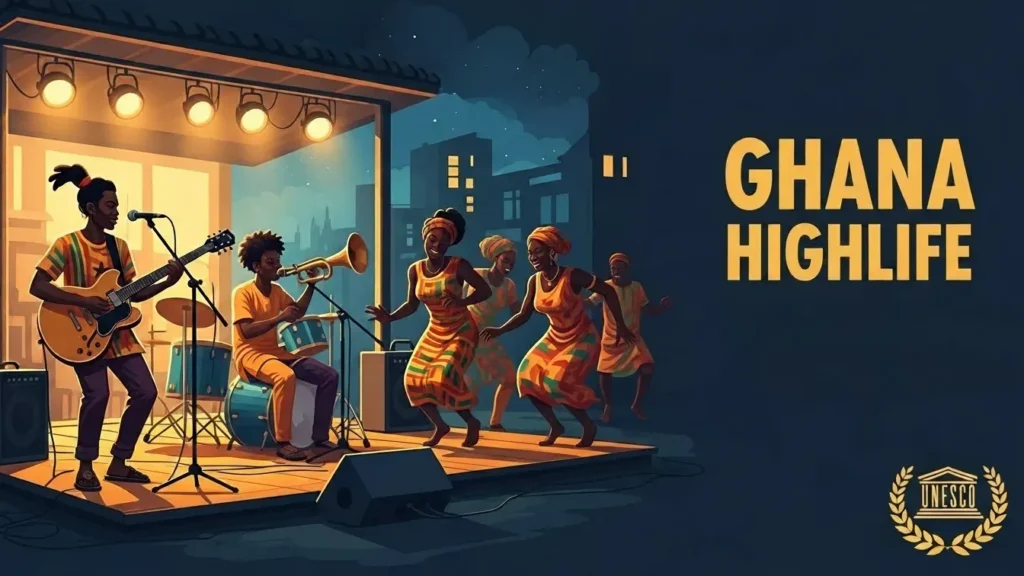
For many Ghanaians, Highlife is the sound of home, and now the world has formally agreed. When Ghana Highlife UNESCO heritage status was confirmed in December 2025, it turned a century of street corners, palm wine bars and dance floors into protected global culture.
Ghana Highlife UNESCO heritage recognition means this music and dance form is now listed as part of humanity’s Intangible Cultural Heritage, a space reserved for cultural treasures that deserve protection and active support. The decision landed in the same year Highlife turned 100, making the moment feel both spiritual and historic for musicians and fans.
What You Need To Know
Ghana Highlife UNESCO heritage status celebrates a genre that grew from coastal dance bands, brass sounds and traditional rhythms in the 1920s. Over time Highlife blended African drums, guitars and horns with jazz and other foreign influences, yet the heart stayed fully Ghanaian.
Ghana Highlife UNESCO heritage listing is not a museum tag but a promise to protect a living culture that still powers weddings, funerals, family parties and Sunday afternoons. The recognition also highlights how Highlife shaped newer styles like hiplife and modern Afrobeats, even when younger listeners sometimes forget where those chord progressions came from.
Bigger Picture for Music and Identity
Ghana Highlife UNESCO heritage confirmation sends a clear message that local sounds can stand proudly beside any global genre. It tells young artists that drawing from Highlife is not backward but actually a smart way to build something fresh with deep roots.
Ghana Highlife UNESCO heritage also gives cultural groups and event organisers a stronger story when pitching festivals, tours and archive projects. With the label in place, it becomes easier to argue for funding, preservation of old recordings and education programs that teach school children how this music reflects Ghanaian life.
Why It Matters In Ghana
Ghana Highlife UNESCO heritage status can help drive tourism, from themed live nights in Accra and Kumasi to festivals that invite the diaspora to experience the sound where it was born. Visitors are no longer just coming for sunshine, they are coming for a protected cultural experience that cannot be copied anywhere else.
Ghana Highlife UNESCO heritage recognition is also a quiet challenge to all of us at home. If the world now treats Highlife as a treasure, then local venues, DJs, churches and event planners have more reason to programme live bands, archive classic songs and push younger acts who proudly carry that Highlife flavour.
What It Means Going Forward
Ghana Highlife UNESCO heritage listing can unlock training for musicians, research for universities and collaborations with global artists who want to understand the sound at its source. This can lead to fresh fusions that still respect the original feel of the music rather than copying it in shallow ways.
Ghana Highlife UNESCO heritage may also inspire similar efforts for other Ghanaian cultural practices, from traditional dance to festivals and craft. Once one door to the UNESCO system is open, cultural advocates have a clearer path to document and pitch other elements of Ghanaian life that deserve the same level of care.
What to Watch Next
Ghana Highlife UNESCO heritage will likely show up more in branding for concerts, tourism campaigns and December in Ghana events. Keep an eye on new Highlife themed festivals and curated nights at live music spaces across Accra and beyond.
Source note: Based on UNESCO Intangible Cultural Heritage listing details and coverage of Ghana Highlife recognition.
Related: a rising star in Ghana music today.



Discussion 0 comments
You must be logged in to write a comment.
Log In Sign UpNo comments yet. Be the first to start the conversation!