

Ghana music sits between crisis talk and a new golden era. Kofi Mole says there is no identity, KiDi says there is no industry, yet Sarkodie and rising artists are going global.
Question: Is Ghana music really in crisis, or is the industry entering a new golden era despite the complaints
Answer: Ghana music is sitting in a tension point. Kofi Mole and KiDi are right that identity and structures remain weak, but at the same time Sarkodie and a new wave of Ghanaian artists are quietly building a more global and confident era for Ghana’s sound.
Ghana music is full of contradictions this year. On radio and TV, respected voices say the industry has no clear identity and no real structures. Online, the same ecosystem celebrates sold out international shows and rising young artists on “Africa to watch” lists. Both realities exist at the same time, and Ghanaian fans are trying to make sense of it.
What You Need to Know
In January 2026, Kofi Mole told JoyNews and Luv FM listeners that “Ghana music has no identity.” He argued that Ghana’s biggest mistake was abandoning Azonto too quickly instead of turning it into a long term global sound.
He said Ghana music should be booming much more than it is and complained that “everybody is on their own,” with no real industry feeling to unite artists, managers and gatekeepers. In his view, Ghana has the talent but has lost the clear sound and collective push that countries like Nigeria enjoy.
Months earlier, KiDi had already fired a different kind of warning shot. On Daybreak Hitz, he said plainly that “from where I sit, we do not have an industry,” because the structures that make up a real music industry are missing. He talked about weak royalty systems, poor support and a situation where every musician in Ghana has to fend largely for themselves.
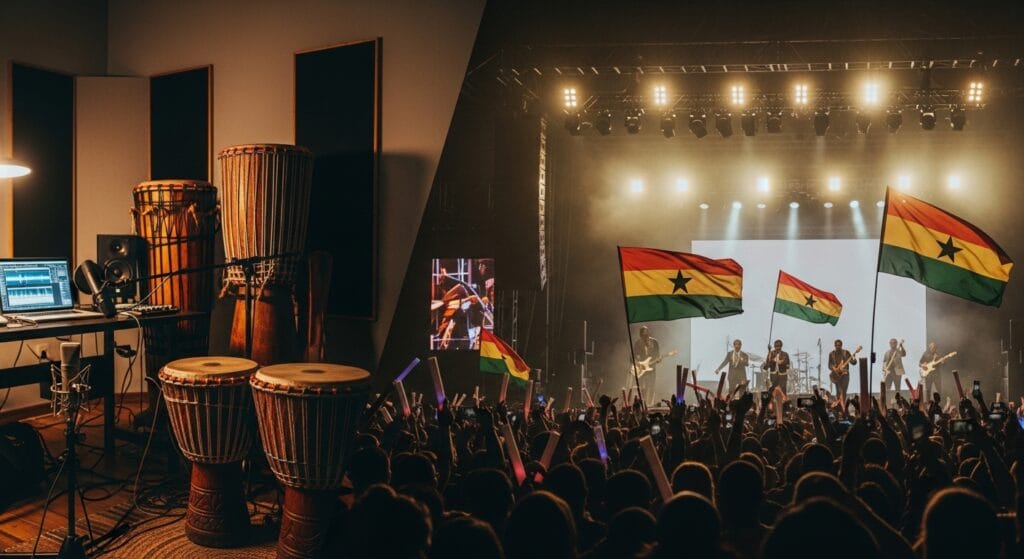
At the same time, the international picture looks very different. Sarkodie is taking his Rapperholic concert to London’s Royal Albert Hall on March 6, 2026, and the show has already sold out thousands of seats for Ghana Independence Day. Black Sherif, Amaarae and others are becoming regular names on global festival and streaming lists, while Ghanaian artists 2026 are being highlighted by platforms like Audiomack and Afrocritik.
So Ghana music is not a simple success story and not a simple crisis either. It is a mixed picture where criticism and progress are happening at the same time. To understand it properly, you have to look at identity, structure and the new generation together, not separately.
How It Works
The identity debate
Kofi Mole’s comments add a new chapter to a long running identity conversation. Ghana gave the world highlife, helped shape Afrobeat and introduced Azonto, but none of those genres is currently treated globally as the Ghana sound in the same clear way Afrobeats is seen as Nigerian.
In your own explainer on Ghana music identity, you have already traced how Ghana moved from highlife to hiplife to Azonto and then slowly allowed those sounds to fade from the front line while chasing new trends. That history makes it easier to understand why Kofi Mole feels Ghana lost something important along the way.
He is not saying Ghana has no creativity. He is saying Ghana has too many directions and not enough patience to protect one or two core sounds as national brands. When he complains about Azonto being mocked as “Indian music,” he is really pointing at how easily Ghana sometimes throws away its own inventions.
The structure problem
KiDi’s “no industry” comments focus on the other side of the coin. Even if Ghana settles on a clear musical identity, it will still struggle without proper systems. On MyJoyOnline and other platforms he explained that royalty collection is weak, investor confidence is low and many artists operate without long term planning support.
Reports and conversations on FirstNewsroom, GhanaWebbers and entertainment shows underline that he sees the Ghana music industry mostly existing in name. Everyone calls it an industry, but the structures that should hold it up are either broken or missing.
This lines up with wider research on Ghana’s music value chain, which shows that managers, labels, distributors and collection societies are still catching up with the digital era. Academic work on popular music in Ghana also notes that media talk and everyday conversation shape how artists see themselves and shape micro identities in the scene.
Global wins in the middle of the complaints
Against this backdrop, Ghana is still producing big wins. Sarkodie’s Royal Albert Hall sell out is one of the most visible examples. Ticket platforms and UK event sites list Rapperholic London as a Ghana Independence special, and promoters confirmed that all seats were taken well before March.
You have already broken down why that matters in your Rapperholic London sell out post. It proves that a Ghanaian rapper with a Ghana rooted brand can fill a world class venue without being a support act. It gives Ghana music a clear victory that can be shown to promoters, brands and fans abroad.
Beyond Sarkodie, your Ghanaian Artists 2026 Ready To Transform African Music article highlights a new wave of names blending highlife, Afrobeats, hip hop and alternative sounds. These artists are using streaming platforms, social media and cross border collaborations to reach audiences far beyond Ghana’s borders.
Their rise matches external lists like Pulse Ghana’s top artists to watch and Audiomack’s African Artists to Watch, where Ghanaian names often appear alongside Nigerians, South Africans and others. That means, even while local structures remain shaky, individual Ghanaian artists are still finding ways to grow.
Where the Amerado and Asakaa tensions fit in
Incidents like the Amerado and Asakaa Boys clash at This Is Oseikrom concert in early January sit inside this bigger context. GhanaWeb and several video clips showed crowd confusion and on stage tension around performance time and perceived disrespect on the night.
Taken alone, that story is just another entertainment drama. Seen as part of Ghana music, it also reflects deeper questions about gatekeeping, regional pride and how artists share space on stage. Kumasi drill and Asakaa culture are still negotiating their place inside the wider industry narrative.
Why It Matters in Ghana
For Ghana based fans, this mixed picture has real effects. When key voices say there is no identity and no industry, some listeners feel discouraged and may undervalue the progress happening in front of them. At the same time, ignoring those critiques would also be a mistake because they highlight issues that need fixing.
You can actually see the tension in your own content on Debesties. One article explains how Ghana may have lost a global identity by abandoning Azonto. Another article celebrates a fully sold out Rapperholic London show. A third one introduces Ghanaian artists 2026 who are ready to transform African music. All three are true at the same time.
For policymakers and industry bodies, Ghana music offers both warning and opportunity. Warnings because, without better structures, many of the wins will remain personal victories instead of becoming national gains. Opportunity because the talent and global attention are already there. Building better systems now could turn this period into a genuine golden era.
For the diaspora, the picture matters in an emotional way. When they see Sarkodie at Royal Albert Hall, Black Sherif headlining festivals and Chef Abbys making TIME’s 100 creators list, it builds pride in Ghana’s cultural exports. When they hear that artists feel unsupported or that Ghana music has no identity, it raises questions about how much the country values its own creatives.
Ghana music is therefore not just about beats and charts. It is about how the country sees itself, how it treats its artists and how it presents Ghanaian culture to the world.
Key Takeaways
- Kofi Mole says Ghana music has no clear identity and believes Ghana abandoned Azonto before it could become a strong global sound.
- KiDi argues that Ghana does not have a proper music industry because structures such as royalties and support systems are too weak.
- At the same time, Sarkodie has sold out the Royal Albert Hall with Rapperholic London on Ghana Independence Day, proving strong global demand for Ghanaian music.
- Your Debesties pillars on Ghana music identity, Rapperholic London and Ghanaian artists 2026 show both the problems and the progress in one place.
- External lists like Audiomack’s African Artists to Watch and Pulse Ghana’s 2026 picks confirm that Ghanaian artists are part of the continent’s next wave.
- Incidents like the Amerado and Asakaa Boys clash at This Is Oseikrom concert highlight ongoing tensions around respect, stage sharing and regional pride in Ghana music.
- Academic and industry studies still point to gaps in the Ghana music value chain, especially around management, archiving and long term planning.
- For Ghana, the choice is between letting these wins stay as isolated moments or using them as a base to fix structures and define a stronger identity.


Discussion 0 comments
You must be logged in to write a comment.
Log In Sign UpNo comments yet. Be the first to start the conversation!