

Ghanaian culture and traditions explained through history, customs, festivals, food, and values that shape identity in Ghana.
Question:
What defines Ghanaian culture and traditions today?
Answer:
Ghanaian culture and traditions are shaped by history, ethnicity, community values, chieftaincy, festivals, language, and deep respect for ancestry.
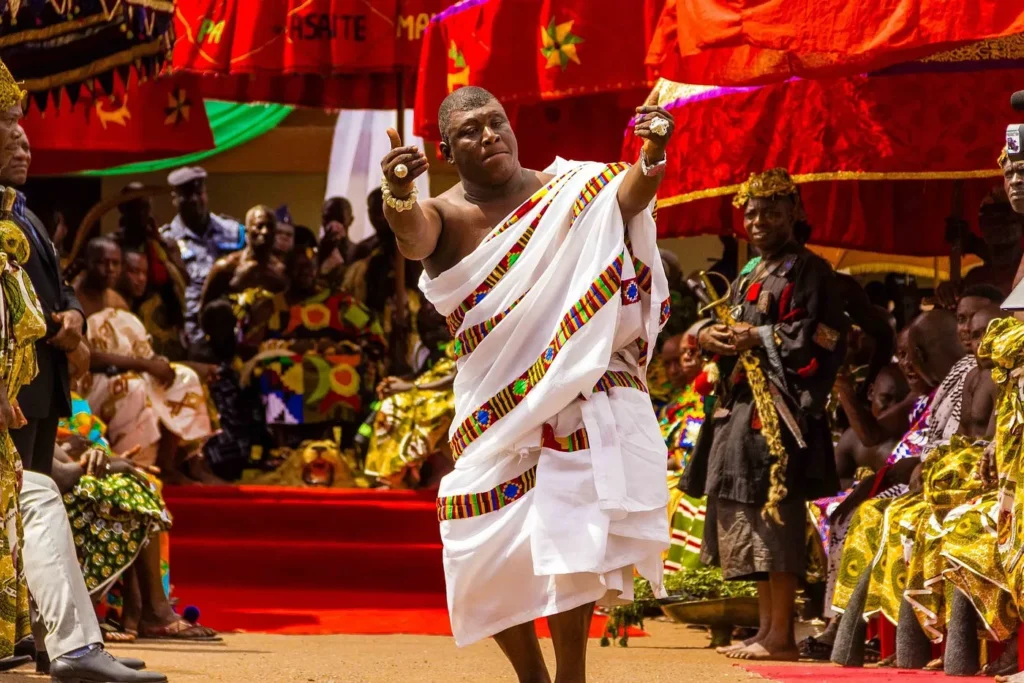
Ghanaian culture is not performative.
It is lived daily.
Passed down, protected, and proudly shared.
What Ghanaian Culture and Traditions Mean
Ghanaian culture and traditions reflect how people live, relate, celebrate, and remember their ancestors. They are not fixed in the past. They evolve while remaining rooted in values like respect, unity, and responsibility.
Ghana has over 100 ethnic groups, with major ones including Akan, Ewe, Ga Dangme, Mole Dagbani, and Guan. According to national population data, the Akan group alone makes up over 47 percent of the population, influencing language, customs, and naming systems across the country.
Despite ethnic diversity, shared cultural principles unify Ghanaian society.
The Role of Chieftaincy and Traditional Authority
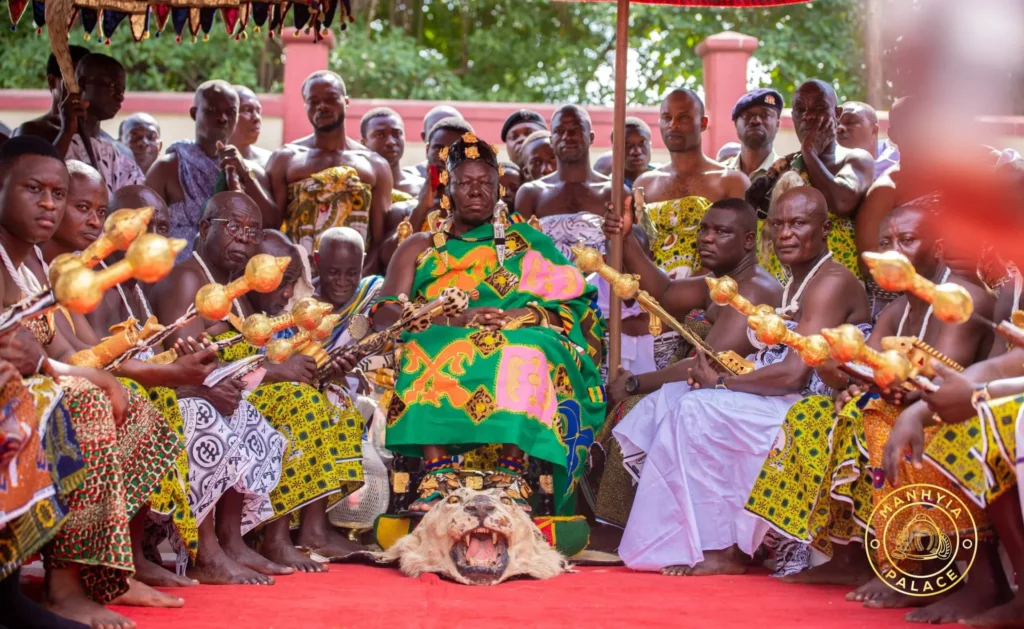
Chieftaincy remains a central pillar of Ghanaian culture and traditions.
Ghana has thousands of traditional chiefs and queen mothers, each overseeing land, customs, conflict resolution, and festivals within their communities. The institution predates colonial rule and continues to function alongside modern governance.
Chiefs are custodians of culture. They safeguard traditions, rituals, and moral values. Many cultural ceremonies, including naming rites and festivals, require the involvement or blessing of traditional authority.
The importance of chieftaincy is formally recognized in Ghana’s constitution, making it one of the few African countries where traditional leadership is constitutionally protected.
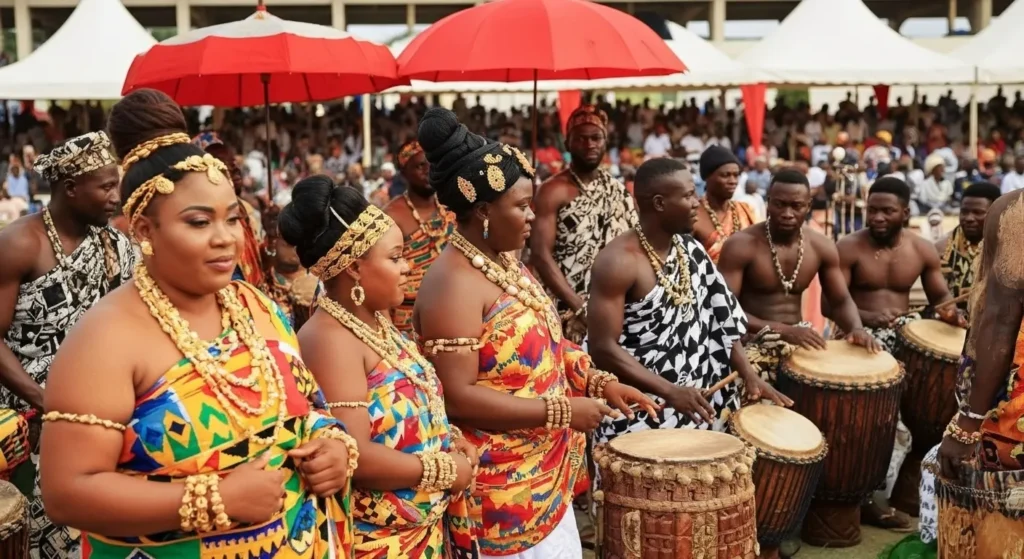
Naming Ceremonies and Identity
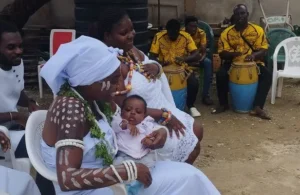
Naming ceremonies are among the most important Ghanaian traditions.
In many cultures, especially Akan communities, children are named based on the day of the week they are born. For example Kofi represents Friday born males, while Ama represents Saturday born females.
These names are not symbolic only. They connect individuals to ancestral timelines and community identity. Studies on Ghanaian naming practices show that over 70 percent of Ghanaians carry a day name as either a first or middle name.
Naming ceremonies often include libation, blessings, and prayers for protection and purpose.
Festivals as Living History
Festivals are how Ghana remembers its past publicly.
There are over 80 traditional festivals celebrated annually across Ghana. These festivals mark events such as migration stories, harvest periods, victories, and remembrance of ancestors.
National Commission on Culture Ghana
Examples include Homowo, Aboakyir, Hogbetsotso, and Adae festivals. Each festival combines music, drumming, dance, storytelling, and community gatherings.
Festivals are not tourist shows. They serve as cultural classrooms where history is taught through performance and participation.
Food Culture and Communal Living
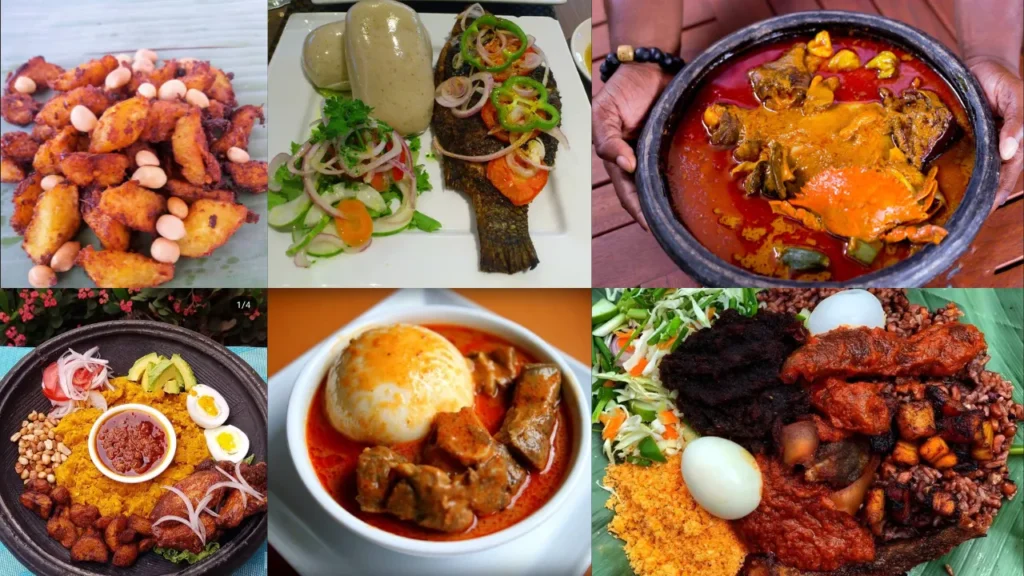
Food is central to Ghanaian culture and traditions.
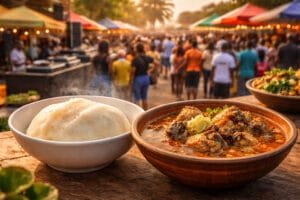
Meals are often shared, reinforcing community bonds. Popular staples like fufu, banku, kenkey, waakye, and jollof rice reflect regional diversity and agricultural history.
According to food consumption studies, over 60 percent of Ghanaian households still prepare traditional meals at least four times a week, despite the rise of fast food culture.
Food also plays a spiritual role. In some ceremonies, meals are symbolically offered to ancestors as part of remembrance rituals.
Language and Oral Tradition
Ghana has over 80 indigenous languages, with Akan languages being the most widely spoken.
Language is a carrier of culture. Proverbs, folktales, and storytelling remain key methods of teaching morals, leadership, and social behavior. Many Ghanaian proverbs are used in daily conversation, political speeches, and traditional courts.
Oral tradition ensures that history survives even without written records.
Traditional Clothing and Symbolism
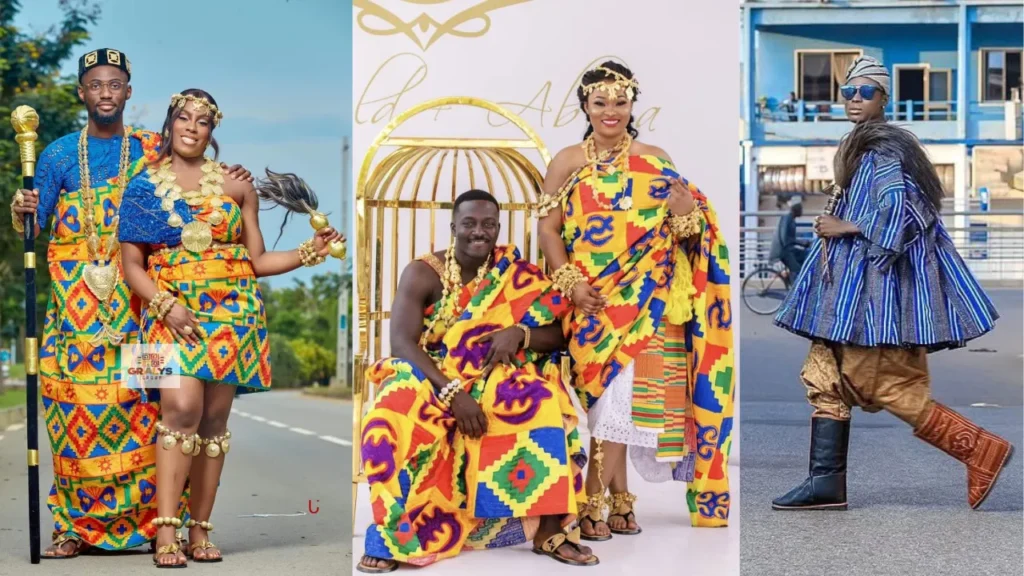
Clothing is another powerful expression of Ghanaian culture and traditions.
Kente cloth, traditionally woven by hand, represents unity, leadership, and social status. Each pattern has meaning. Historically, Kente was reserved for royalty and sacred occasions.
Today, Kente is worn globally as a symbol of African pride. Ghana exports Kente inspired textiles to more than 30 countries, making it both a cultural and economic asset.
Respect, Family, and Social Values
Respect is foundational in Ghanaian society.
Greetings matter. Elders are acknowledged first. Family extends beyond parents and siblings to include extended relatives and community members.
Research on social values in Ghana shows that over 85 percent of Ghanaians consider respect for elders as a core moral value, higher than many global averages.
This value shapes behavior in homes, schools, and public life.
Ghanaian Culture in the Modern World
Ghanaian culture and traditions continue to adapt.
Urban youth blend tradition with modern expression through music, fashion, digital media, and storytelling. Yet core values remain visible in ceremonies, family structures, and national celebrations.
Global attention through tourism, festivals, and digital creators has increased interest in Ghanaian culture, but its strength lies in everyday practice, not performance.
Key Takeaways
• Ghanaian culture and traditions are shaped by ethnic diversity and shared values
• Chieftaincy remains a protected and influential institution
• Naming ceremonies connect identity to ancestry and community
• Festivals preserve history through collective celebration
• Food, language, and clothing reflect both heritage and modern life
Conclusion
Ghanaian culture and traditions are not frozen in time.
They live in language, food, leadership, and family. They adapt without losing meaning. And they continue to define Ghana’s identity at home and across the diaspora.
Discussion 0 comments
You must be logged in to write a comment.
Log In Sign UpNo comments yet. Be the first to start the conversation!