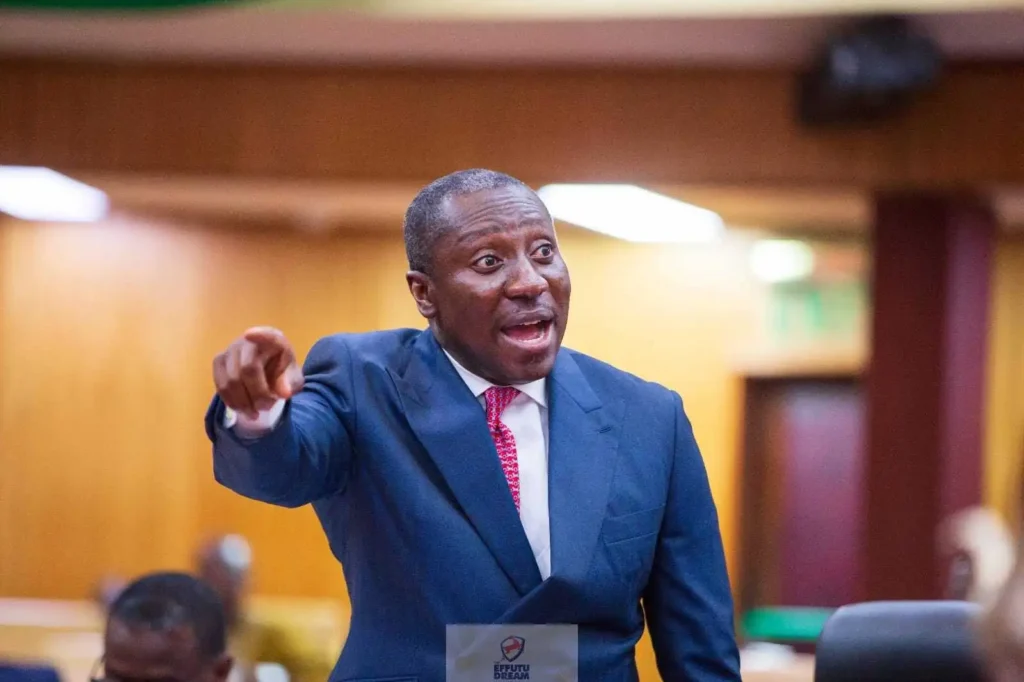
ACUP declares 2028 election bid, joining Alan Kyerematen’s United Party in challenging Ghana’s NPP-NDC dominance. Can third parties capture 2 million disaffected voters?
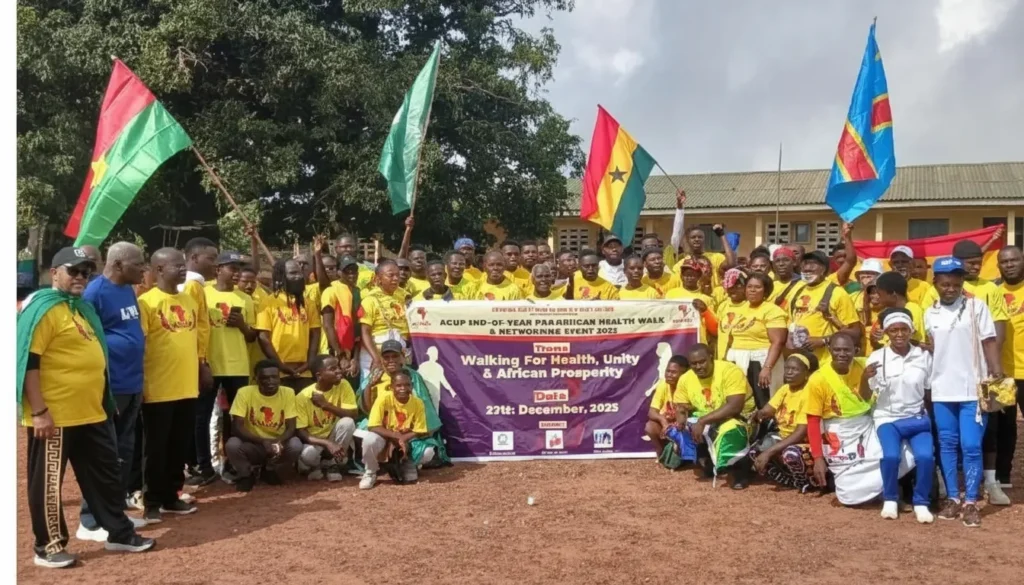
Table of Contents
Ghana’s Third Force Uprising: When ACUP and UP Challenge the Duopoly
On December 27, 2025, during an End of Year Pan-African Health Walk in Accra, the African Continental Unity Party (ACUP) formally declared its intention to contest Ghana’s 2028 general elections. The announcement, made by Interim Chairman Ken Ameovi Gbeve, represents more than one political party’s ambition. It signals the beginning of a systematic challenge to Ghana’s 32-year dominance of the New Patriotic Party (NPP) and National Democratic Congress (NDC).
But ACUP is not alone. Just three months earlier, in October 2025, Alan Kyerematen’s United Party (UP) officially rebranded and launched its own 2028 presidential bid, positioning itself as a “credible third force.” Together with smaller movements, these parties are making a calculated bet: that Ghana’s political duopoly is finally vulnerable, and that millions of disaffected voters are ready for an alternative.
The question is no longer whether a third force will emerge in 2028. The question is: Can it actually win?
Breaking News: ACUP Enters the Arena
On December 27, 2025, ACUP’s interim leadership team unveiled a bold Pan-African vision during a public health walk in Accra. The party’s positioning is unapologetically ambitious: not to become the third major force in Ghana, but to become Africa’s first continental political party.
“We are not here to make up the numbers. We are here to win political power, starting from Ghana, and to rule Africa beginning from Ghana,” Interim Chairman Ken Ameovi Gbeve declared.
This is not rhetorical flourish. ACUP claims operational structures in eight African countries: Nigeria, Sierra Leone, The Gambia, Democratic Republic of Congo, South Africa, Kenya, Tanzania and South Sudan. It has fielded a specialized leadership team emphasizing women’s substantive decision-making (not quota systems) and youth participation. Its General Secretary, Kwadwo Agyei Yeboah, has explicitly contrasted ACUP with “personality-driven” politics, positioning the party’s ideology, not its leader, as its primary selling point.
Organizationally, ACUP received provisional certification from Ghana’s Electoral Commission in July 2023 and now awaits gazetting for full registration. For more background on that process, see coverage by GNA and Citi Newsroom.
Unlike ACUP’s ideological positioning, the United Party (UP), launched in October 2025, has centered itself on a leader-driven vision: Alan Kyerematen’s “Paradise Project” (Vision 2040) to transform Ghana into Africa’s economic powerhouse by 2040.
The System They’re Targeting: 2 Million Disaffected Voters
Both ACUP and UP are betting on the same data point: in Ghana’s 2024 general elections, approximately 2 million registered voters refused to vote.
This is the political opening they see. Here’s why it matters.
The 2024 Breakdown
| Metric | 2024 | 2020 | Change |
|---|---|---|---|
| Voter Turnout | 60.9% | 79% | ↓ 18.1 percentage points |
| NPP Vote Share | 41.6% | 51.59% | ↓ 4+ million votes |
| NDC Vote Share | 56.6% | 47.4% | ↑ 3+ million votes |
| Floating Voters Pattern | Moved to NDC | Moved to NPP | Anti-incumbent swing |
The 2 million abstainers are not passive voters. According to UP’s General Secretary Yaw Buaben Asamoa, they represent politically conscious citizens who deliberately stayed home because they were dissatisfied with both major parties. They risked their political voice to signal discontent.
For Debesties readers following Ghana’s democracy stories, this echoes the deeper questions raised in our Kpandai election rerun coverage, where trust in electoral processes and outcomes is increasingly under scrutiny.
The Math
NDC won with 56.6% of votes cast, but this represented only about 34–35% of total registered voters. NPP dropped to 41.6%, a catastrophic loss from their 2020 position. Neither party earned a mandate from a majority of eligible voters.
The gap exists: if ACUP or UP could capture even 10–15% of votes cast, they could force a runoff (requiring more than 50% to win).
“It is obvious that there is a space for a third force. The duopoly is not safe anymore,” Asamoa told media. “Two million people refused to step out and vote in the last election.”
This is the strategic opening ACUP and UP believe exists.
Two Visions, One Goal: How ACUP and UP Differ (But Agree on Everything Else)
ACUP and UP represent different approaches to challenging the duopoly, but their shared enemy unites them.
| Dimension | ACUP | United Party (UP) |
|---|---|---|
| Founder | Collective leadership model | Alan Kyerematen (personality-driven) |
| Geographic Scope | Pan-African (8+ countries) | Ghana-first, Africa-later |
| Economic Vision | African self-reliance and unity | “Paradise Project” (Vision 2040) |
| Leadership Model | Ideology as leader | Competence-based (merit-driven) |
| Gender Strategy | Substantive participation, not quotas | Equal opportunity for all groups |
| Campaign Message | End two-party stagnation | End winner-takes-all politics |
Despite these differences, both parties are essentially saying the same thing: Ghana’s NPP-NDC system has failed, and voters are ready for structural change.
The real competition for third-force voters is not between ACUP and UP, it’s between any third party and voter apathy. Can they convince 2 million abstainers to vote again?
Why Third Parties Fail: The Institutional Barriers
For all their ambition, ACUP and UP face a brutal historical reality: third parties in Ghana almost never break through. In Ghana’s Fourth Republic (since 1992), the NPP and NDC have consistently captured 95%+ of votes combined. Other parties averaged 1–2%.
There are structural reasons why.
1. Winner-Takes-All System
Ghana uses first-past-the-post electoral rules. The winning party controls state patronage, resources, jobs, contracts. Coming in third means getting nothing—not one cabinet position, not one government contract, not one state resource to distribute to supporters. This creates powerful incentives for politicians to defect to major parties after elections, and for voters to fear “wasting” their vote.
2. Regional Lock-In
The NPP dominates the Ashanti Region and Eastern Region (vote-rich zones). The NDC dominates the Northern Region, Upper regions, and Volta Region. These regional strongholds are so deep that a third party cannot realistically compete without breaking 20+ years of voting patterns.
3. Voter Psychology: The Wasted Vote Fear
Even if voters are dissatisfied with NPP and NDC, many fear that voting for ACUP or UP will “split the opposition” and allow the incumbent to win. This psychological barrier makes third parties structurally disadvantaged.
4. Financial Disadvantage
Incumbent parties have access to state resources (media, money, security). ACUP and UP must rely on personal wealth (Kyerematen’s money for UP) or diaspora fundraising. The financial gap is vast.
What 2028 Might Look Like: Three Scenarios
Scenario 1: The Status Quo Holds (70% Probability)
Despite ACUP and UP’s organizing, the 2028 election plays out like 2024: NPP and NDC dominate, third parties combined get 2–3%, and the duopoly perpetuates itself. The 2 million abstainers do not suddenly become ACUP voters; they remain home.
Scenario 2: A Credible Threat Emerges (25% Probability)
One third party (likely UP, given Alan Kyerematen’s profile and personal resources) breaks through to 8–12% of the vote, forcing unprecedented negotiation, possibly a runoff scenario, and shifting the entire political conversation toward “coalition building.” This would represent historic change—not a third-party victory, but a three-way race instead of two-way.
Scenario 3: The Duopoly Fractures (5% Probability)
ACUP and UP combined siphon enough votes (15%+) that neither NPP nor NDC can win outright, leading to a runoff and coalition-building where third-party leverage becomes kingmaker power. This is historically rare but not impossible.
The Deeper Pattern: Ghana’s Political Realignment
What ACUP and UP’s emergence reveals is not a guaranteed third-party breakthrough, but a genuine political realignment underway in Ghana.
The 2024 election was not won by the NDC’s strength, but by the NPP’s weakness. The incumbent party lost 4 million+ votes in one term. This suggests deeper structural dissatisfaction with both major parties, not just with the sitting government.
If this is true, then:
- 2028 will test whether dissatisfaction is durable or temporary
- ACUP and UP are the symptom, not the disease
- The real winner of 2028 may not be a party, but whoever best channels the demand for alternative governance
For more on Ghana’s democracy stress-tests, see our Kpandai series under the Ghana democracy and election rerun tags, where local disputes reveal national-level cracks in voter trust.
A system where 2 million voters refuse to participate is a system in crisis, even if third parties fail to capitalize on that crisis.
Key Takeaway
ACUP’s December 2025 declaration is not breaking news in isolation. It is the second major third-force movement (after United Party) to formally challenge the duopoly in 6 months. Together, they signal that Ghana’s political landscape is shifting, whether or not either party wins 2028.
The more interesting question for 2025–2028 is not whether ACUP or UP will win, but whether their presence will force NPP and NDC to fundamentally address the governance issues that made 2 million voters stay home in 2024.
That would be a third-force victory, even if the third force itself loses.