Over 50 shops were destroyed in a major fire behind VVIP Station at Kwame Nkrumah Circle on January 20, 2026. No deaths reported. Here’s what we know.
Question:
What happened during the latest fire outbreak at Circle today?
Answer:
The Kwame Nkrumah Circle fire today destroyed over 50 phone shops, causing heavy losses to traders and disrupting business activities at the busy transport hub.
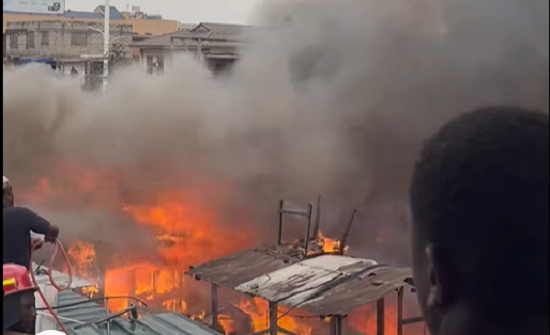
Over 50 shops went up in flames at Kwame Nkrumah Circle on Tuesday morning. For the traders who lost everything, it’s a catastrophe. For Ghana, it’s a pattern. Fires in informal markets and settlements are chronic, devastating, and preventable, yet they keep happening because the systems meant to protect people keep failing.
Table of Contents
What happened in the Kwame Nkrumah Circle fire?
A massive fire broke out behind the Royal VVIP Bus Terminal at Kwame Nkrumah Circle in Accra on Tuesday, January 20, 2026, destroying over 50 shops and makeshift homes used by mobile phone traders and other informal vendors.
When did the Kwame Nkrumah Circle fire start?
The fire began around 10:00 AM and spread rapidly through wooden structures before the Ghana National Fire Service (GNFS) could contain it.
The Blaze Unfolds at Kwame Nkrumah Circle
A thick cloud of black smoke rose over one of Accra’s busiest transport hubs as traders watched their livelihoods go up in flames. The Kwame Nkrumah Circle fire, which started in a kiosk behind the VVIP Station, raced through densely packed wooden structures and metal containers; structures that serve as both shops and makeshift homes for the informal traders who work in the area.
Eyewitnesses described the scene as chaotic. Within minutes of the first sign of smoke, the entire row of shops was engulfed. One trader told reporters she saw smoke from a container and within moments “the whole line was on fire.” Residents and commuters in the area were sent into panic, with many fleeing the vicinity as flames jumped from structure to structure.
Emergency Response and Challenges to Kwame Nkrumah Circle fire Control
The GNFS responded relatively quickly to the Kwame Nkrumah Circle fire, but faced significant obstacles. Initial deployment included four fire tenders, but access to the fire’s core proved difficult due to the cramped layout of the informal settlement. Fire officers had to request additional support, eventually bringing in a total of five fire tenders plus a water tanker from the Klotey Korle Municipal Assembly.
Reports suggest that at least one fire tender stationed at the Circle fire station was not operational at the time, forcing responders to call in units from other stations. “We had to call in additional support,” a GNFS Public Relations Officer told reporters. By the time full containment of the Kwame Nkrumah Circle fire was achieved, approximately 80 percent of the fire had been brought under control, though hot spots continued to smolder.
The difficulty in reaching the seat of the fire meant the blaze had already spread significantly before water could be effectively directed at the source. This delay, a common problem in informal settlements, allowed the flames to consume more structures than might have otherwise been lost.
Learn more about: Ghana National Fire Service emergency protocols.
What Caused the Kwame Nkrumah Circle fire?
Investigators believe the fire started in a cooking kiosk, with an electrical fault suspected as the trigger. However, the exact cause is still under investigation. Some reports mention a woman cooking in one of the structures; others point to faulty electrical connections, a recurring problem in informal commercial areas where illegal wiring is common.
The GNFS Regional Fire Commander acknowledged that “these are things we cannot rule out” when discussing possible causes, noting that domestic activity in the area likely contributed. What is clear is that once ignited, the fire spread with frightening speed through the combustible materials stored in the shops: mobile phones, charging equipment, and other goods that feed Ghana’s informal retail economy.
Impact: Traders Lose Everything to Kwame Nkrumah Circle fire
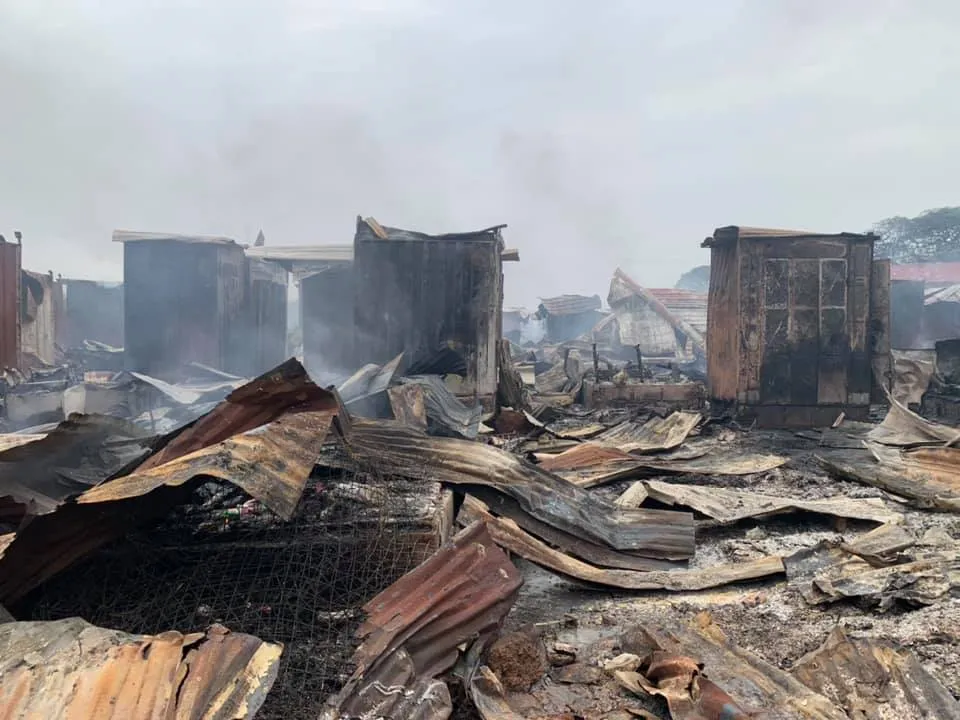
Over 50 structures were destroyed. While no casualties have been reported, the human cost is immense. Traders who use these shops as both workspaces and sleeping quarters have lost not only their goods but their homes. Many operate on credit from family and friends; few have business insurance. One devastated vendor told media that his shop was “completely burnt” and his “capital lost.”
The Accra Mayor, Michael Kpakpo Allotey, visited the scene and promised authorities would “clear the place for a fresh start.” He praised the GNFS for keeping the fire under control and said the city would assess the cause and work toward rebuilding. However, for traders who lost everything in minutes, promises of future action offer little comfort today.
Why It Matters in Ghana: The Kwame Nkrumah Circle fire Context
Market and informal settlement fires are not anomalies in Ghana; they are a recurring crisis that exposes deep structural vulnerabilities in how the country manages urban risk. The Kwame Nkrumah Circle fire is the latest reminder of systemic failure.
Between January and November 2025, Ghana recorded 5,585 fire incidents nationwide, with Greater Accra accounting for 628 of those. In the first half of 2025 alone, fires killed 16 people and injured 110; a dramatic jump from 12 deaths and 30 injuries in the same period of 2024. The informal sector, which employs over 80 percent of Ghana’s working population, bears the brunt of these losses.
Kwame Nkrumah Circle is emblematic of this crisis. The intersection is a major transport hub where thousands of traders and commuters pass daily. Behind the visible bus terminals lies a dense informal settlement of makeshift shops; many of them wooden structures packed tightly together. This configuration is a fire hazard waiting to ignite.
What makes these fires particularly devastating is not just the immediate destruction but the systemic failures they reveal. Traders in these areas typically lack fire insurance. They have little access to fire safety training. Informal settlements are not included in urban development plans, so basic fire prevention infrastructure (hydrants, wider access roads, firebreaks) is absent or inadequate.
Research on market fires in Accra shows that traders often do not trust local authorities’ fire safety warnings because authorities have broken promises before. After previous disasters, government agencies pledge action and then fail to follow through. Communication about fire risks is often delivered in English or southern languages, leaving traders from northern Ghana or neighbouring West African countries unable to understand warnings. Meanwhile, local officials blame traders for “building illegally,” rather than acknowledging that formal authorities failed to provide legal alternatives.
Historical Echo: June 3, 2015
The January 20 Kwame Nkrumah Circle fire comes a decade after one of Ghana’s worst urban disasters. On June 3, 2015, a combination of torrential flooding and a fire at a GOIL fuel station near Kwame Nkrumah Circle killed over 150 people. Heavy rains had flooded the area; people seeking shelter crowded into the fuel station; a generator sparked fuel that had mixed with floodwaters, causing an explosion. The disaster displaced over 8,000 people and shocked the nation.
A decade later, the underlying vulnerabilities that enabled that catastrophe remain largely unaddressed. The informal settlement behind the VVIP Station exists in the same high risk environment: dense, poorly planned, lacking basic infrastructure, and populated by traders with few resources and little voice in city planning.
Key Takeaways
- Over 50 shops and homes were destroyed in a January 20 Kwame Nkrumah Circle fire; no deaths reported but traders lost livelihoods and homes.
- The GNFS responded to the Kwame Nkrumah Circle fire with difficulty due to cramped access and an inoperational fire tender, leading to slower containment.
- Informal sector fires in Ghana are chronic, affecting an estimated 80 percent of informal workers who lack insurance and fire safety training.
- Structural issues (poor urban planning, inadequate infrastructure, weak regulatory enforcement) perpetuate fire risk in markets and informal settlements across Accra and beyond.
- Traders often distrust authority warnings about fire safety due to broken promises after previous disasters, hampering effective fire risk communication.
What Comes Next After Kwame Nkrumah Circle fire
The National Disaster Management Organisation (NADMO) and the Klotey Korle Municipal Assembly are assessing damage and investigating the cause of the Kwame Nkrumah Circle fire. The Mayor has pledged to clear and rebuild the site. However, unless authorities address the underlying vulnerabilities (formal inclusion of informal traders in urban planning, investment in fire prevention infrastructure, and genuine engagement with trader communities), similar fires will continue.
For now, traders who lost everything at Kwame Nkrumah Circle face an immediate crisis: replacing lost goods, finding temporary shelter, and hoping their next opportunity to rebuild comes before the next fire.