Rubaya mine collapse kills over 200 in Democratic Republic of the Congo and raises urgent questions about mining safety, conflict minerals, and lessons for Ghana.
Question:
What does the Rubaya mine collapse mean for Africa’s mining sector and Ghana?
Answer:
The Rubaya mine collapse exposes deep safety failures in artisanal mining and highlights risks in Africa’s mineral supply chains that also matter to Ghana.
Over 200 lives lost in seconds.
A mineral used in phones and laptops.
A disaster that goes far beyond Congo.
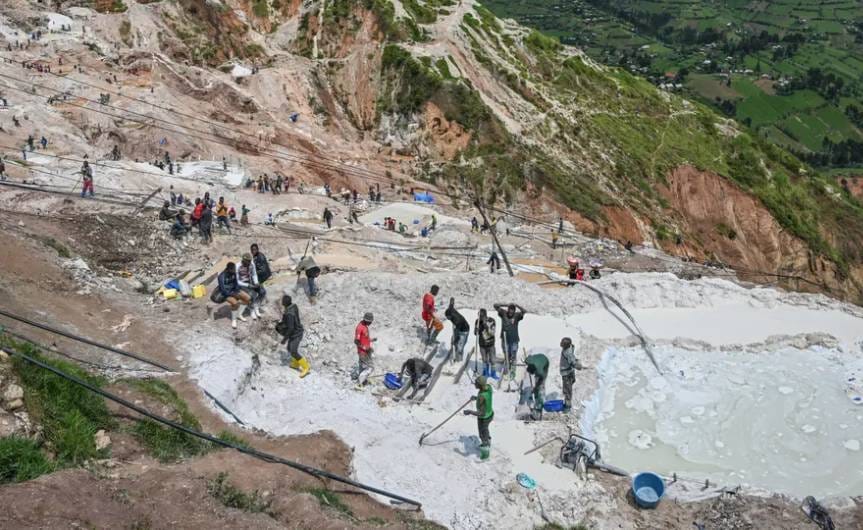
Table of Contents
What Happened at the Rubaya Mine in Eastern dr Congo
The Rubaya mine collapse happened on January 28 in eastern Democratic Republic of Congo after heavy rainfall weakened the ground. The land gave way and buried miners, children, and market women who were working around the site.
Local authorities confirmed that more than 200 people died, with many others injured or trapped. Rescue efforts were limited because the mine operates informally with no proper safety structures.
The Rubaya mine collapse occurred in an area dominated by artisanal mining where workers dig manually with little protection and no emergency systems.
Why Rubaya Matters to the World
Rubaya is one of the most important coltan mining areas in the world. The site produces about 15 percent of global coltan supply. Coltan is refined into tantalum, a key material used in mobile phones, computers, medical devices, and aerospace equipment.
The Democratic Republic of Congo supplies about 40 percent of the world’s coltan. This makes the Rubaya mine collapse a global issue, not just a local tragedy.
Many of the electronic devices used daily in Ghana rely on minerals sourced from central Africa.
Conflict Minerals and Control of the Mine
The Rubaya mine has been under the control of the M23 rebel group since 2024. United Nations reports estimate the group earns about 800,000 dollars each month from coltan production and transport linked to the area.
This control limits government oversight and makes safety enforcement almost impossible. The Rubaya mine collapse shows how conflict minerals are linked to human suffering and instability.
The same mineral that powers global technology is also funding violence and unsafe labour conditions.
What the Rubaya Mine Collapse Means for Ghana
Ghana has both large scale mining and small scale operations. While Ghana’s regulatory system is stronger than eastern Congo’s, illegal and informal mining still poses safety risks.
The Rubaya mine collapse serves as a warning. Poor oversight, weak safety enforcement, and economic pressure can turn mining sites into death traps.
Ghana has faced its own mining related accidents, especially in unregulated small scale pits. Lessons from the Rubaya mine collapse point to the need for stronger inspections, safer working practices, and community protection.
This story also raises questions about ethical sourcing. Ghanaian consumers and businesses use technology linked to minerals mined under dangerous conditions elsewhere in Africa.
The Humanitarian Crisis Behind the Disaster
Eastern Congo is facing one of Africa’s worst humanitarian crises. More than seven million people have been displaced by conflict and economic hardship.
The Rubaya mine collapse adds to this crisis. Families have lost breadwinners. Children have lost parents. Entire communities have been shaken.
Artisanal miners often work for very low daily earnings because they have few alternatives. This forces people to accept dangerous conditions just to survive.
Key Takeaways
• The Rubaya mine collapse killed over 200 people and exposed severe safety failures
• Rubaya supplies a major share of the world’s coltan used in everyday technology
• Conflict control of mines increases danger and reduces accountability
• Ghana can learn from this tragedy by strengthening small scale mining safety
• Ethical mineral sourcing matters across Africa
Conclusion
The Rubaya mine collapse is not only a Congo story. It is an African warning. Behind modern technology lies a chain of human risk that demands stronger safety, better regulation, and responsible sourcing.
Read also: Ghana Nature Escapes: Hidden Places You Need To Visit