Senya Bereku pirates attack left over 50 Ghanaian fishermen stranded at sea; here is how 71 men were rescued and why coastal communities want stronger security.
Question:
What happened in the Senya Bereku pirates attack, and what does it mean for fishermen and coastal communities in Ghana?
Answer:
The Senya Bereku pirates attack saw armed men in a black boat rob fishermen of outboard motors and valuables, leaving them stranded until the Ghana Navy and Air Force rescued 71 men, raising fresh fears about sea security.
A night of fishing turned into a nightmare off the coast of Senya Bereku.
Armed men on a black boat attacked Ghanaian fishermen at sea and left their colleagues drifting in the dark.
Now the whole Central Region is asking how safe our waters really are.
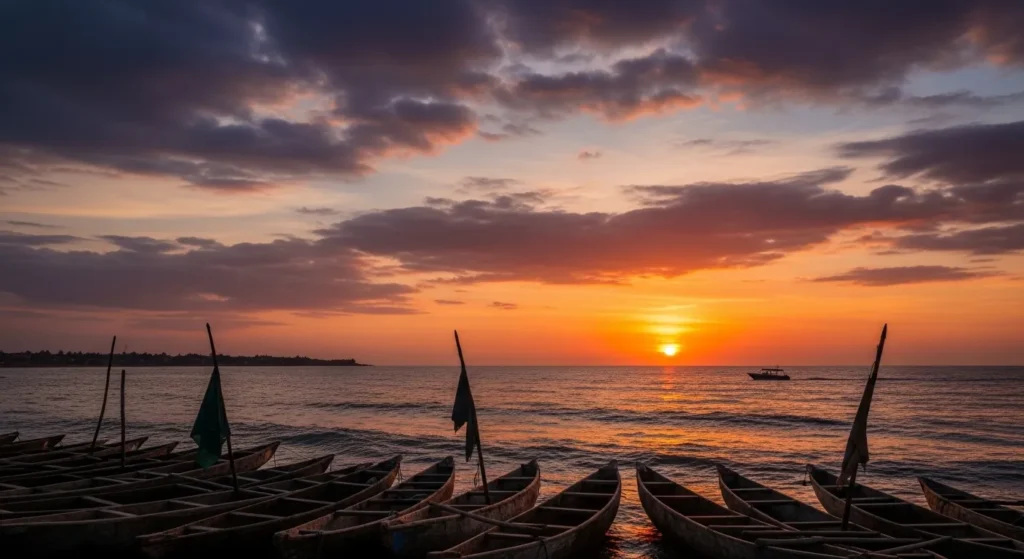
Table of Contents
What happened during the Senya Bereku pirates attack
On the night of 26 February 2026, dozens of fishermen from Senya Bereku and nearby landing beaches headed offshore for a regular expedition in the Central Region.
As they returned in the early hours, a group of armed men in a black boat approached them far from shore, fired warning shots into the air and ordered the crew to lie down.
The attackers reportedly held the men at gunpoint, pointed what victims described as AK‑47‑type rifles at them and threatened to kill anyone who resisted.
They then moved from canoe to canoe, seizing seven outboard motors, generators, fuel and other valuables, before speeding away and leaving the frightened fishermen drifting without power in the open sea.
Initial reports said more than 50 fishermen were stranded, but later updates from the District Chief Executive and security agencies confirmed that 71 men were affected in total.
The incident happened about 30 to 35 nautical miles off the coast, far beyond the comfort zone of most small canoe operators, which added to the fear on board.
How the rescue operation saved 71 stranded fishermen
The District Chief Executive for Awutu Senya West, Kalala Nyamkye, confirmed the attack and quickly arranged a local rescue boat to search for the stranded crews.
At the same time, the Ghana Navy and Air Force launched a coordinated search and rescue operation after receiving distress information about the sea robbery.
Navy vessels, supported by an Air Force aircraft, combed the waters off Senya Bereku and Awutu Senya West, eventually locating the drifting canoes and towing them to safety.
According to official updates, 71 fishermen were rescued in total, with 24 transported to Tema for medical checks and 47 brought back to landing beaches near Senya Bereku.
Local media footage shows exhausted but grateful fishermen stepping ashore, some speaking about how they prayed together when they realised their engines were gone and they could not move.
Security officials say no one was killed or kidnapped, but many of the men were traumatised and lost expensive equipment that they depend on for their daily work.
Watch It Here: Victims attacked off the shore of Senya Bereku have been safely brought ashore
Why the Senya Bereku pirates attack worries coastal communities
For artisanal fishers, an outboard motor is often the single most valuable asset they own, sometimes bought on credit or shared by several families, so losing even one can wipe out years of savings.
In this case, seven engines and other gear were taken in one night, which means multiple canoe owners now face the risk of staying off the sea or borrowing money at high cost to replace equipment.
Community leaders in Senya Bereku and nearby towns say this is not the first time fishermen have reported sea robbery, though many earlier cases did not make national headlines.
The latest attack has renewed fears that the Gulf of Guinea’s wider security issues are creeping closer to small Ghanaian landing beaches that already struggle with fuel prices, declining fish stocks and premix supply problems.
Families of the victims also worry about the psychological impact, with some fishers now afraid to travel far offshore or to fish at night, which can reduce their catch and income.
Community calls for protection are growing louder, with chiefs, assembly members and fishers demanding stronger patrols, better communication equipment and insurance or support schemes for those who lose gear to armed robbers at sea.
What authorities are doing after the pirates attack
The Ghana Armed Forces have assured the public that they are tracking the perpetrators, saying they will work to identify and arrest those behind the black boat that attacked the fishermen.
Officials from the Defence and Fisheries ministries have also spoken about reviewing maritime security measures, including increased patrols in vulnerable fishing zones.
According to statements reported by local outlets, the Navy plans to step up its presence along busy fishing routes in the Central Region and improve coordination with coastal radio stations and community watchdogs.
The Ministry of Fisheries and Aquaculture Development has been urged to engage directly with landing beach committees in Senya Bereku, Winneba, Kasoa and other towns to gather complaints and design support for affected fishers.
Members of Parliament from Awutu Senya West and surrounding constituencies have used media interviews to call for long term investments in maritime surveillance, from better radar coverage to patrol boats suited for shallow waters.
Civil society groups focused on fishing and coastal livelihoods say this case should be a turning point for Ghana’s approach to sea robbery, insisting that small‑scale fishers deserve the same protection attention as offshore oil assets.
Why the Senya Bereku pirates attack matters to all Ghanaians
Artisanal fishing communities along the Central, Greater Accra, Volta and Western coasts supply a large share of the fresh fish that ends up in markets and chop bars across Ghana.
When attacks like this make it harder or more expensive for fishers to work, the ripple effects can show up later in higher prices for popular dishes and reduced availability of fresh catch.
Incidents of sea robbery and piracy also affect Ghana’s image as a safe maritime hub in the Gulf of Guinea, which is important for shipping, offshore investment and regional trade.
If such attacks become frequent, insurance costs for vessels and cargo can rise, and some operators may choose to avoid certain routes, which can indirectly affect the wider economy.
For ordinary Ghanaians, stories like the Senya Bereku pirates attack highlight how closely security, livelihoods and food security are linked, especially in coastal towns that depend heavily on the sea.
Giving attention to these communities is not just about crime reporting; it is about protecting families, preserving traditional occupations and making sure national policy sees fishers as frontline workers in our food system.
Key Takeaways:
- The Senya Bereku pirates attack saw armed men on a black boat rob fishermen at gunpoint, seizing outboard motors and valuables and leaving them stranded at sea.
- A coordinated response from the District Chief Executive, Ghana Navy and Air Force led to the rescue of 71 fishermen, with no deaths or kidnappings reported.
- The loss of seven engines and other gear is a major economic blow to artisanal fishers, deepening fears about safety and livelihood security in coastal communities.
- Authorities have promised stronger patrols and safety reforms, but fishers and local leaders are calling for long term solutions, including insurance, better equipment and closer engagement.
- The Senya Bereku pirates attack is a reminder that sea security, food prices and coastal livelihoods are tightly linked, making protection of small‑scale fishers a national issue.