

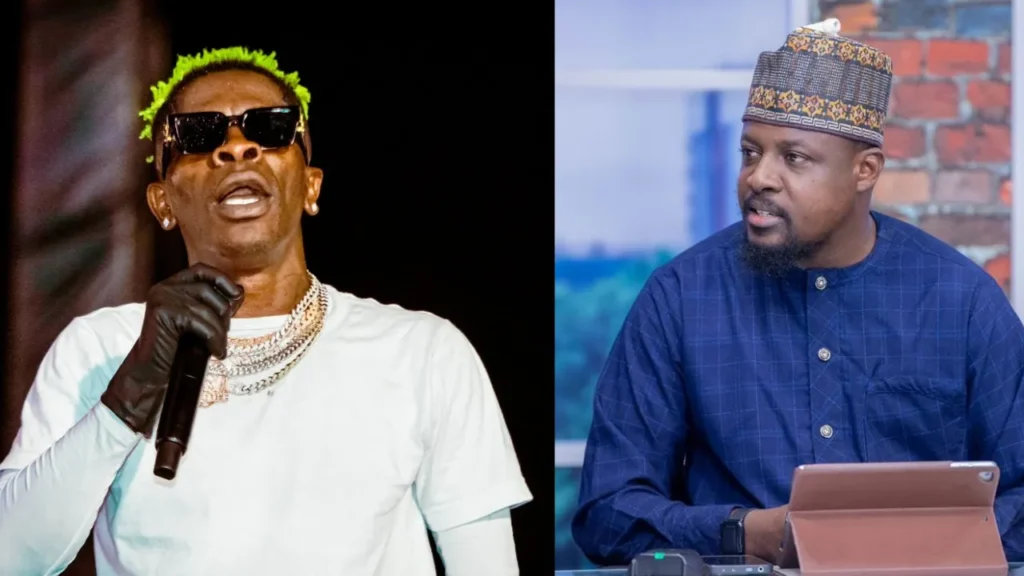
Shatta Wale responds to NPP communicator Awal Mohammed's apology for calling Shatta Movement fans "junkies," accepting it but warning that disrespect toward his brand must end.
The Moment That Changed Everything
An NPP communicator called Shatta Wale's fans "junkies" on live television. Within 24 hours, an apology came. But Shatta Wale's response wasn't a quiet acceptance, it was a declaration that years of disrespect toward his brand would no longer be tolerated. What happened next tells us something important about power, respect, and the political influence of Ghana's youth.
On January 20, 2026, NPP communications team member Awal Mohammed appeared on JoyNews and made a controversial remark during a discussion about government bail conditions. While criticizing the stringent bail placed on Shatta Wale, Awal said: "When they arrested Shatta Wale, they gave stringent bail conditions. When the junkies got there, what happened?" The term was used to describe fans who had gathered at the Economic and Organised Crime Office (EOCO) to support the musician during his detention.
The comment triggered immediate backlash. Within hours, Shatta Movement fans flooded social media demanding an apology and public retraction. The Shatta Movement's Chairman issued a formal release, giving Awal 24 hours to respond. By January 21, Awal had issued both a written apology on Facebook and a video apology, stating: "I didn't intend to insult or belittle anyone. The term was unnecessary, and I am truly sorry for any offense caused. I respect the passion of fans and acknowledge that my choice of words was wrong. It was totally out of sync with my character."
But Shatta Wale's acceptance came with a powerful caveat. He wrote: "Apology noted. But let this be clearly understood by everyone: the continuous tarnishing of my brand must stop. MUST STOP. FOR YEARS, I HAVE SERVED AS A VOICE FOR THE YOUTH. MY INFLUENCE GOES BEYOND MUSIC TO JOB CREATION, INSPIRATION, AND REPRESENTING GHANA GLOBALLY. THIS DESERVES RESPECT."
He continued with a stark warning: "The Shatta Movement is organized and aware of our collective strength. The people are not ignorant. The patience of the masses is not unlimited."
What You Need to Know
The recent controversy between NPP communicator Awal Mohammed and Shatta Wale's fanbase is not isolated. It represents a recurring pattern where media personalities, political figures, and public commentators make dismissive or derogatory remarks about the Shatta Movement. Understanding why this happens requires looking at how different groups in Ghana perceive Shatta Wale, his influence, and his followers. The issue is not simply about one careless comment but about systemic lack of respect for a fanbase that represents millions of Ghanaians across all sectors of society.
The incident sits at the intersection of entertainment, politics, youth power, and national respect. When politicians dismiss Shatta Wale, they risk alienating millions of young voters. When media platforms allow such comments without immediate challenge, they fail their responsibility to protect dignity across all communities. And when Shatta Wale responds with a warning about political consequences, he's signaling something the establishment can no longer ignore.
Questions People Are Asking
Q: Is Awal's apology genuine, or just political damage control?
Many fans are skeptical. Some believe the quick apology came only because of massive backlash, not from genuine remorse. Others point out that calling it "a slip of the tongue" downplays what many see as a deliberate insult. The debate on social media shows Ghanaians divided on whether one video apology is enough. Some Shatta Movement supporters demanded Awal return to JoyNews to apologize on air, arguing a Facebook post isn't sufficient for an insult broadcast on national television.
Q: Why did Shatta Wale accept the apology if he seemed so angry?
Shatta Wale's acceptance was strategic and political. By accepting quickly, he demonstrated grace and maturity. But by immediately pivoting to warn about "continuous attacks" and the movement's collective strength, he made clear this single apology doesn't end the conversation. It's not forgiveness without conditions, it's acceptance with a message that the pattern must stop.
Q: Will the Shatta Movement really become a political force?
Shatta Wale didn't threaten to create a political party, but he signaled something important: millions of Ghanaians identify with him and his values. In 2025, political insiders publicly acknowledged trying to get Shatta Wale to help connect with Ghana's youth, revealing his real political value. If the establishment continues to disrespect this community, those millions could mobilize politically. Whether that means voting as a bloc, supporting specific policies, or creating formal political structures remains to be seen.
Q: Why does this matter beyond entertainment?
This incident sits at the intersection of entertainment, politics, youth power, and national respect. Shatta Wale represents a voice independent of traditional power structures. When politicians dismiss him, they risk alienating millions of young voters. When media platforms allow such comments without immediate challenge, they fail their responsibility to protect dignity across all communities.
The Video That Started It All
Who Are the Shatta Movement and Why Do They Matter
The Shatta Movement is not just a fanbase. It is a community with real social and political weight. Shatta Wale's supporters span professionals, students, workers, traders, and youth across urban and rural areas. They are organized, vocal, and increasingly visible in national conversations. The movement represents a significant demographic: young people who feel connected to Shatta Wale's music and message about resilience, hustle culture, and street authenticity. This fanbase has shown the ability to mobilize quickly on social media, organize physical gatherings, and influence public opinion. When politicians or media figures dismiss this group, they are overlooking a potentially important voting bloc.
The Shatta Movement's political value is undeniable. When fans gathered at EOCO during Shatta Wale's detention in late 2024, their presence demonstrated organizational capability. When the "junkies" comment went viral, Shatta Movement fans coordinated trending campaigns across multiple platforms simultaneously. This isn't random fanboy behavior, it's organized community action. Political parties that previously dismissed such communities are now scrambling to understand how to engage them.
They have purchasing power, they vote, they influence opinions, and they create economic value through streaming, merchandise, and concert attendance. Shatta Wale has claimed he has generated more income for Ghana than the Ministry of Finance, a claim that, while hyperbolic, reflects how he frames his economic value. Whether you accept that claim entirely, the underlying point is valid: the Shatta Movement represents real economic and political capital.
The Bigger Picture
Ghana's media and political establishment has long treated entertainment figures and their fanbases with varying degrees of respect. Certain artists and their followers are celebrated and elevated, while others face consistent mockery or diminishment. The Shatta Movement has experienced this selective treatment. Media outlets that cover Shatta Wale's work with dignity when reporting on his music, business ventures, or philanthropic efforts sometimes shift tone when discussing his fans, using language like "junkies" or other coded dismissals. This inconsistency reveals a class or cultural dimension to how different groups are valued in Ghanaian discourse.
The Awal Mohammed comment came from a political communicator during a discussion about government bail conditions. This context matters. When a representative of a political party makes such a remark while discussing government decisions that affected Shatta Wale, it's difficult to separate the personal insult from the political positioning.
Part of the pattern also stems from political strategy. Because the Shatta Movement is large and independent, various political parties may view it with suspicion or seek to marginalize it. The fact that this comment came from an NPP communicator during a discussion critical of government bail conditions suggests there may be deeper political dimensions beneath the surface. Whether intentional or not, the comment served a function: diminishing a voice that could challenge political narratives.
There's also media gatekeeping at play. Ghanaian media outlets, while diverse, operate within certain constraints and power structures. Some outlets may hesitate to challenge political figures aggressively. When Awal Mohammed made his comment on JoyNews, that platform became part of the infrastructure through which disrespect was amplified. The question now is: will that platform acknowledge its role and commit to doing better?
Shatta Wale's Full Response
What It Means
Shatta Wale's response to the Awal apology signals a shift in how popular figures are willing to address disrespect. Instead of letting the incident fade, he used it as a moment to articulate what the Shatta Movement represents and why it deserves respect. His warning that the movement is "organized" and could become a political force was not a threat, it was a statement of reality. When millions of Ghanaians identify with a community, that community has inherent power. Ignoring or disrespecting it comes with consequences.
The incident also raises questions about national maturity. Shatta Wale's call for an end to "selective criticism, coded insults, and subtle disrespect" applies beyond his specific situation. It speaks to a broader need in Ghana for more equitable treatment of all voices, regardless of their music taste, accent, background, or social class. The street language and dancehall aesthetic associated with Shatta Wale sometimes triggers gatekeeping behavior from more "establishment" figures, who view the movement as less refined or educated. This gatekeeping often masks deeper class and cultural biases.
When Awal Mohammed used the term "junkies," he was engaging in this gatekeeping. The word carries specific connotations, addiction, lack of control, poor judgment. Using it to describe millions of people reveals how some establishment figures view this fanbase: not as worthy of respect, but as beneath dignity. Shatta Wale's response rejects this categorization entirely.
Fans React on Social Media
How This Connects to Broader Patterns
The Awal Mohammed comment is one example in a longer story. Media coverage of Shatta Wale has historically oscillated between celebration and ridicule. When he released successful albums or toured globally, coverage emphasized his achievements. When he faced legal issues or made controversial statements, coverage often featured sensationalism or took moral stances. Compare this to how other Ghanaian musicians are covered, and you see variation in tone and fairness. Some artists receive presumption of good faith; others do not.
Shatta Wale's consistent independence from political party control makes him a target for different actors. Some politicians have courted him for his influence; others have criticized him to diminish that influence. This political attention, while reflecting his real power, also means that casual remarks carry weight they might not otherwise carry. When Awal Mohammed called fans "junkies," some heard it as a slip of the tongue. Others heard it as deliberate diminishment of a political constituency that might not align with NPP interests.
Similar incidents have occurred in Ghana's media landscape. When other musicians' fans have been mocked on air without consequence. When commentators have made class-based or region-based jokes about certain communities. When certain voices in entertainment are celebrated when convenient and ridiculed when inconvenient. When political communicators use entertainment figures as convenient targets. Each incident alone might seem minor, but the pattern reveals systemic issues in how Ghana's media and political establishment treats popular culture and the people who love it.
Full Analysis and Context
What to Watch Next
The real test of how Ghana's media and political establishment respond will come next. Will media outlets use this moment to reflect on their own coverage patterns? Will political parties recalibrate how they speak about and engage with the Shatta Movement? Will platforms like JoyNews or other stations create more formal standards to prevent communicators from making derogatory remarks on air? The apology was issued, but the structural issues that enabled the comment remain in place.
Shatta Wale's mention of the movement becoming a political force is also worth monitoring. If the Shatta Movement formalizes its political engagement or if Shatta Wale becomes more directly involved in political advocacy, the dynamics of Ghanaian politics could shift. A mobilized fanbase of millions could influence elections, policy conversations, and how politicians engage with youth. The question is whether the establishment will continue to dismiss this potential or begin to engage with it seriously.
The NPP, as Awal's party, may need to address how communication team members engage with public figures and their supporters moving forward. The apology came quickly, but questions remain about whether it signals genuine institutional reflection or simply damage control.
KEY TAKEAWAYS
- Awal Mohammed apologized in writing and video for calling Shatta Wale's fans "junkies" on JoyNews on January 20, 2026
- Shatta Wale accepted the apology but warned that attacks on his brand must stop
- The comment sparked backlash across social media, with fans demanding stronger action
- Some supporters rejected the apology and called for a public on-air retraction on the same platform
- Shatta Wale emphasized his contributions to Ghana and the organized strength of the Shatta Movement
- The incident highlights how politics and entertainment intersect in Ghana's public discourse
- The Awal Mohammed comment reflects a long-standing pattern of selective disrespect toward Shatta Wale and the Shatta Movement
- The Shatta Movement represents millions of Ghanaians across all sectors and has real social and political weight
- Media and political figures sometimes treat Shatta Wale's fanbase with inconsistent respect, using coded language and subtle insults
- Political dimensions exist beneath the surface, with different actors using attacks on Shatta Wale for broader strategic reasons
- Shatta Wale's response signals a shift toward directly confronting disrespect and articulating the movement's value and power
- Ghana's national conversation needs greater equity in how different voices, aesthetics, and communities are treated and respected



Discussion 0 comments
You must be logged in to write a comment.
Log In Sign UpNo comments yet. Be the first to start the conversation!