
An analysis of the Ghana economy 2025, examining recovery signs, remaining risks, and what the outlook means for everyday life.
Is Ghana’s economy really recovering in 2025?
Answer:
Yes. The Ghana economy 2025 shows signs of recovery as growth strengthens, inflation slows, and reforms begin to stabilise the system.
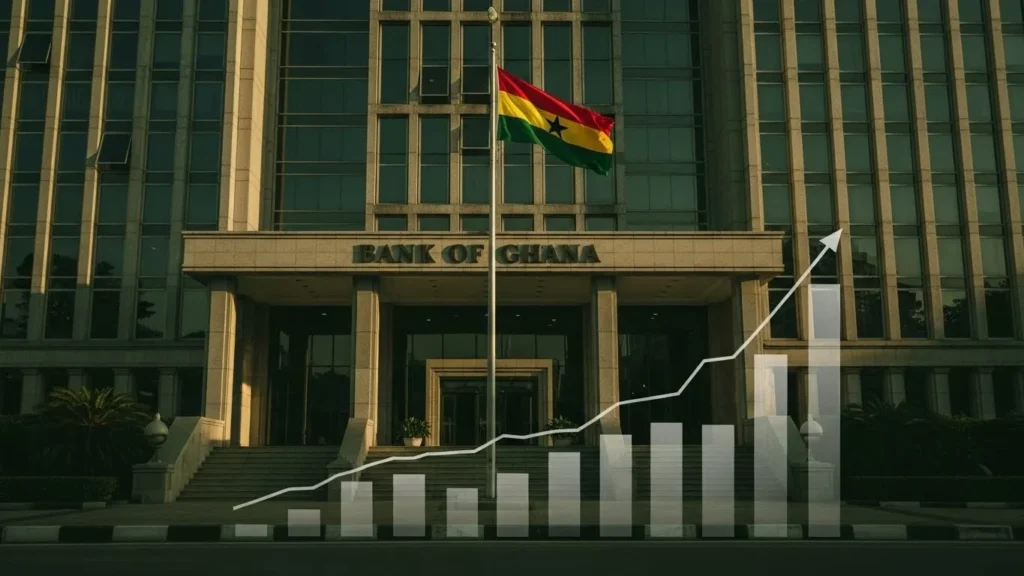
After years of pressure, the numbers are shifting.
Growth is returning and prices are easing.
But the recovery still needs discipline.
Table of Contents
Where Ghana’s Economy Stands in 2025
The Ghana economy 2025 is gradually stabilising after several difficult years. Output is rising again, inflation has dropped sharply, and confidence is slowly rebuilding.
Recent policy updates from the Bank of Ghana show easing inflation and tighter monetary control supporting the recovery.
This recovery follows painful adjustments such as debt restructuring, tighter spending controls, and reforms backed by international partners. The challenge now is maintaining momentum without reversing course.
VAT Reforms Ghana Signal New Direction for Taxpayers 2026
Where Things Stand After the 2025 Rebound
Following the rebound, the Ghana economy 2025 entered a more stable but cautious phase. Growth moderated slightly as emergency stimulus faded, yet inflation remained far below crisis levels seen in 2022 and 2023.
Fiscal discipline remains central. Spending controls and revenue measures continue to limit debt risks, especially as election related pressures test restraint. External factors like commodity prices and currency movements also influence outcomes.
For households and businesses, conditions are less volatile than before, but job creation and income growth remain the real test of recovery.
The Key Numbers Behind the Recovery
To understand the Ghana economy 2025, three indicators matter most: growth, inflation, and debt.
Economic output expanded strongly in 2025, driven mainly by non oil activity. Inflation has fallen sharply, easing pressure on households. However, public debt remains high and continues to limit fiscal flexibility.
Ghana Card Fees 2026 Replacement Now GH₵200 Explained
Key Macro Snapshot, 2024 to 2025
How Ghana’s economy changed from 2024 to 2025 at a glance
| Indicator | 2024 Situation | 2025 Position | What It Means |
|---|---|---|---|
| Real GDP growth | Mid single digits | About 6 percent | Economic activity is recovering |
| Non oil GDP growth | Moderate | Stronger than oil sector | Recovery is more balanced |
| Services sector growth | Uneven | High single digits | ICT and finance are leading |
| Inflation rate | Very high | Single digit range | Price pressure has eased |
| Debt to GDP ratio | Extremely high | Still elevated | Debt remains a major risk |
| IMF programme | Ongoing | Majority disbursed | Reforms are being enforced |
In simple terms, growth has returned and inflation has cooled, but high debt means Ghana must stay disciplined to avoid another crisis.
Ghana Content Creator: 7 Powerful Ways To Make Steady Money
Which Sectors Are Driving Growth
Services are now central to the Ghana economy 2025. ICT, digital services, finance, education, and trade are leading contributors.
Construction has picked up as confidence improves and stalled projects resume. Agriculture and mining remain important, but urban and service based activity now carries more weight.
Inflation, Reforms, and Fiscal Discipline
One of the most noticeable improvements in the Ghana economy 2025 is lower inflation. Slower price increases have brought some relief, although living costs remain high.
Fiscal reforms focused on spending control and revenue mobilisation are helping stabilise the economy. These measures are difficult, but they reduce the risk of another debt crisis.
MoMo Fraud 2026 Explained: New Rules You Must Know
Can the Recovery Be Sustained
Despite progress, the Ghana economy 2025 still faces risks. High debt, election year spending pressures, and slow reforms in energy and state owned enterprises could weaken gains.
For most people, recovery will only feel real when jobs improve, incomes rise, and public services work better. The next two budgets will be decisive.
Frequently Asked Questions
Is inflation fully under control?
Inflation has fallen sharply, but food prices and currency movements remain risks.
Is growth being felt by ordinary people?
Not fully yet. Employment and income growth usually lag headline figures.
What could derail the recovery?
Overspending, weak reforms, or shocks to exports and energy.
Key Takeaways:
• The Ghana economy 2025 is recovering after a difficult period
• Falling inflation has eased pressure on households
• Services and construction are driving growth
• High debt remains the biggest long term risk
Comments are closed.