
Experience Ghana’s cocoa heritage on immersive farm-to-bar tours. Meet farmers, learn sustainable practices, and create your own chocolate in Accra and Kumasi.
Question: What makes Ghana chocolate farm tours different from typical heritage tourism?
Answer: Ghana chocolate farm tours blend cultural immersion with economic storytelling, you meet farmers, homestay with rural families, and support emerging entrepreneurs transforming raw cocoa into world-class artisan chocolate.
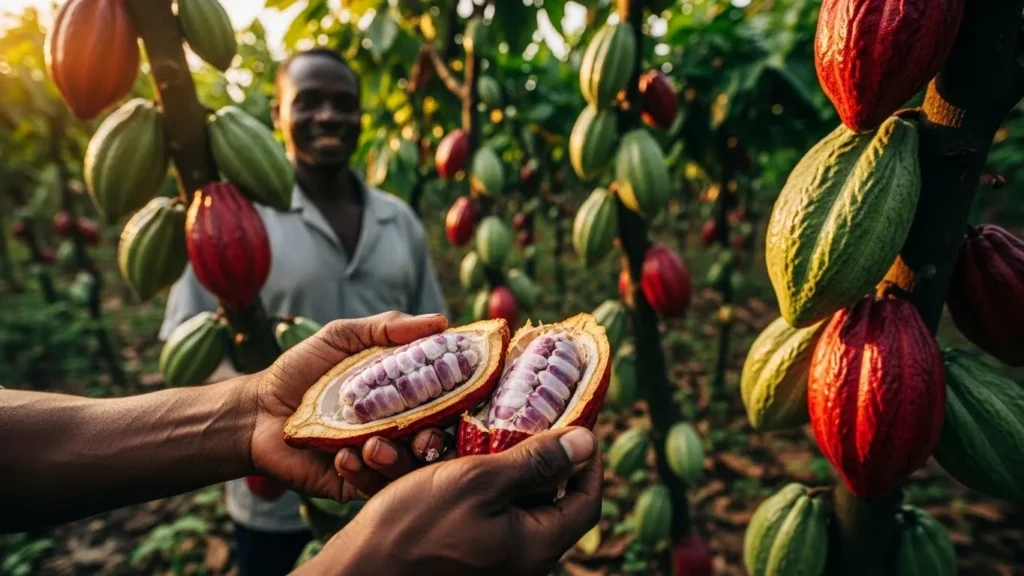
Ghana’s cocoa belt stretches across four regions, and visitors are finally getting a chance to walk those red earth paths, taste fresh cocoa pods, and watch small-batch chocolatiers craft chocolate bars that rival global makers. It’s not just a tour; it’s a taste of how a nation feeds the world.
Table of Contents
Ghana Chocolate Farm Tour’s Stunning Growth
The chocolate trail has quietly become Ghana’s newest signature tourism product. Where travellers once focused only on heritage sites like Cape Coast Castle, a new wave of Ghana chocolate farm tour operators now connects diasporans and cultural travellers to the cocoa-growing heartland. Tour companies now offer multi-day Ghana chocolate farm tour experiences that run from October through December (peak harvest) and May to June, though workshops operate year-round.
Ghana’s cocoa belt spans the Eastern, Central, Ashanti, and Western regions. On a Ghana chocolate farm tour, you start where it matters: the farm itself. You’ll meet cocoa farmers who’ve worked the land for generations, learn sustainable cultivation methods, and watch pods being cracked open. The Ghana chocolate farm tour journey then moves to artisan chocolate workshops in Accra and Kumasi, where bean-to-bar makers roast, winnow, grind, and temper cocoa into finished bars infused with local spices like grains of paradise and hibiscus.
Why Ghana Chocolate Tours Matter: Supporting Entrepreneurs
This shift from commodity export to value-added tourism reflects a broader movement in Ghana. Rather than shipping raw cocoa overseas to be made into chocolate abroad, young entrepreneurs are building their own chocolate brands at home. Your Ghana chocolate farm tour spending flows directly into farming communities and small businesses, not international hotel chains.
For diasporans, a Ghana chocolate farm tour offers something the typical heritage circuit misses: real connection to contemporary Ghanaian entrepreneurship. You meet business owners challenging centuries of colonial trade patterns. You taste fresh cocoa pulp straight from the pod (it’s sweet, tropical, nothing like chocolate). You participate in fermentation and drying techniques that give Ghanaian cocoa its distinctive flavour. Many tours include homestay experiences where you share meals with farming families, gaining insights into rural Ghanaian life that resonate far deeper than any museum exhibit.
The Ghana chocolate farm tour experience also opens doors to investment conversations, business partnerships, and Pan-African economic discussions making it meaningful beyond the weekend.
What to Expect: An Outstanding Chocolate Journey
On a typical Ghana chocolate farm tour, you’ll witness the full cocoa lifecycle. Walk through cocoa groves where trees are hand-pollinated and pods ripen from green to yellow-red. Learn the art of fermentation, cocoa beans must sit for days to develop flavour. Watch farmers dry beans under the sun, turning them from purple to brown. At the factory end, a Ghana chocolate farm tour usually includes hands-on sessions where you roast, grind, and temper your own batch, sometimes infusing it with local spices.
Cultural elements woven into the Ghana chocolate farm tour often include traditional naming ceremonies in cocoa villages, kente weaving demonstrations, drumming circles, and storytelling sessions with village elders. Some Ghana chocolate farm tour operators pair the experience with other heritage stops, creating a full picture of Ghana’s past and present.
Expect half-day workshops in Accra for a quick tasting, or week-long immersions combining farm visits with broader cultural experiences. Most tours range from $200–$3,000 USD depending on duration and group size.
Inspiring Tips for Booking Ghana Chocolate Tours
Best times for an authentic Ghana chocolate farm tour align with harvest seasons: October to December and May to June. However, chocolate workshops operate year-round, so you can visit anytime.
When booking your Ghana chocolate farm tour, look for operators that emphasize sustainability and fair trade. Check that revenue goes to farming families and that tours are structured as community-based experiences, not extractive tourism. Many Ghana chocolate farm tour companies now offer secure visa-on-arrival services, smoothing entry for diasporans and international visitors.
Pack comfortable walking shoes, sunscreen, and water. Bring a camera, your Ghana chocolate farm tour will yield stunning photos and chocolate-making moments worth capturing. Consider hiring an expert guide to maximize your learning and support local employment.
Why Now: Ghana’s Breakthrough Tourism Moment
Ghana Tourism Authority’s 2025 Heritage Month https://www.ghana.travel, featuring the “Black Star Experience,” positions Ghana as the gateway to Africa for diasporans. The Ghana chocolate farm tour fits perfectly into this vision: it honours Ghana’s economic heritage while celebrating contemporary innovation. You’re not just looking backward; you’re engaging with living, evolving Ghanaian enterprise.
For diasporans seeking authentic, impactful ways to reconnect with home, whether through business interests, cultural curiosity, or simply tasting Ghana’s richness, the chocolate trail offers a sweetly tangible path.
Key Takeaways
- Ghana chocolate farm tours immerse you in cocoa cultivation, fermentation, and artisan chocolate-making
- Your spending supports farming families and young Ghanaian entrepreneurs directly
- Best harvest seasons are October to December and May to June; workshops run year-round
- Homestay experiences offer deeper cultural immersion than standard heritage tourism
- Bean-to-bar workshops let you create and taste your own chocolate infused with local spices