Ghana mineral policy reforms now demand value addition, local jobs and cleaner mining. Here is how the new rules work.
Question:
What are the latest Ghana mineral policy reforms and how do they push value addition in mining
Answer:
Recent Ghana mineral policy changes focus on keeping more value in the country by tightening mining rules, demanding local processing and linking minerals to jobs. New policies for green minerals, stronger local content rules, export bans on raw ore and local refining deals all try to move Ghana from raw exports to higher value products and better community benefits.
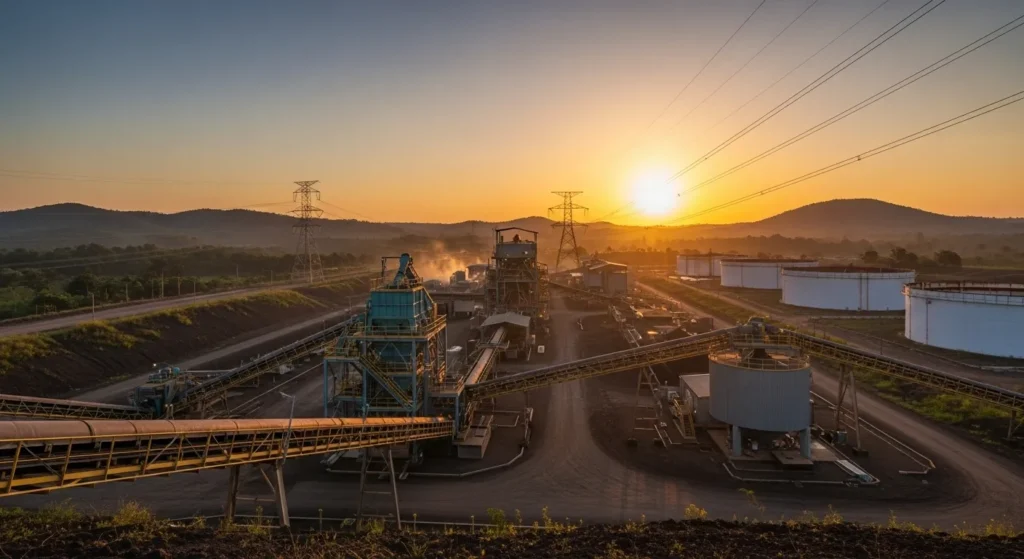
For many years, Ghana earned foreign exchange by exporting raw gold, bauxite and manganese.
That model brought money but also left communities with pollution, weak linkages and limited skills.
Now Ghana mineral policy is in a new chapter, with government openly saying that minerals must create factories, better jobs and stronger local industries, not just royalties.
Table of Contents
What you need to know about Ghana mineral policy reforms
The starting point is the 2014 Minerals and Mining Policy of Ghana, which set a clear goal that minerals are public property and must support broad based development, local linkages and value addition. The policy talks about backward linkages like local suppliers, forward linkages like refineries and jewellery, and side stream services like engineering and financial support.
Since then, several reforms have tried to turn those ideas into real rules. Ghana mineral policy now sits on top of:
- The Minerals and Mining Act and its amendments, which give the legal frame for mineral rights, royalties and environmental duties.
- Local Content and Local Participation regulations in mining that require companies to buy from Ghanaian suppliers, hire Ghanaian staff and submit detailed procurement and localisation plans.
- The Minerals Income Investment Fund, set up as a sovereign fund to invest mineral revenues into value addition projects and downstream industries instead of only using them for budget spending.
Taken together, this framework tries to move mining from an enclave on the side of the economy into a sector that feeds Ghanaian factories, service firms and skills.
Why It Matters in Ghana
Mining still plays a huge role in the national economy. Gold, bauxite, manganese and now lithium support export earnings, jobs and investor interest, and they are part of the growth story that Debesties has already covered in the guide on Ghana’s economy and its growth rebound.
At the same time, research and public debate have shown the costs. Studies link mining to forest loss, soil damage, polluted rivers and health risks from heavy metals and mercury, especially in areas with intense small scale and illegal mining. The Debesties explainer on the new mining ban in Ghana forest reserves also showed how mining pressure can clash with tourism, rural livelihoods and nature.
This is why Ghana mineral policy is now written less for foreign investors and more for citizens. The aim is to answer three local questions.
Will minerals still be here for future generations.
Will they support decent work and local businesses instead of only expatriate suppliers.
Will they stop destroying forests, farms and water sources that Ghanaians depend on
Reforms around value addition, stronger local content and export bans on raw ore are one way government is trying to say yes.
How Ghana is building value addition into mining
The most visible shift is the new focus on processing minerals inside the country before export. Under the Green Minerals Policy, Ghana mineral policy demands that critical minerals like lithium are processed beyond raw ore so that Ghana earns more from the energy transition value chain.
Several tools show how this is being built in.
Green Minerals Policy for critical minerals
Cabinet approved a Green Minerals Policy in twenty twenty three to guide lithium and other transition minerals such as manganese, cobalt, graphite and certain iron ore deposits. The policy:
- Raises royalty rates and state participation for green minerals compared with older gold deals, so the state keeps a larger share of returns.
- Bans the export of raw lithium and pushes companies to process concentrates into higher value chemical products inside Ghana or within regional value chains.
- Requires listing on the Ghana Stock Exchange and stronger community benefits, so that citizens can share in ownership and oversight.
The Ewoyaa lithium project shows these ideas in action. The mining lease gives the state a free carried interest above the old ten percent level, increases royalties to about ten percent and obliges the company to study and plan for a chemical plant in Ghana, not just ship concentrate abroad.
Export bans and restrictions on raw ore
Beyond lithium, government has signalled that it will ban the export of raw bauxite and other ores to force investment in local refineries, alumina plants and related industries. The goal is clear.
If companies want access to Ghana’s large bauxite reserves, they must help build an integrated aluminium value chain from mines to alumina to finished products, not just dig and ship.
Local content rules as value addition tools
Value addition is not only about big factories. Local content regulations in mining demand that companies use Ghanaian suppliers for key goods and services, from fuel and explosives to catering, security and engineering, as long as local firms can meet quality and price.
This means a mine that once spent most of its budget abroad now has to build relationships with local manufacturers, logistics firms and technical service providers. Over time, those suppliers learn, scale and sometimes export their skills to the region. That is also a form of value addition, even if it does not look like a refinery.
Fiscal tweaks to balance risk and reward
To keep exploration attractive while pushing for more value at the production stage, Ghana has also moved on taxes. The Finance Minister has announced plans to remove the long standing value added tax on mineral exploration and reconnaissance, which industry groups say made the country less competitive than neighbours.
The idea is to lower the cost and risk at the early exploration stage but recover more later through higher royalties, state equity and downstream processing when a project becomes a real mine.
Real world examples of value addition in Ghana
Policy only matters if it changes behaviour. These deals show how Ghana mineral policy is slowly moving from promises to concrete projects.
Lithium and green minerals value chains
The Ewoyaa lithium lease is often cited as the first full test of the Green Minerals Policy. Under that agreement:
- The state and the Minerals Income Investment Fund take bigger equity stakes than in older gold mines.
- Royalties rise above the levels applied to traditional minerals.
- The company must complete a study on building a chemical plant in Ghana, rather than export all lithium in concentrate form.
Analysts see this as a sign that Ghana wants part of the battery materials chain, not just raw rock sales.
Gold refining and traceable exports
Government has also turned to gold refining as a fast way to capture more value. The Ghana Gold Board has signed a landmark agreement with Gold Coast Refinery so that gold from small scale and large scale miners is refined locally before export.
This means:
- More of the value from refining fees and services stays in Ghana.
- The sector can build a track and trace system that follows gold from mine to bar, which helps fight smuggling and supports premium pricing.
- Over time, Ghana can brand its own refined gold products rather than only selling doré bars.
At the same time, the Minerals Commission and the Ministry of Lands and Natural Resources are rolling out mercury free processing plants for small scale miners and pushing reclamation of degraded sites. This links value addition with cleaner technology and better health outcomes in mining communities.
Salt, manganese and other industrial minerals
The Minerals Income Investment Fund and other agencies increasingly talk about salt, manganese and iron ore, not only gold and lithium. Examples include:
- Support for a major salt project that aims to push Ghana into the top tier of global salt exporters with more processed products for industry.
- Programs to raise the share of Ghanaian suppliers and investors in manganese processing and downstream uses, so that steel and chemical sectors benefit, not just miners.
These moves fit the wider push on green manufacturing and import substitution, where Ghana wants to reduce imports of basic industrial inputs by using its own minerals more smartly.
Linking to wider economic reforms
Debesties has already shown how Ghana’s economy is beginning to stabilise, with inflation easing and growth driven by a mix of farming, gold, oil, information technology and urban services. Value addition in mining is meant to support that rebound by:
- Creating more diverse jobs in engineering, logistics, manufacturing and services.
- Deepening tax and royalty bases without endless new borrowing.
- Feeding local industry with cheaper, locally processed inputs.
When mining connects to the rest of the economy in this way, it supports the same recovery story we see in interest rate cuts, budget reforms and more stable currency trends.
What still needs to change to make value addition real
On paper, Ghana mineral policy now looks much stronger than two decades ago. In practice, there are serious challenges.
Execution and enforcement gaps
Civil society groups have already shown that even high profile deals can fall short of the best governance standards, as seen in the strong pushback against the Agyapa royalties plan and parts of the first lithium lease terms. If monitoring is weak, value addition clauses in contracts can be ignored or watered down over time.
State agencies such as the Minerals Commission, Environmental Protection Agency and local governments need enough staff, data and independence to enforce rules, from local content plans to environmental standards and community agreements.
Balancing investor confidence and national ambition
Stronger royalties, export bans on raw ore and higher state equity can make some investors nervous, especially when competing countries offer softer terms. Ghana’s recent move to scrap the exploration value added tax tries to answer that by reducing early stage costs while keeping tougher rules at the production stage.
The hard task is to keep contracts stable and predictable so that serious investors accept higher long term commitments to value addition because they trust the rules will not be changed overnight.
Including communities and small scale miners
Academic work on inclusiveness in mineral rights and on small scale mining in Ghana shows that communities often feel left out of decisions and gains, even when reforms talk about participation. If value addition only benefits large companies and urban elites, social pressure and illegal mining will continue.
Community mining schemes, local development funds funded by a share of gross sales and stronger participation of traditional authorities and youth in planning can help align value addition with local expectations.
Keeping environment and climate at the centre
Finally, cleaner mining is not a luxury. Studies on water contamination, soil damage and forest loss show that the costs of unmanaged mining can wipe out any gains from exports. The ban on mining in forest reserves that Debesties has explained is one answer to this tension.
For value addition to be meaningful, Ghana has to match export bans and local content rules with strict limits on where and how mining happens, and invest in climate smart technologies, land restoration and alternative livelihoods around mining communities. That is how minerals support long term wellbeing, not just short term cash.
Key Takeaways
- Ghana is reshaping mining rules to keep more benefits at home through export bans on raw ore, stronger local content and higher state stakes in key projects.
- The Green Minerals Policy and the Ewoyaa lithium deal mark a new phase where critical minerals must feed battery and green industry value chains, not just raw exports.
- New gold refining agreements, support for salt and manganese processing and local procurement programs show value addition slowly moving from policy to practice.
- Success depends on strong enforcement, transparent contracts and real inclusion of communities and small scale miners, or else old problems like illegal mining and conflict will continue.
- Done well, mining reforms can support Ghana’s wider economic rebound that Debesties has covered, by creating better jobs, deeper industries and more stable public finances.
Conclusion
Ghana’s push for value addition in mining is not just a technical policy shift. It is a choice about what kind of economy the country wants, and who should benefit from its natural resources. If new rules on green minerals, local content, export bans and refining are backed by serious enforcement and citizen oversight, the mining sector can move from simple extraction to a real engine of shared growth across Ghana.