
Ghana independence on March 6 1957 made it the first sub Saharan colony to gain freedom from Britain. Here is the complete story of how it happened why it matters and what it inspired across Africa.
Question:
How did Ghana become the first sub Saharan African country to break free from British colonial rule?
Answer:
Ghana gained independence through years of mass protests, political organization, and decisive elections that forced Britain to hand over power on March 6 1957.
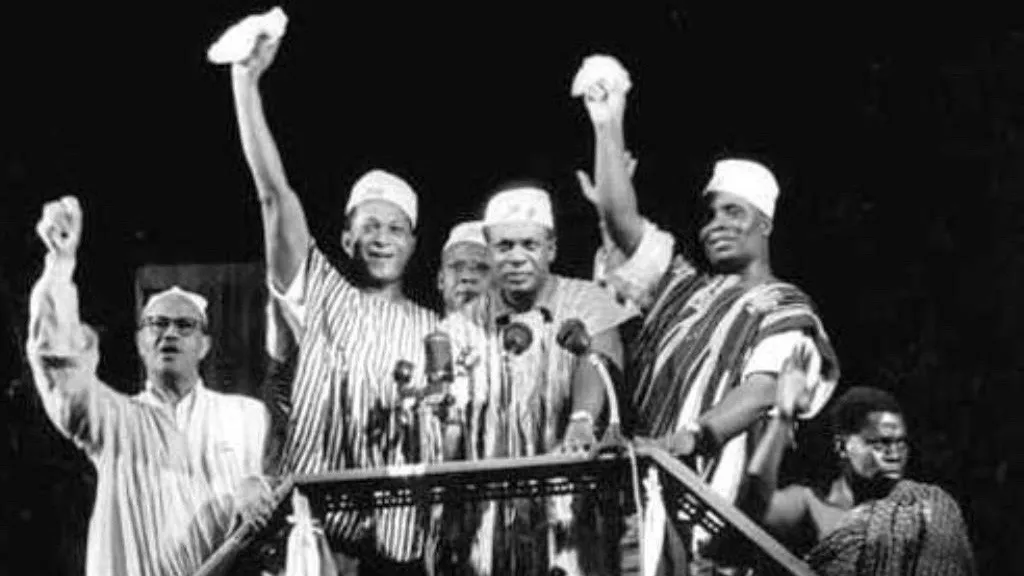
Freedom was not handed over.
It was demanded in the streets.
And Ghana lit the spark that changed Africa forever.
Table of Contents
How did Ghana gain independence from Britain?
Ghana became independent from Britain on March 6 1957, becoming the first sub Saharan African country to break free from colonial rule. The journey took a decade of constitutional reform, mass protests, and electoral victories that proved to both the British and the world that Africans could govern themselves.
What you need to know
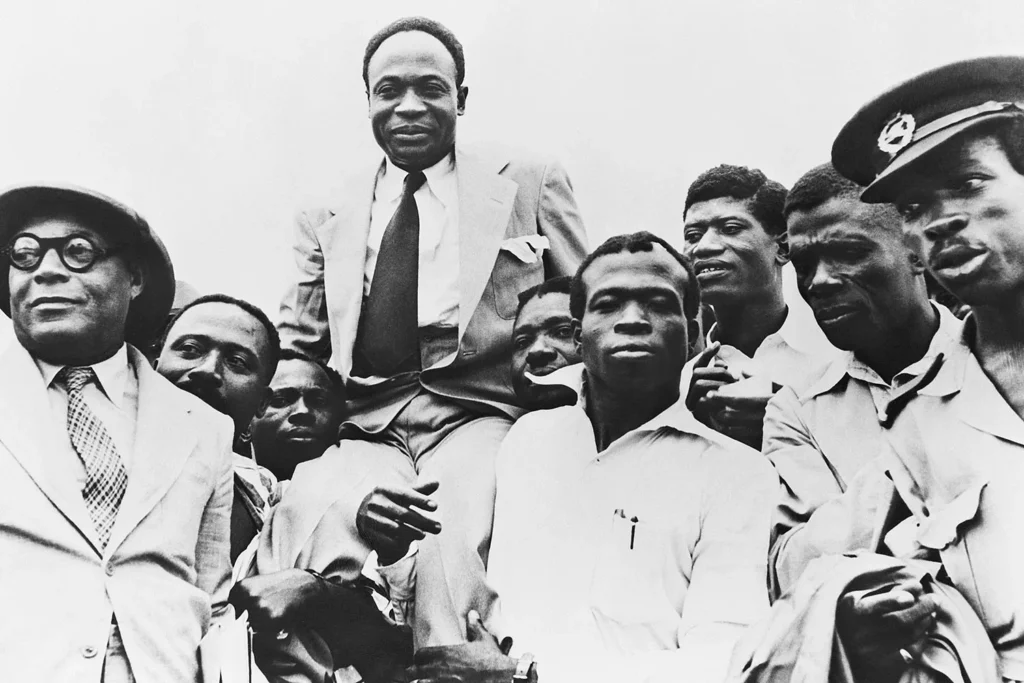
On March 6 1957 the Gold Coast, a British colony for over a century, became the independent nation of Ghana. But this date represents far more than a flag change. It marks the moment when Africa began to shake off colonialism and when one man’s dream of continental liberation caught fire across the entire continent. Ghana independence was not handed over quietly.
It was fought for, negotiated, protested, and ultimately won through a combination of constitutional maneuvering, mass mobilization, and the British recognition that holding onto power had become impossible. Understanding Ghana independence means understanding how Africa’s most powerful nations were born.
The story From riots to revolution
The path to Ghana independence did not start in parliament. It started in the streets.
In February 1948, unarmed ex servicemen who had fought for Britain in World War II marched peacefully toward the Governor’s residence at Christiansborg Castle in Accra. They wanted something simple, the pensions and jobs they’d been promised when they enlisted. The colonial police stopped them. When the veterans refused to turn back, police opened fire, killing three men, Sergeant Adjetey, Corporal Attipoe, and Private Odartey Lamptey.
The shooting sparked the Accra Riots of 1948. For five days, Ghanaians looted European businesses, attacked colonial symbols, and made clear their anger at British rule. The colonial government arrested six prominent nationalist leaders. They became known as the Big Six and were blamed for inciting violence.
But the British government knew the problem went deeper. They appointed the Watson Commission to investigate. What the Commission found shocked even the colonial officials. The 1946 Burns Constitution was, in their own words, outdated at birth. Ghanaians did not want minor reforms. They wanted self government.
Out of this moment of crisis came opportunity. A new commission, the Coussey Committee, was created with an all Ghanaian membership to draft a new constitution. This was revolutionary. For the first time, Africans, not British officials, would design their own political future. But the Committee’s proposals, published in 1949, were not radical enough for everyone. A faction broke away from the moderate United Gold Coast Convention and formed the Convention People’s Party, demanding not gradual independence but self government now.
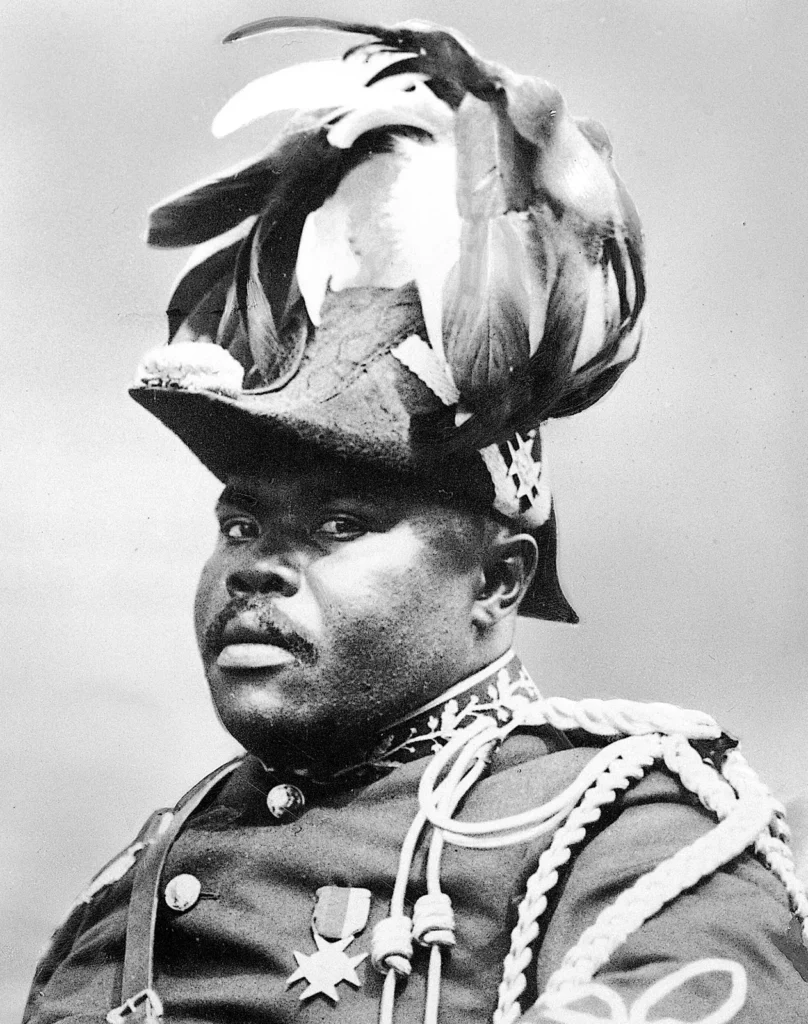
The CPP leader was Kwame Nkrumah, a charismatic political organizer educated in America and Britain. Nkrumah had studied in the United States, where he absorbed Pan African ideology from thinkers like Marcus Garvey and attended radical conferences with other African nationalists. Unlike the educated elites of the UGCC, Nkrumah spoke directly to workers, farmers, and the poor.
He launched a campaign called Positive Action, combining political education, newspaper campaigns, and as a last resort, strikes and boycotts based strictly on non violence.
In January 1950, the CPP declared Positive Action. Trade unions declared a general strike, railways stopped, shops closed, and the colonial government ground to a halt.
The British response was swift. They arrested Nkrumah and imprisoned him. But they also realized they had to move faster toward Ghana independence.
In 1951, they held elections under a new constitution that gave elected representatives control over most government functions. The CPP won 34 of 38 elected seats, a landslide. And the man who had organized the victory was still in prison.
The Governor released Nkrumah and made him Leader of Government Business, effectively the head of government. It was a stunning reversal. The man jailed for demanding independence now led the colonial administration.
Over the next six years, Nkrumah and the CPP proved they could govern effectively. Elections in 1954 and 1956 returned overwhelming CPP majorities. By 1956, the British government accepted what had become undeniable. Ghana independence was inevitable.
On August 3 1956, the Gold Coast Assembly voted to request independence. On September 18 1956, Britain officially announced that Ghana independence would come on March 6 1957, a date chosen to mark the 113th anniversary of the Bond of 1844, the agreement that had formalized British power on the coast.
On that March morning, 500000 Ghanaians gathered in Accra to witness the moment. The Union Jack came down. The new Ghanaian flag, with its gold green and red stripes and black star, rose for the first time as the flag of an independent nation. Kwame Nkrumah delivered his famous speech, Ghana is free forever. From now on there is a new African in the world. That new African was ready, he declared, to fight his own battles and show that after all the black man is capable of managing his own affairs.
Why Ghana independence matters in Ghana
For Ghanaians, Ghana independence on March 6 1957 is more than a national holiday. It marks the moment when Ghanaians took control of their own destiny. Before that day, every major decision about education, land, justice, and trade passed through a British Governor. After that day, they did not.
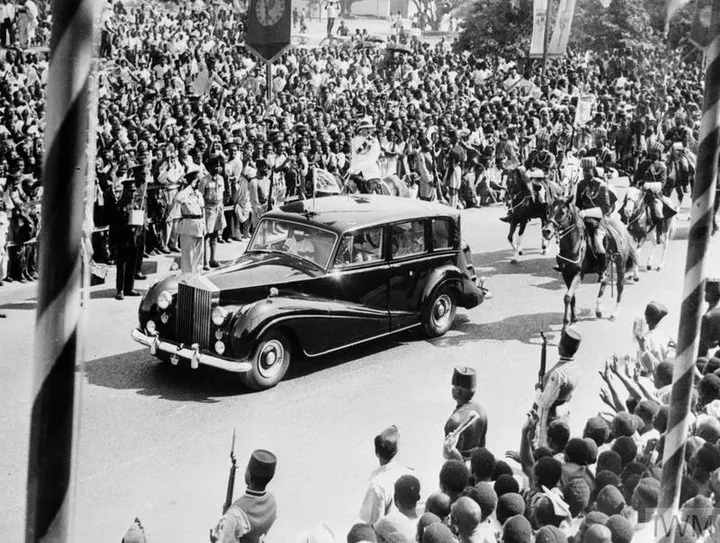
The struggles of the 1948 riots, the Positive Action campaign, and the electoral victories of the CPP proved to Ghanaians that organized people could challenge power and win. That lesson shapes how many Ghanaians think about government accountability and their right to shape their nation’s future even today.
Ghana independence also unified four distinct territories, the Gold Coast Colony, Ashanti, the Northern Territories, and British Togoland, into a single nation. This created modern Ghana’s diversity, bringing together different ethnic groups, languages, and traditions into one state.
That unity, forged in the independence struggle, remains central to Ghanaian national identity. The independence day ceremony, with its changing of the flag and ceremonial speeches, is replayed every year not just as commemoration but as collective renewal of the nation’s founding promise.
The bigger picture: How Ghana independence inspired a continent
But Ghana independence meant something far larger than just one nation becoming free.
On March 6 1957, when the flag was raised in Accra, there were no independent sub Saharan African nations. By 1960, independence movements across the continent were accelerating.
Nigeria, which gained independence just three years later, looked to Ghana’s model. Tanzania, Kenya, and dozens of other colonies saw that an African nation could be born not just through violent revolution but through constitutional negotiation backed by mass support. Ghana independence proved that the impossible was possible.
Kwame Nkrumah saw Ghana independence not as an end but as a beginning. Even as the British flag came down, Nkrumah was already speaking of Pan African unity, the idea that all African nations should work together as one.
In his independence speech, Nkrumah declared that the independence of Ghana is meaningless unless it is linked up with the total liberation of the African continent.
This was not just rhetoric.
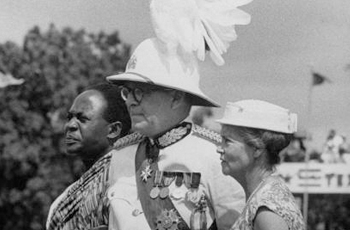
In 1958, Ghana and Guinea formed a political union. In 1961, Mali joined to create the Ghana Guinea Mali Union, an early attempt at continental federation. Nkrumah hosted the All African People’s Conference in Accra, where delegates from 62 nationalist organizations across the continent gathered to plan their own independence struggles. He urged them to go home and fight for independence now, the same slogan that had won Ghana independence.
This Pan African vision, born from Ghana independence, reshaped the continent. Within a decade, most of sub Saharan Africa was independent. The Organization of African Unity, founded in 1963, carried forward Nkrumah’s dream of continental cooperation.
When Nkrumah was overthrown in a military coup in 1966, a moment that also reshaped Ghana, African leaders like Egypt’s Gamal Abdel Nasser, Tanzania’s Julius Nyerere, and Guinea’s Sekou Toure immediately offered him refuge. They recognized that Ghana independence and Nkrumah’s leadership had changed Africa forever.
What it means: The lessons of Ghana independence
Ghana independence teaches several enduring lessons.
First, it shows that colonialism could be defeated not just through armed rebellion but through organized non violent mass action backed by electoral legitimacy. The CPP’s Positive Action campaigns drew inspiration from Gandhi’s non violent resistance in India, proving that African movements could adapt global strategies to local conditions.
Second, Ghana independence demonstrates the power of unified political organization. The CPP brought together workers, traders, students, and farmers around a single vision of freedom now.
Third, Ghana independence reminds us that even seemingly unshakeable power structures can collapse when faced with determined, united opposition. The British Empire appeared permanent until it was not.
Finally, Ghana independence opened a door. Within a decade, most of Africa was free. The blueprint for how that happened, constitutional reform, electoral validation, mass mobilization, and the backing of an educated elite willing to lead, became the template that other nations followed. Some adapted it, some accelerated it, but all of them operated in the shadow of Ghana’s success.
What to watch next
Ghana independence on March 6 1957 was only the political beginning. The real challenges came after.
Nkrumah’s vision of transforming Ghana into a modern industrialized nation, his dream of moving Ghana from the Stone Age to the Space Age, achieved some successes but also led to economic mismanagement and political centralization. By 1966, barely a decade after independence, Nkrumah was overthrown.
This too became a continent wide pattern. Post independence disillusionment, coups, and struggles to build functional states.
Understanding Ghana independence then requires asking not just how the country won freedom, but what it did with that freedom and why so many post independence dreams were deferred.
The story of Ghana does not end on March 6 1957. In many ways, it was just beginning.
Today, as Ghanaians continue to strengthen democracy and demand accountability from leaders, they are completing the work that began with Ghana independence, building a nation that reflects not just political freedom but genuine self determination for all its people.
Key Takeaways
• Ghana independence on March 6 1957 made it the first sub Saharan African colony to gain freedom, transforming the global balance of power and proving that colonialism could be defeated.
• Constitutional reform plus mass mobilization secured Ghana independence. The Burns Constitution 1946, Coussey Committee 1950s, and CPP electoral victories in 1951, 1954, and 1956 created a legal pathway that the British could not ignore.
• Kwame Nkrumah‘s break from gradualism accelerated Ghana independence. By shifting from elite UGCC tactics to mass based CPP organizing and Positive Action campaigns, Nkrumah proved that ordinary Ghanaians not just educated elites would fight for their freedom.
• Ghana independence inspired Pan African liberation. Nkrumah’s insistence that Ghana independence must lead to continental unity sparked a wave of independence movements across Africa within a decade.
• The 1948 Accra Riots accelerated Ghana independence. The police shooting of three unarmed ex servicemen and the public outrage that followed forced the British to admit their governance model had failed, opening the door to faster decolonization.
Quick timeline
1844: Bond of 1844 formalized British power on the coast
1946: Burns Constitution
February 1948: Ex servicemen shot in Accra
1948: Accra Riots and the Big Six arrested
1949: Coussey Committee proposals published and CPP formed
January: 1950 Positive Action declared
1951: CPP election landslide 34 of 38 seats
1954: CPP wins again
1956: CPP wins again and Britain accepts independence is inevitable
August 3 1956: Gold Coast Assembly votes to request independence
September 18 1956: Britain announces independence date
March 6 1957: Ghana independence and the flag is raised
1958: Ghana Guinea political union
1961: Ghana Guinea Mali Union formed
1963: Organization of African Unity founded
1966: Nkrumah overthrown

Comments are closed.