

Ghana's traditional festivals are the one part of the tourism calendar that is genuinely spread across the country. Every region has one. Most of them fall on a fixed day rather than a fixed date, several move with a lunar month, and almost none of them are listed anywhere you would think to look.
This is the working calendar: what happens, where, and roughly when, so you can plan a trip around one instead of finding out afterwards that you missed it by a week.
How the dates work
Three different systems are at play, which is why a single list of dates does not exist.
- Fixed weekday festivals. Aboakyir is always the first Saturday in May. Fetu Afahye is always the first Saturday in September. These you can plan a year ahead.
- Lunar festivals. Damba follows the Dagbon lunar calendar and moves by roughly eleven days a year against the Gregorian one.
- Traditional-cycle festivals. Akwasidae comes round every forty-two days on the Asante calendar, so there are roughly nine a year and none of them on the same date twice.
Always confirm locally before you travel. Traditional councils announce dates, and they move: for a funeral, a state occasion, or a decision taken in the town rather than in a press release.
May: Aboakyir, Central Region
First Saturday in May, Winneba.
The deer hunt. Two Asafo companies compete to catch a live antelope bare-handed and present it to the chief, and the whole town turns out for it. It is one of the most physically dramatic festivals in the country and it starts very early. Be in Winneba the night before rather than driving down on the morning.
July: Bakatue, Central Region
First Tuesday in July, Elmina.
The opening of the fishing season on the Benya lagoon, marked with a procession, a net cast by the chief fisherman, and a regatta. Elmina is compact and the festival takes over the harbour, so it pairs naturally with the Cape Coast weekend. The castles are twenty minutes apart.
July to August: Damba, the five northern regions
The lunar month of Damba, celebrated across Northern, Savannah, North East, Upper East and Upper West.
The largest festival in Ghana, and the single best reason to be in the north. Damba marks the birth of the Prophet Muhammad and has been absorbed into Dagbon, Mamprusi, Gonja and Wala tradition, so it is celebrated in different towns with the same name and different detail: drumming, horsemanship, and the chief's durbar in full regalia.
Tamale and Yendi hold the largest celebrations. If you have wanted a reason to go north and never had one, this is it, and Mole National Park is on the same trip.
August to September: Homowo, Greater Accra
Ga towns across Greater Accra, timed to the traditional planting calendar.
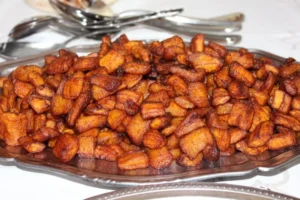
Homowo means "hooting at hunger". It commemorates a famine survived, and the centrepiece is kpokpoi, sprinkled through the streets by chiefs and elders. Different Ga towns celebrate on different days over several weeks, with Ga Mashie, Teshie, Nungua and La each keeping their own.
The month before it is a traditional ban on drumming and noise-making across Ga territory, which is worth knowing if you are planning an event in Accra in that window.
August to October: Kundum, Western Region
Nzema and Ahanta towns, dates varying by town.
A harvest festival that rolls through the Western coast over about two months, town by town, with drumming and dancing at its centre. Because it moves, it is one of the easier festivals to catch: if you are going to Busua or Axim any time in that window, ask which town is celebrating that week.
September: Fetu Afahye, Central Region
First Saturday in September, Cape Coast.
The most important festival in the Fante calendar. Chiefs and Asafo companies process through Cape Coast in full regalia, and the town is at capacity. The name refers to the wearing of new clothes. Book accommodation well ahead, or stay in Elmina and travel in.
September to October: Odwira, Eastern Region
Akuapim towns: Akropong, Aburi, Larteh and Mamfe.
Odwira purifies the state, honours the ancestors and marks the harvest. It was begun in Akropong in 1826 to mark the Akuapim victory at Katamansu, and it is a week-long affair rather than a single day, with a ban on eating the new yam until it is over.
Because it runs through Aburi, this is the one festival that folds straight into an easy weekend from Accra: see the Aburi guide and the Eastern Region weekend.
November: Hogbetsotso, Volta Region
First Saturday in November, Anloga.
The Anlo people's commemoration of their escape from Notsie in what is now Togo: walking backwards so their footprints pointed the wrong way. The festival is preceded by a period of peacemaking and a ritual cleaning of the town, and culminates in a durbar at Anloga.
Anloga is close to Keta and the lagoon, so this is the natural anchor for a Volta trip.
Every six weeks: Akwasidae, Ashanti Region
Manhyia Palace, Kumasi, every forty-two days.
Not annual. The Asante calendar runs on a forty-two-day cycle and each turn of it ends in Akwasidae, when the Asantehene receives chiefs and subjects in state: drumming, horns, umbrellas and gold in the palace forecourt.
Because it comes round nine times a year, it is the easiest major traditional occasion in Ghana to actually attend. Check the date with the palace or the regional tourist office and build a Kumasi weekend around it. The palace museum is where the visit starts either way.
Going as a visitor
These are not performances. They are working occasions of state and religion that happen to be open, and the difference shows in how you are received.
- Ask before photographing, particularly chiefs, priests and anyone in ritual dress. At a durbar, ask an official rather than the person.
- Dress for it. Cover shoulders and knees. Black and red are funeral colours in much of southern Ghana; at a festival, wear neither unless you know why you are.
- Do not step in front of a procession to get a photograph. Stand where the crowd stands.
- Take off your shoes and lower your hat where you see others doing it, especially near a stool or a shrine.
- Book early. Cape Coast at Fetu Afahye and Anloga at Hogbetsotso both fill up.
- Bring cash. Nothing in a festival town runs on card.
Which regions this reaches
Ten of Ghana's sixteen regions have a major festival on this list, including five in the north that Damba covers between them. That is the practical answer to seeing more of the country than the same three regions: the festivals go where the hotels do not.
Our region-by-region breakdown is in Ghana by region.
Discussion 0 comments
You must be logged in to write a comment.
Log In Sign UpNo comments yet. Be the first to start the conversation!