

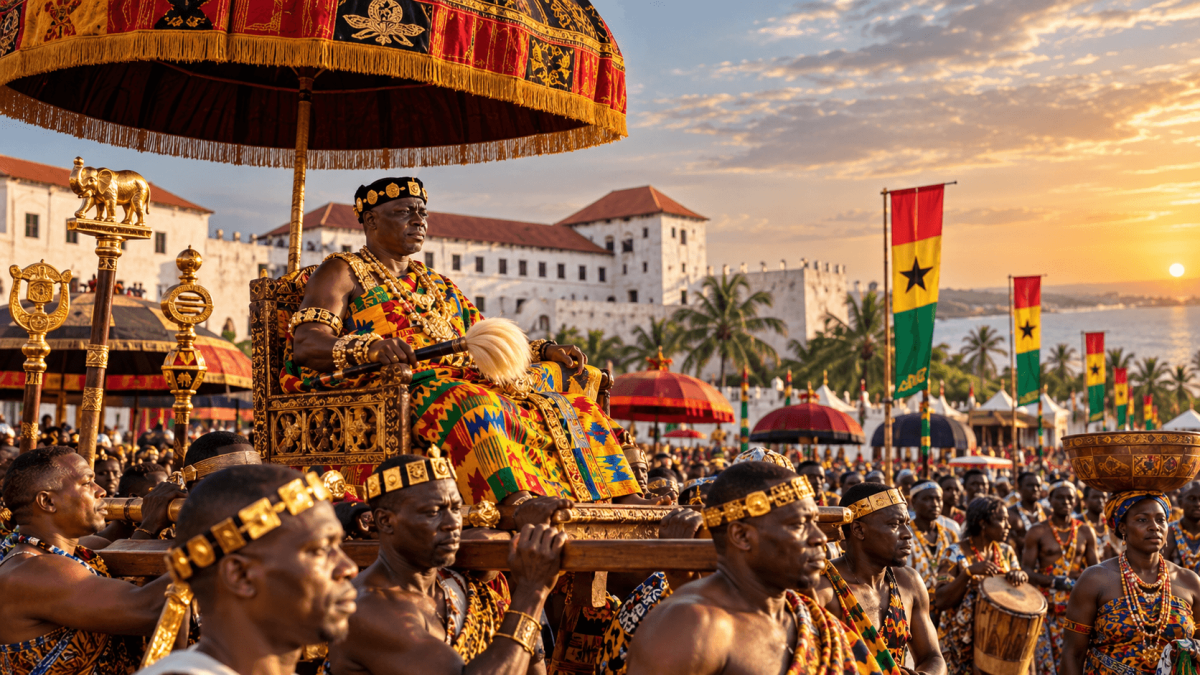
Manhyia Palace is the seat of the Asantehene, and the museum inside it is one of Ghana's most-visited cultural attractions, drawing well over 100,000 visitors in 2025. It is also the single best hour anyone can spend understanding why Kumasi is Kumasi.
What Manhyia Palace is
The palace was built in 1925 for Prempeh I on his return from exile in the Seychelles, where the British had sent him after the Asante wars. He lived in it. So did Prempeh II after him. The current Asantehene lives in the newer palace next door, and the old building became a museum in 1995.
That history is the reason the museum works. It is not a collection assembled from elsewhere and arranged in cases. It is a house with the furniture still in it, belonging to people whose successor is on the other side of the wall.
What you actually see
Every visit opens with a short film, about ten minutes, telling the Asante story from the founding through the wars, the exile and the return. Sit through it properly; the tour assumes you have.
Then a guide takes you through the house:
- The original furniture, arranged as it was used, room by room.
- Wax figures of past Asantehenes and queen mothers, which sound like a gimmick and are not: they put you in a room at the scale of the people who were in it.
- Regalia: gold work, swords, staffs, and the objects that carry office rather than decorate it.
- The thrones of past kings.
The guides are the reason to come. This is not a museum you can usefully walk around by yourself, and the tour is included rather than an extra.
What it costs and when it opens
- Ghanaians: around GH₵20
- Non-Ghanaians: around GH₵100
- Open daily, 9:00 a.m. to 5:00 p.m., including public holidays
Allow an hour to ninety minutes. Confirm opening hours by phone before you travel, particularly around Akwasidae and state occasions, when the palace grounds may be given over to something other than visitors.
Prices checked in August 2026. Bring cash in small notes.
The rules, and why they matter here
This is a royal residence, not a public building that happens to be old. Two things follow.
Dress respectfully. Nobody will hand you a robe at the gate, but shorts and beachwear read badly in a place where people arrive to greet a king. Cover your shoulders and knees.
Photography is allowed in the museum and not in the royal chambers. Your guide will tell you where the line is. Take them at their word. This is the one site on any Kumasi itinerary where a camera in the wrong room is a genuine offence rather than a telling-off.
Akwasidae
Every six weeks or so, the Asante calendar reaches Akwasidae: a festival day when the Asantehene receives chiefs and subjects in full regalia. Drumming, horns, umbrellas, gold, and a durbar in the palace forecourt.
If your Kumasi trip can be moved to land on one, move it. It turns a museum visit into the thing the museum is about. The dates follow the traditional forty-two-day cycle rather than the Gregorian calendar, so check locally rather than guessing: the palace, the Ghana Tourism Authority's Kumasi office and the Ashanti regional tourist board all publish them.
Getting there
Manhyia sits in central Kumasi, north of the city centre and easily reached by taxi from anywhere in town for a few cedis. Ask for "Manhyia Palace Museum" rather than just Manhyia: the palace, the hospital and the district all share the name.
If you are coming from Accra, see our Kumasi travel guide for the bus and flight options.
What to pair it with
Manhyia is a morning. The natural pairings, in order of how well they work:
- Kejetia Market: twenty minutes away and the complete opposite in every register. Palace then market is the right order; market then palace is exhausting.
- The Prempeh II Jubilee Museum at the Cultural Centre, which covers similar ground with different objects.
- Bonwire, the kente weaving town outside the city, if you have the afternoon.
- Lake Bosomtwe the following day.
Before you go
- Check for Akwasidae or state occasions first, hours can change.
- Cash, small notes, and more than the entrance fee.
- Covered shoulders and knees.
- An hour and a half, unhurried.
- Ask the guide questions. They are the exhibit that answers back.


Discussion 0 comments
You must be logged in to write a comment.
Log In Sign UpNo comments yet. Be the first to start the conversation!