

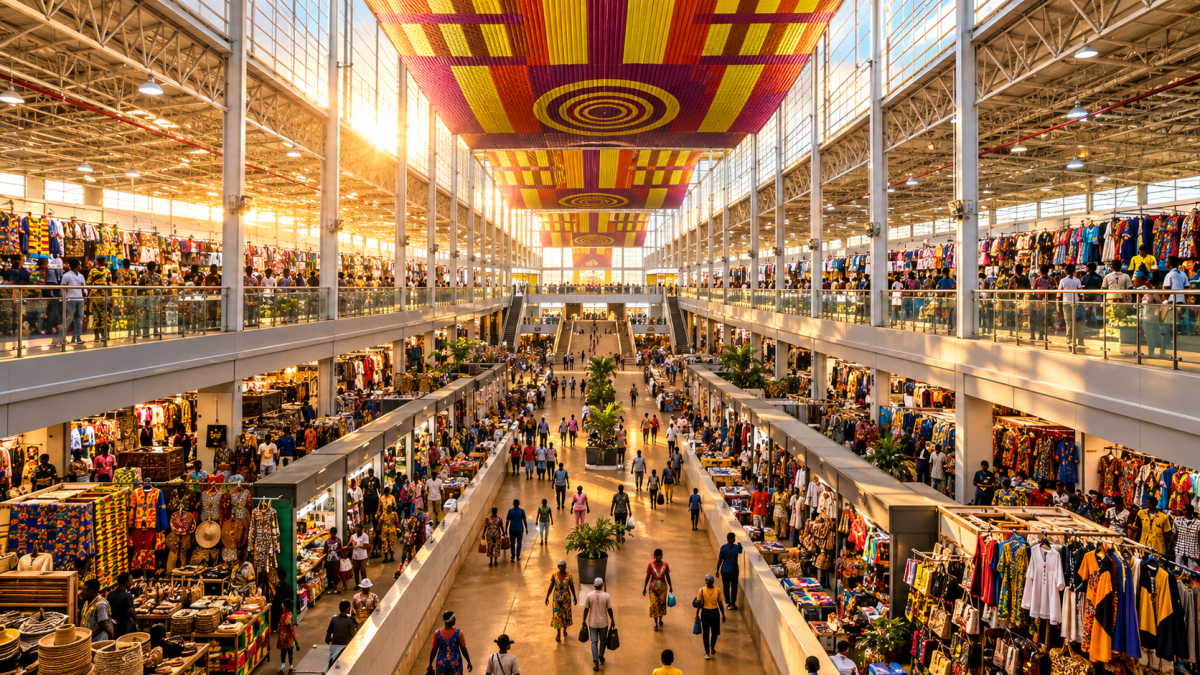
Kejetia Market is the largest in West Africa and it does not care whether you are ready. Thousands of traders across more than 8,000 stores, and a redevelopment that turned the most famous open-air market on the continent into something closer to a city inside a building.
It is worth going. It is also the one stop on a Kumasi itinerary where turning up unprepared genuinely costs you something.
What Kejetia Market is now
For most of its life Kejetia was open air: a sea of tin roofs below the Kumasi ring road that appeared in every documentary about Ghanaian commerce. The government's redevelopment project replaced much of that with a purpose-built market complex and lorry terminal. The first phase was completed in late 2018, and work on the wider Kumasi Central Market began in May 2019.
So there are two Kejetias in most people's heads: the old photographs and the current building. The trade is the same, the crowds are the same, and the scale is the same. The roof is new.
What to buy
Kejetia sells everything, which is not useful advice. What it sells better than anywhere else in Ghana:
- Kente: Kumasi is the centre of the trade, and the range here is far wider than anything in Accra. Know the difference between hand-woven and machine-printed before you buy, and expect to pay accordingly.
- Ashanti sandals: the leather ones, in more styles than you knew existed.
- Glass beads, batik and adinkra cloth.
- Woodcarvings: stools, masks, bowls.
- Fabric generally. If you are having something made, buy the cloth here and take it home.
Everything else, produce, spices, electronics, hardware, secondhand clothing, is there in volume, but it is not why a visitor comes.
Bargaining
Expected, everywhere, on everything except food staples. The first price is an opening position, not an insult and not a rip-off. Counter at well below it, settle somewhere in the middle, and stay friendly. The transaction is social as much as commercial, and traders remember people who were pleasant.
Two practical notes. Carry small notes: nobody wants to break a 200 for a 15-cedi purchase, and "no change" is a real negotiating position. And decide what a thing is worth to you before you ask the price, because the number you hear first will anchor you.
Go with a guide
This is the single strongest recommendation on this page, and it applies even to Ghanaians who are simply not from Kumasi.
Kejetia is layered, dense and not signposted in any way that helps a newcomer. A local guide knows which section sells what, what a fair price looks like this month, and which routes through the market are walkable at eleven on a Saturday. Guided walking tours are available in Kumasi; agree the price and the length before you set off.
Without one you will see a great deal of market and find very little of what you came for.
Timing
- Trading starts early in the morning.
- It begins winding down in the late afternoon.
- Mornings are cooler, calmer and far easier to move through.
- Allow one to two hours with a guide; longer if you are shopping seriously.
Midday on a weekend is the market at maximum density. That is an experience, and it is not the one to choose on a first visit.
Staying comfortable and keeping your things
None of this is alarmism. It is a very crowded place and crowded places have the same rules everywhere.
- Comfortable closed shoes. You will walk further than you plan and the ground is not uniform.
- Front pockets or a zipped bag worn in front. Pickpocketing is the realistic risk, not anything worse.
- Carry only what you need. Leave the second phone and the passport at the hotel.
- Ask before photographing people. Traders are working, not performing, and most will say yes if you ask and no if you don't.
- Keep moving with the flow. The narrow sections move at one speed and stopping in them is how you get pushed.
Eating in the market
The food is good. The rule is the one that works anywhere in Ghana: eat where there is a queue and a fast turnover. A busy stall is a fresh stall.
Getting there
Kejetia is central: most taxis in Kumasi will take you for a few cedis and the market is a landmark rather than an address. The adjoining Kejetia lorry terminal is also the departure point for a good deal of regional transport, including vehicles out to Lake Bosomtwe, so it doubles as the practical hub for the rest of your trip.
What to pair it with
Manhyia Palace in the morning, Kejetia after. That order matters: the palace asks for quiet attention and the market does not leave you with any. Doing it the other way round means arriving at a royal residence hot, loaded with shopping and short of patience.
The full itinerary is in our Kumasi travel guide.


Discussion 0 comments
You must be logged in to write a comment.
Log In Sign UpNo comments yet. Be the first to start the conversation!