

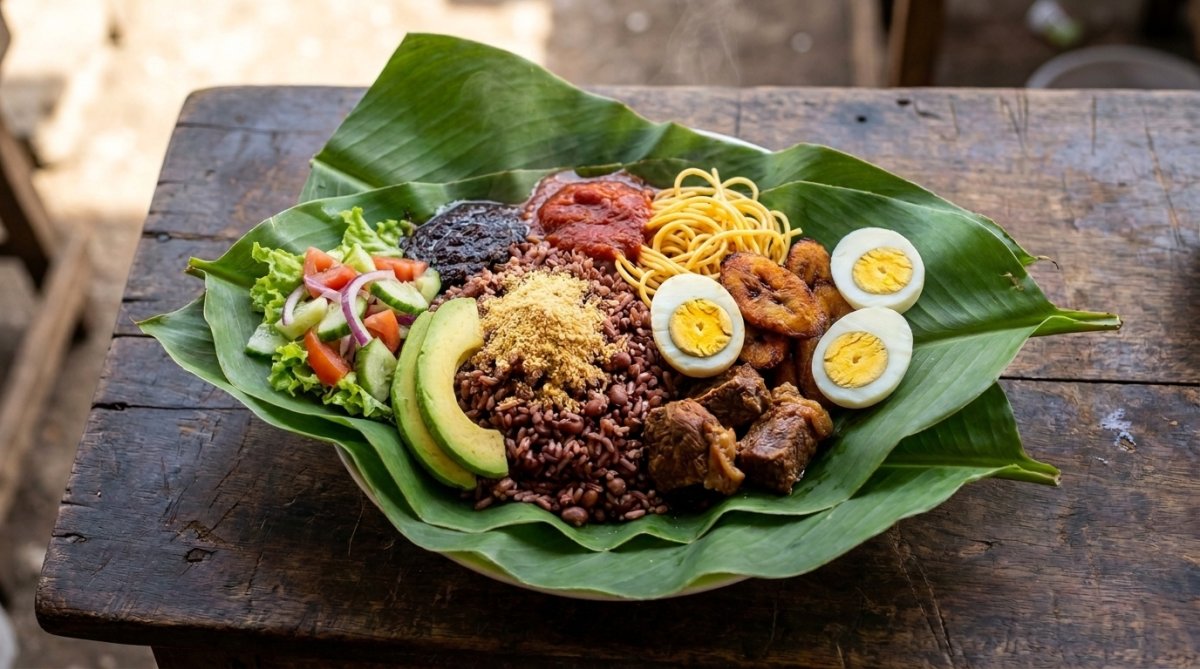
Ghanaian culinary culture is defined by bold aromatic profiles, slow simmering, fermented bases, and intense pepper heat. Exploring authentic Ghana food takes you far beyond generic hotel breakfast buffets and into bustling open air kitchens, neighborhood street stands, and communal chop bars. Whether it is morning rice and beans steamed over sorghum leaves or evening fresh tilapia straight off smoking charcoal grills, food in Ghana represents both historical heritage and daily community connection.
Understanding how dishes are constructed, paired, and ordered ensures you experience the best flavors without culinary missteps. Drawing from local culinary traditions across Greater Accra, the central coast, and the Ashanti heartland, this guide provides a practical breakdown of iconic dishes, price benchmarks, ordering etiquette, and dining customs.
Quick Facts at a Glance
Culinary Profile: Starch rich swallows and fermented grains paired with spicy tomato stews, slow cooked palm nut or peanut soups, and seafood or smoked meats.
Average Street Food Pricing: GHS 20 to GHS 45 ($1.30 to $3.00 USD) for a full street portion of waakye, red red, or ga kenkey with sides.
Casual Dining and Chop Bar Pricing: GHS 45 to GHS 95 ($3.00 to $6.50 USD) for loaded fufu bowls or grilled tilapia plates.
Essential Condiments: Shito (slow cooked black pepper sauce infused with dried shrimp and fish), freshly ground green and red raw pepper sauces, and ground agushie.
Dining Custom: Traditionally eaten using your right hand; the left hand is culturally prohibited from touching communal food or entering soup bowls.
Insider Tip: Morning dishes like waakye and hausa koko sell out fast. Arrive at popular roadside neighborhood aunties before 09:30 AM to secure prime cuts of meat and fresh fried plantains.
Morning Fuel: Iconic Breakfasts and Street Staples
Breakfast in Ghana is hearty, hot, and savory. Morning street vendors set up large aluminum pots under canopy umbrellas along major commuter routes across Accra, serving commuters on their way to work.
Waakye (The Undisputed Breakfast King)
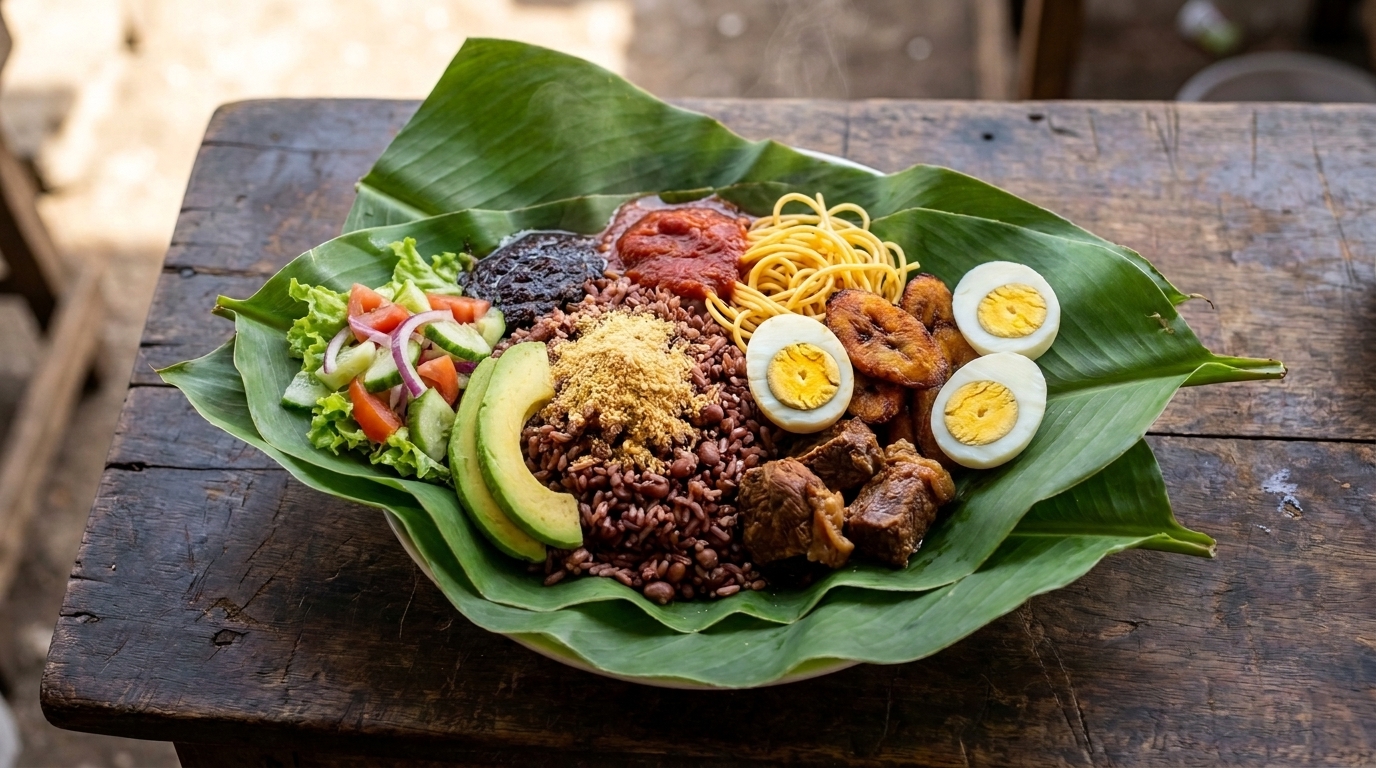
Waakye is a savory blend of rice and indigenous cowpeas or black eyed beans cooked alongside dried red sorghum leaf sheaths, which impart a signature deep burgundy color and earthy undertone.
Ordering waakye is an art of stacking customized accompaniments:
The Foundation: A base portion of rice and beans ladled into a plastic takeaway rubber or an indigenous broad leaf (katemfe).
The Sauces: Both red tomato stew and rich black shito pepper sauce layered across the rice.
The Sides: Talia (spaghetti noodles), moist gari foto (seasoned cassava grits), and fried ripe plantains.
The Proteins: Options range from hard boiled eggs and tender beef to wele (braised, spiced cow skin), fried fish, or crunchy cow intestines.
Hausa Koko with Koose
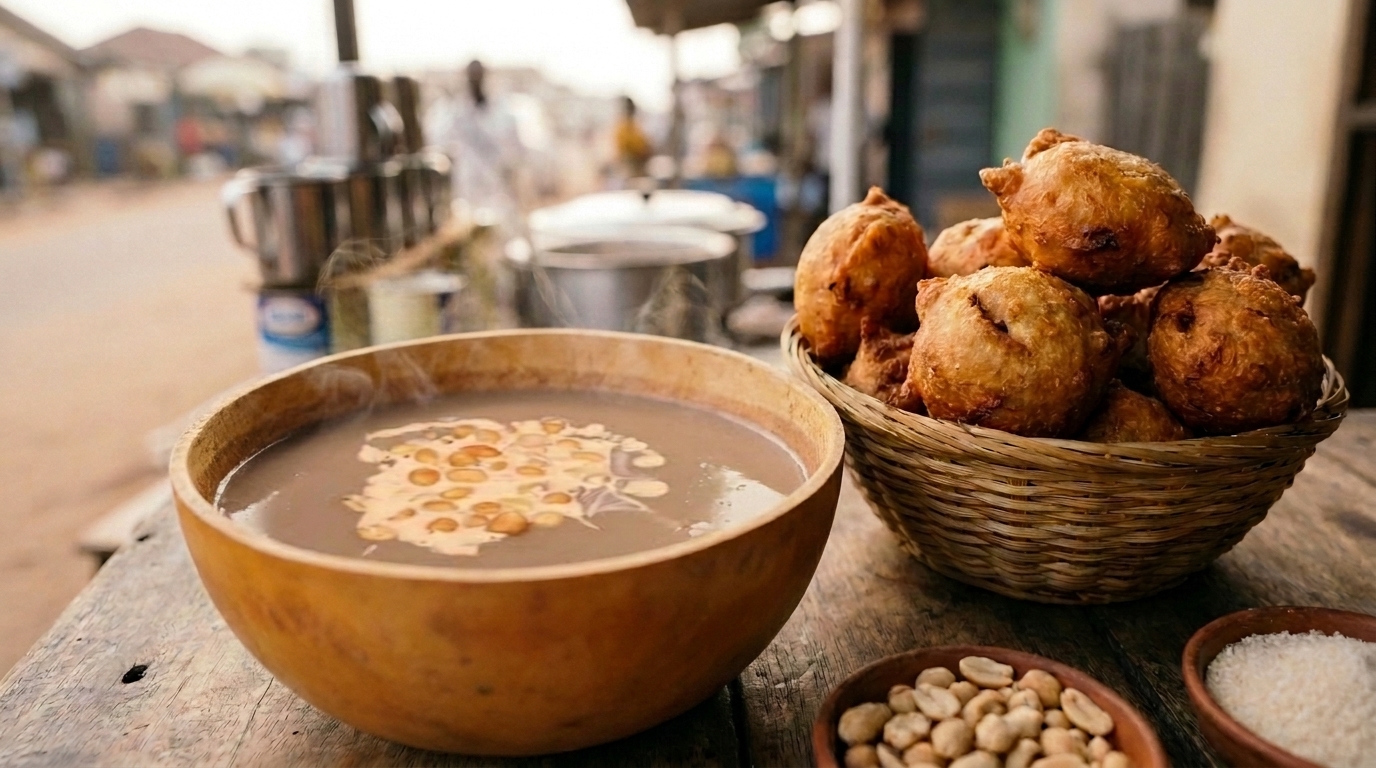
For a quick morning boost, Hausa koko provides smooth warmth. This spicy, fermented millet porridge is seasoned with ginger, cloves, and hot chili. It is universally paired with koose (deep fried, fluffy bean fritters) or crispy fried dough balls known as bofrot. A complete koko breakfast rarely exceeds GHS 10 to GHS 15 at local neighborhood kiosks.
Gobe: Red Red (Fried Plantain and Bean Stew)
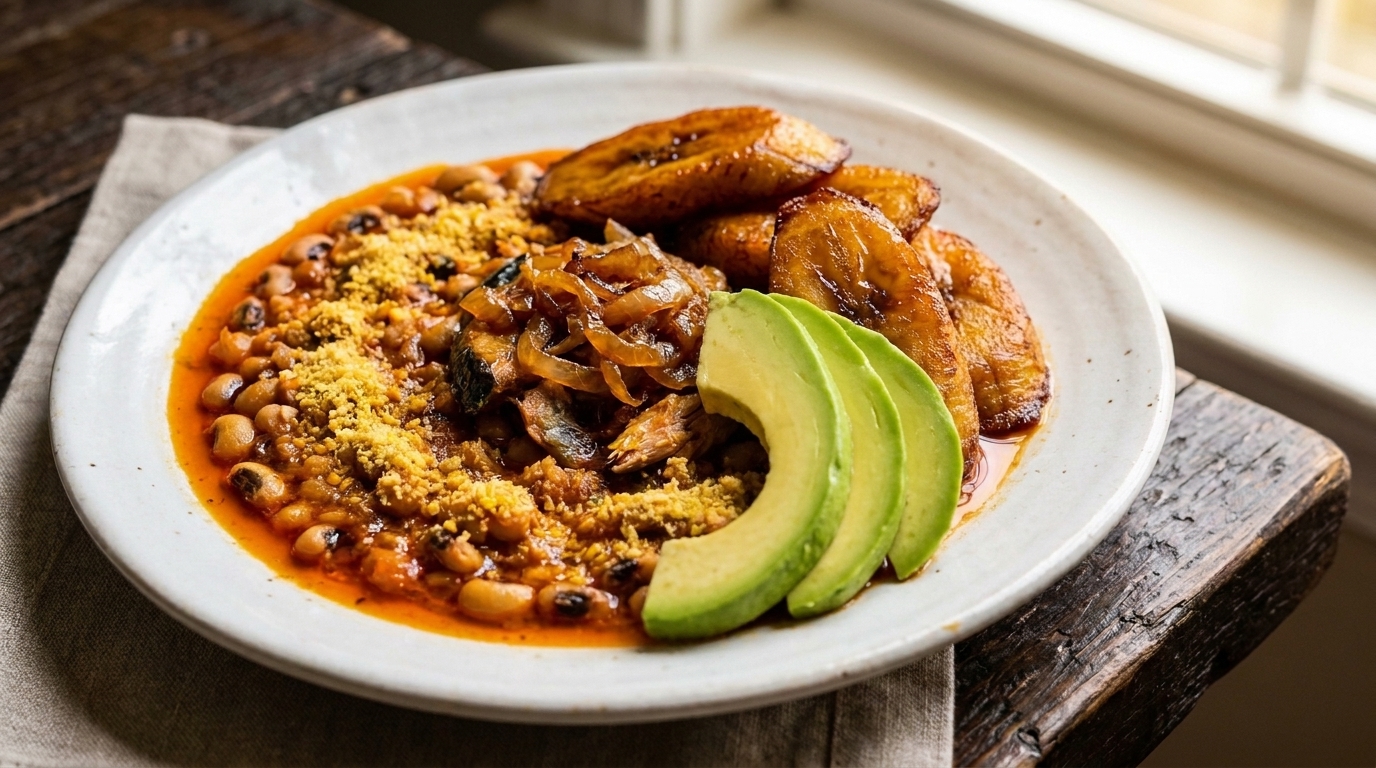
A comforting, high protein classic made of soft cowpeas stewed slowly in zomi (unrefined red palm oil), smoked mackerel, onions, and chili. The stew is served alongside generous slices of sweet, caramelised fried ripe plantains. Diners frequently dust the dish with roasted gari to absorb the savory palm oil gravy. For late evening street snacking, locals transition to spicy ginger plantains, covered in depth in our Kelewele guide.
The Heart of Ghana Food: Fermented Staples and Chop Bar Classics
The emotional core of Ghanaian home cooking resides in its fermented staples and pounded swallows, served inside open sided restaurants called chop bars. These venues feature enormous aluminum cauldrons simmering over charcoal pits, filled with aromatic broths and tender meats.
Fufu and Rich Soups
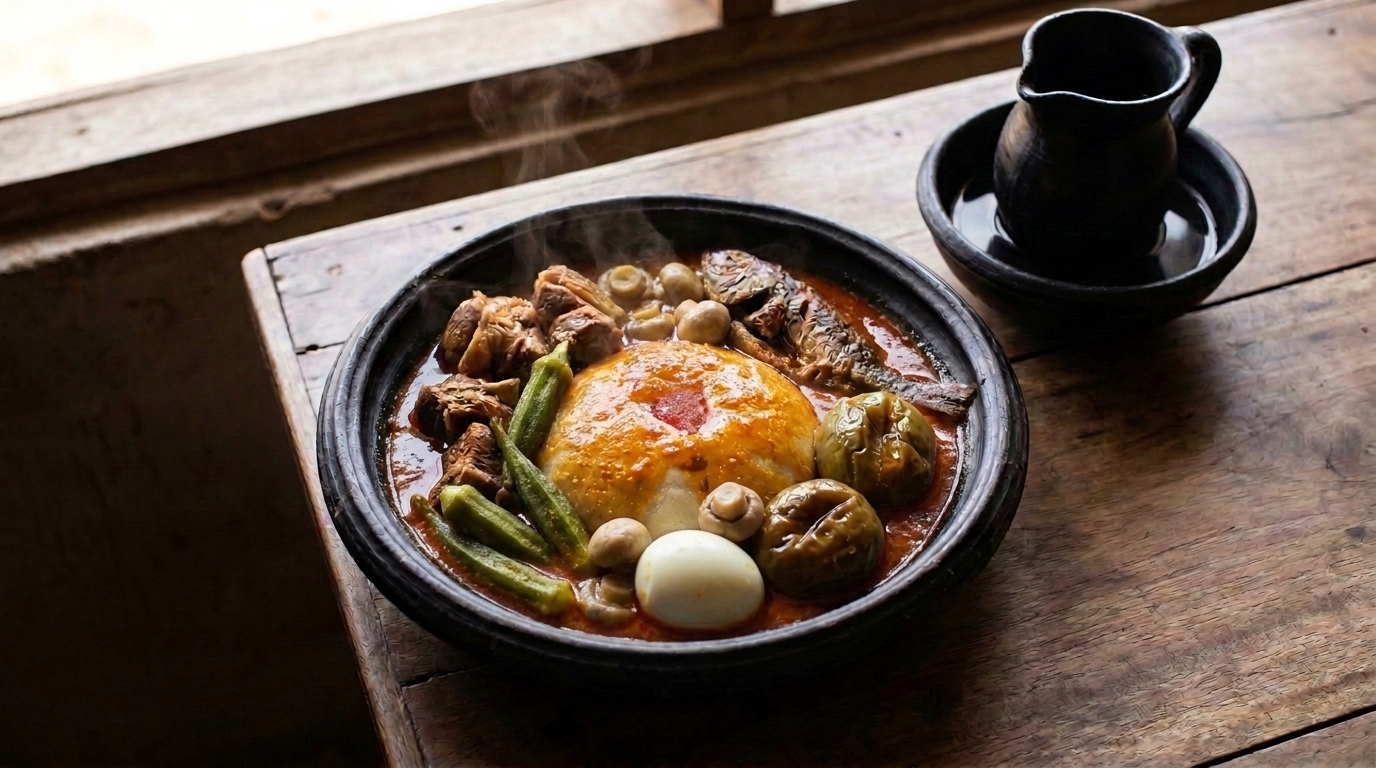
Fufu is the beloved staple of the Akan heartland, prepared by boiling equal parts cassava and green plantain (or yam) and pounding them rhythmically in a large wooden mortar and pestle until they form a smooth, stretchy, elastic dough.
Fufu is always served swimming in hot, aromatic, slow simmered soups:
Light Soup (Nkrakra): A thin, intensely spicy tomato and chili broth made with fresh garden eggs and goat meat, chicken, or fresh fish.
Palm Nut Soup (Abenkwan): Extracted from fresh boiled palm fruits, yielding a thick, silky, heavy broth rich with natural oils and smoked seafood aromas.
Groundnut Soup (Nkatenkwan): A creamy, nutty stew made from roasted peanut paste simmered with tomatoes, ginger, garlic, and braised beef.
Eating fufu requires a specific technique: you pinch off a morsel with the fingers of your right hand, indent it slightly, scoop up soup and meat, and swallow without chewing.
Ga Kenkey and Banku
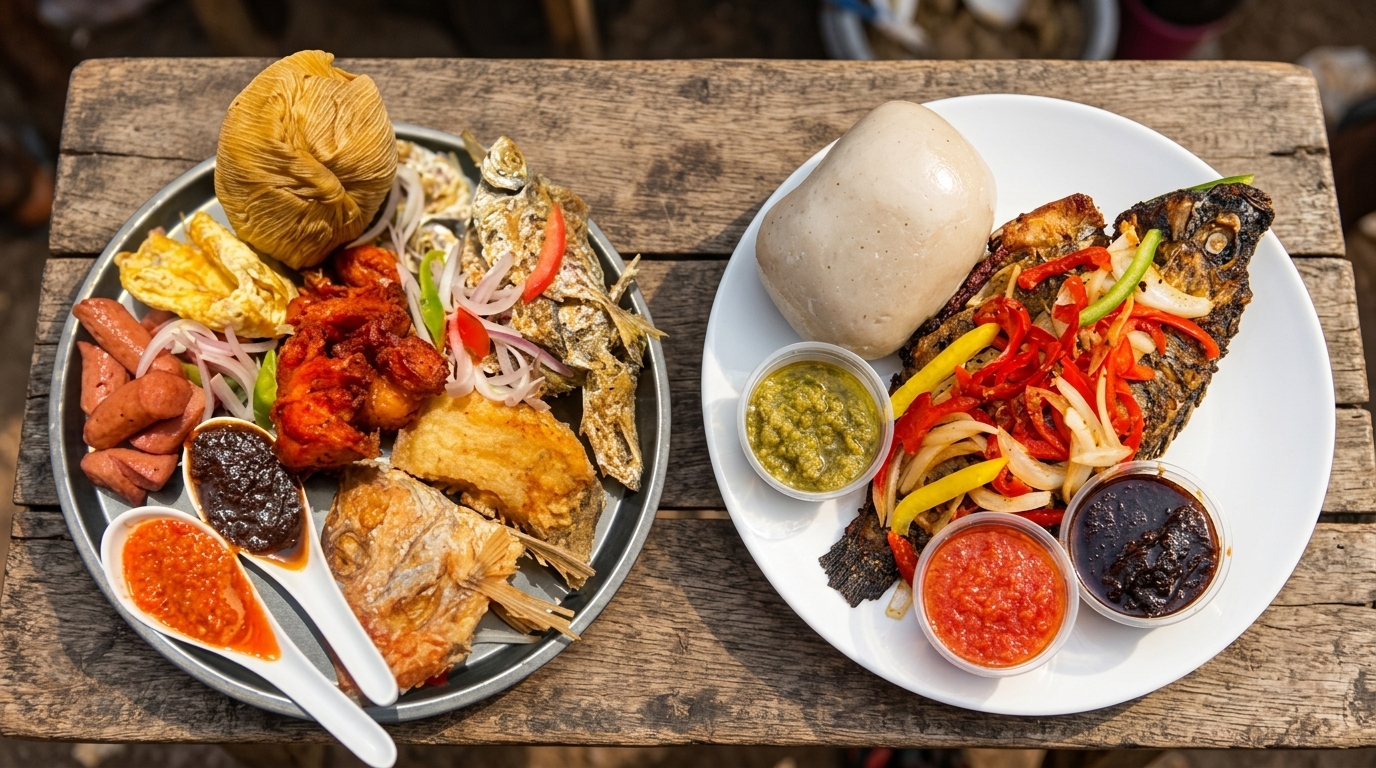
Coastal communities along the Greater Accra shoreline rely on fermented white corn:
Ga Kenkey (Komi): Fermented ground white maize dough wrapped neatly in dried corn husks and boiled for several hours into dense, sour cylinders. It is sliced open and eaten steaming hot alongside fried fish, raw ground red chili, green scotch bonnet sauce, and black shito.
Banku: A smooth, pliable dough made from a fermented mixture of two parts corn dough and one part cassava dough, cooked in boiling water while being kneaded vigorously with a wooden spatula. Banku is the ultimate companion to succulent hot grilled tilapia seasoned with ginger and garlic, or rich okra stew (fetri detsi) packed with crab and wele.
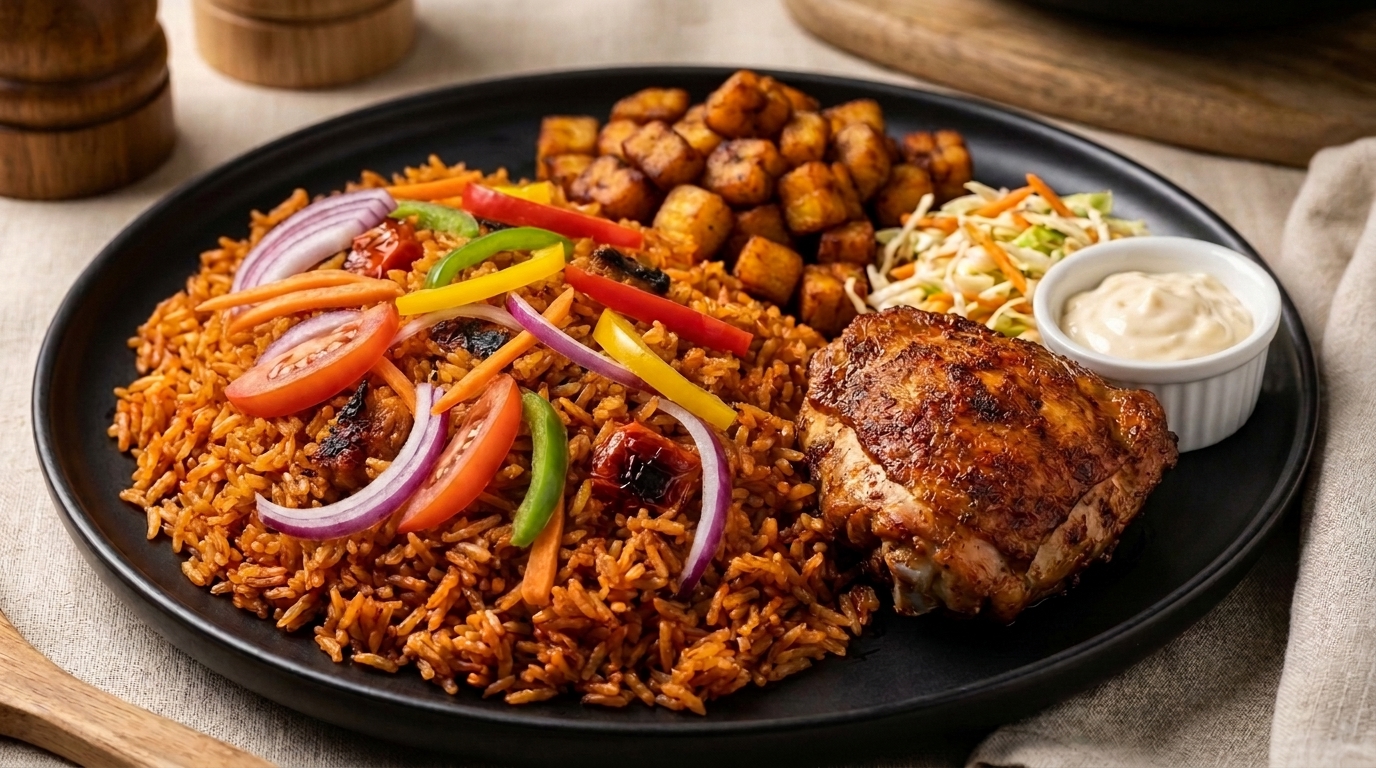
No food guide is complete without mentioning Ghanaian Jollof. Crafted from fragrant long grain jasmine rice cooked directly in a concentrated sauce of blended plum tomatoes, onions, ginger, garlic, scotch bonnets, and bay leaves, authentic party jollof achieves a distinct smoky flavor by lightly scorching the bottom of the pot. It is paired with spiced grilled chicken, beef kebabs (chichinga), and a scoop of sweet fried plantains.
Essential Chop Bar Etiquette: How to Order Like a Local
Walking into an authentic chop bar can feel intimidating for first time visitors, but local customs are friendly and straightforward:
Wash Your Hands at the Station: Before stepping up to order, head straight to the hand washing corner, featuring a Veronica bucket, liquid soap, and paper towels. Clean both hands thoroughly.
Order Your Base First: Tell the serving lady your preferred starch (for example, "One fufu" or "Two balls of banku").
Select Your Soup and Meat Cuts: Point to the large simmering pots. Specify your soup choice and your desired proteins directly (for example, "Light soup with goat meat and one fish").
Use Only Your Right Hand: When your earthenware bowl (asanka) arrives at your wooden table, eat exclusively with your right hand. In West African cultural etiquette, using your left hand to eat or pass bowls is considered offensive.
Wash Up Afterward: Chop bars provide hand bowls right at your table with soapy water and clean rinse water to wash up immediately after finishing your meal.
Related: Ghana's wider culture guide.



Discussion 0 comments
You must be logged in to write a comment.
Log In Sign UpNo comments yet. Be the first to start the conversation!