

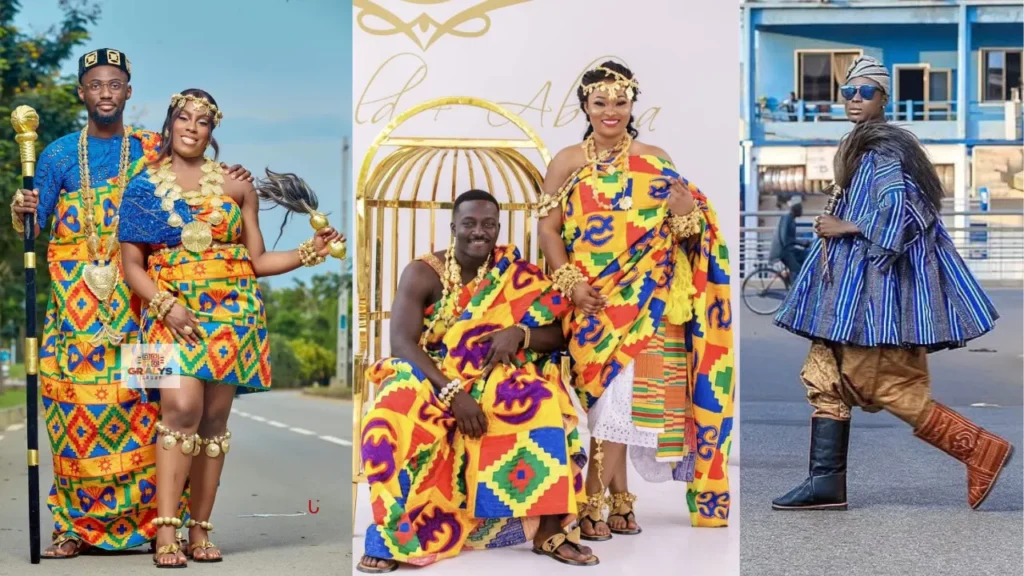
Ghana is home to more than fifty ethnic groups, Akan, Ewe, Ga, Dagomba, Dagaaba, Fante, Ga-Dangme and dozens more, and "Ghana culture" is really several living traditions with a shared history, not one single rulebook. A guide that flattens all of it into "Ghanaians do X" gets the details wrong almost immediately: chieftaincy works differently in Kumasi than it does in Yendi, and a funeral custom that is completely normal in Accra can be unheard of in the Upper West Region. This guide covers the threads that run across most of the country, naming, chieftaincy, funerals, symbolism, food and everyday manners, while flagging exactly where a tradition belongs to one region or ethnic group rather than the whole nation.
Rites of Passage
Naming Ceremonies (Outdooring)
A child is formally named and presented to the community on a specific day after birth, traditionally the eighth day among the Akan and Ga, though the exact timing and rituals vary by ethnic group. Among the Akan, names are also tied to the day of the week a child is born on: a boy born on Saturday is Kwame, a girl born on Friday is Efua, and so on. Those day-names are why so many well-known Ghanaians share a first name with their birthday rather than a family choice. For the full ceremony, what happens on the day, what the naming actually involves, and how it differs between ethnic groups, see our guide to the Ghanaian naming ceremony.
Coming of Age and Marriage Customs
Puberty rites still survive in some communities, the Krobo people's Dipo rite for girls is the best documented, but they are far less universal today than naming ceremonies or funerals. Marriage customs are where regional variety shows up most: an Akan traditional marriage centres on the "knocking" (the groom's family formally asking for the bride) followed by the presentation of a bride-price list agreed between the two families, while Northern Ghanaian and Muslim communities often layer Islamic marriage rites on top of the ethnic-group custom. None of this is a single national ceremony, whatever a wedding-planning site aimed at outsiders might imply.
Chieftaincy and Traditional Governance
Stools vs. Skins: Two Systems of Authority
This is the distinction most outside coverage gets wrong, and it matters: Akan chiefs (Ashanti, Akyem, Akuapem and related groups) are enstooled, the stool is the physical seat of office and the source of the phrase "destooling" a chief who is removed. Chiefs in the north, Dagomba, Mamprusi, Gonja and related groups, are enskinned instead, seated on an animal skin rather than a stool, a distinction that reflects a genuinely different historical system of governance, not a regional variant of the same one. Using "enstooled" for a northern chief, or "enskinned" for an Ashanti one, is the kind of error that immediately signals a guide was written without local input.
The Role of Chiefs Today
Ghana's 1992 Constitution formally recognises chieftaincy alongside elected government, with the National House of Chiefs and regional houses of chiefs handling customary law and land matters. A chief today is rarely just ceremonial: in much of the country, chiefs still allocate stool or skin land, settle local disputes before they reach a court, and are the first point of contact for anyone, including a company or a government agency, who wants to do anything on land the chief's stool or skin controls.
Funeral Customs
Why Funerals Are Major Social Events
A Ghanaian funeral, especially among the Akan, is as much a social and economic occasion as a mourning one. They are commonly held on Saturdays, can span an entire weekend of distinct events (a wake-keeping, the funeral proper, thanksgiving and, sometimes, a later "final funeral rites"), and the scale of the gathering is often read as a measure of the deceased's standing in the community. It is not unusual for a family to spend more preparing a funeral than they would on a wedding, and funeral cloth, specific colours and patterns worn by mourners, is its own small industry.
Fantasy Coffins: A Ga Tradition, Not a National One
The elaborately shaped coffins that show up in nearly every international photo essay about Ghana, a coffin built as a Mercedes, a fish, a Bible, a cocoa pod, are a genuinely local craft tradition, centred on the Ga communities of Teshie and La (Labadi) on the Accra coast, and made by a small number of specialist workshops there. They are widely admired and increasingly requested by families across the country and even abroad, but presenting them as a general "Ghanaian funeral tradition" overstates how universal they are: most funerals in Ghana, in most regions, use a conventional coffin.
Kente, Adinkra and Symbolism
Kente Cloth
Kente originated with the Akan, specifically the Ashanti and Ewe weaving traditions, which produce visibly different patterns, as a cloth woven in narrow strips on a horizontal loom and then sewn together into the finished piece. It was historically reserved for royalty and important occasions, with specific patterns and colour combinations carrying their own names and meanings rather than being purely decorative. "Kente" is not a synonym for any colourful West African textile: the specific strip-weaving technique and its Akan/Ewe origin are what make a cloth kente rather than a generic wax-print fabric.
Adinkra Symbols and Their Meanings
Adinkra symbols are a separate Akan visual tradition, originally stamped onto cloth for funerals and now used far more broadly in art, architecture and branding. A few of the most recognisable, with their actual meanings rather than the loosely paraphrased versions that circulate online:
- Gye Nyame, "except for God," representing the supremacy of God over all things. Ghana's most widely reproduced symbol, and its most frequently mistranslated.
- Sankofa, usually shown as a bird reaching backward for an egg on its back, meaning "go back and get it": there is no shame in reaching back for what you have forgotten or left behind.
- Adinkrahene, concentric circles, meaning leadership and charisma; considered the symbol from which the whole Adinkra system takes its name.
- Nyame Dua, "God's tree," a stylised altar symbol representing God's presence and protection.
Each symbol has a specific, documented meaning rather than a vague "African wisdom" gloss, and getting one wrong in print is a common and avoidable error.
Food as Culture
Food in Ghana carries as much cultural weight as any festival: what you eat, and with which hand, is itself a form of etiquette (more on that below). Street food culture runs deep, our guide to kelewele, the spiced fried plantain sold from roadside stalls nationwide, is one specific entry point into it. For the fuller picture of Ghanaian dishes, chop bars and where to actually find them, see our Ghana food and chop bar guide.
Festivals and Celebrations
Traditional festivals are where Ghana's regional variety is most visible in one calendar: Homowo in Greater Accra, Odwira in the Eastern Region, Damba across the five northern regions, Aboakyir in the Central Region, and more, each tied to a different historical event or agricultural cycle rather than a single national tradition. For the full year-round calendar, when each one happens, what it actually involves and how to attend respectfully, see our Ghana festival calendar.
Everyday Social Etiquette
- Use the right hand. The left hand is considered unclean for greeting, eating, and giving or receiving anything, including money and food. Using it, even by accident, is genuinely noticed.
- Greet elders first, and in order. Walking into a room and greeting the youngest person before the oldest is read as a real breach of respect, not a minor slip.
- Don't point or beckon with the index finger. Pointing directly at a person, or beckoning someone the way it's done in much of the West, is considered rude; an open hand or a downward-facing wave is the polite alternative.
- Day-names double as a bridge into conversation. Asking someone their day-name (see Naming Ceremonies, above) is a small, well-received way to show you know something real about the culture rather than a guidebook version of it.
Ghana Culture at a Glance
- More than fifty ethnic groups, with Akan, Ewe, Ga and the northern groups (Dagomba, Mamprusi, Gonja) the largest.
- Akan chiefs are enstooled; northern chiefs are enskinned, two different systems, not one.
- Fantasy coffins are a Ga tradition from Teshie and La, not a nationwide custom.
- Kente and Adinkra are both Akan in origin, and distinct from each other.
- The right hand is used for greeting, eating and exchanging anything.
Related: a new Ghanaian neo-noir film in production, Ghana's 2026 public holiday dates, facts about Ghana worth knowing, a comedian speaking out on industry neglect, a sustainable fashion drop rooted in cacao.

Discussion 0 comments
You must be logged in to write a comment.
Log In Sign UpNo comments yet. Be the first to start the conversation!