

These facts about Ghana cover its history, people, economy and landscape in one place. Ghana is a West African country on the Gulf of Guinea, with Accra as its capital, and it has a place in African history far bigger than its size suggests. Each fact below is checked against a reference source and linked to a longer guide where we have one.
Quick Answer: Ghana is a West African country of about 35 million people, with Accra as its capital, English as its official language and the cedi as its currency. It was the first colony in sub-Saharan Africa to gain independence, on 6 March 1957, and it is the world's second-biggest cocoa producer.

Ghana at a glance
| Fact | Detail |
|---|---|
| Capital and largest city | Accra |
| Official language | English |
| Population | About 35 million (2025 estimate) |
| Currency | Ghana cedi (GHS) |
| Independence | 6 March 1957, from the United Kingdom |
| Regions | 16 |
| Largest ethnic group | Akan, 45.7% (2021) |
| Religion (2021) | Christianity 71.3%, Islam 19.9%, traditional faiths 3.2% |
Figures are from Wikipedia's Ghana profile, which draws on the 2021 census, and the population figure is an estimate.
1. Ghana was the first sub-Saharan colony to gain independence
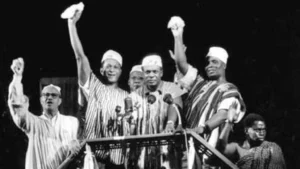
Ghana became independent from the United Kingdom on 6 March 1957, the first colony in sub-Saharan Africa to do so, and became a republic in 1960. The independence movement was led by Kwame Nkrumah, and his ideas influenced freedom movements across the continent. Our independence explainer tells the full story.
2. Ghana is one of Africa's most stable democracies
Ghana has returned to multiparty elections since the early 1990s, and power has passed between its two main parties through the ballot box several times. That record is a big reason investors, students and visitors see the country as a steady base in the region.
3. Gold, cocoa and oil shape the economy
Ghana overtook South Africa as Africa's biggest gold producer in 2024, according to AFP reporting based on government figures, which are projections rather than audited totals. It is also the world's second-biggest cocoa producer after Ivory Coast, and millions of households depend on cocoa income. Oil production has added to national revenue in recent years.
4. Food and festivals are part of daily life
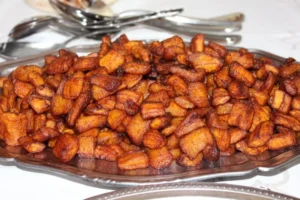
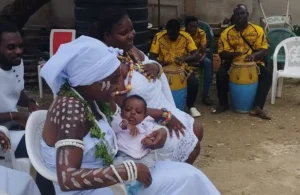
Meals are social and full of meaning. Jollof rice, waakye, banku, kenkey and fufu are staples, and our guide to Ghana's traditional dishes and street food covers where to start. Festivals such as Homowo, Hogbetsotso and Aboakyer honour history and ancestors, and the festival calendar by region shows when each happens.
5. Ghana has deep ties to the African diaspora
Cape Coast Castle and other coastal forts tell the story of the transatlantic slave trade. In 2019 the government launched the Year of Return, marking 400 years since the first enslaved Africans arrived in Virginia, and invited the diaspora home. Many visitors came, and some later stayed or invested. Read more in our Cape Coast guide.
6. Ghana is home to the world's largest reservoir by surface area
Lake Volta, formed by the Akosombo Dam completed in 1965, is described as the world's largest reservoir by surface area. Beyond it, Ghana has beaches, rainforest, savannah and waterfalls, and places such as Kakum National Park's canopy walk draw nature lovers.
7. Ghana has many languages and cultures
English is the official language, but most people also speak Ghanaian languages. The Akan are the largest ethnic group at 45.7%, followed by the Mole-Dagbon (18.5%), Ewe (12.8%) and Ga-Adangbe (7.1%). Our Ghana culture guide explains how these traditions shape naming, dress and ceremony.
Where to go next
If these facts make you want to see Ghana, start with the Accra travel guide and the best places to visit across the regions.

Discussion 0 comments
You must be logged in to write a comment.
Log In Sign UpNo comments yet. Be the first to start the conversation!