

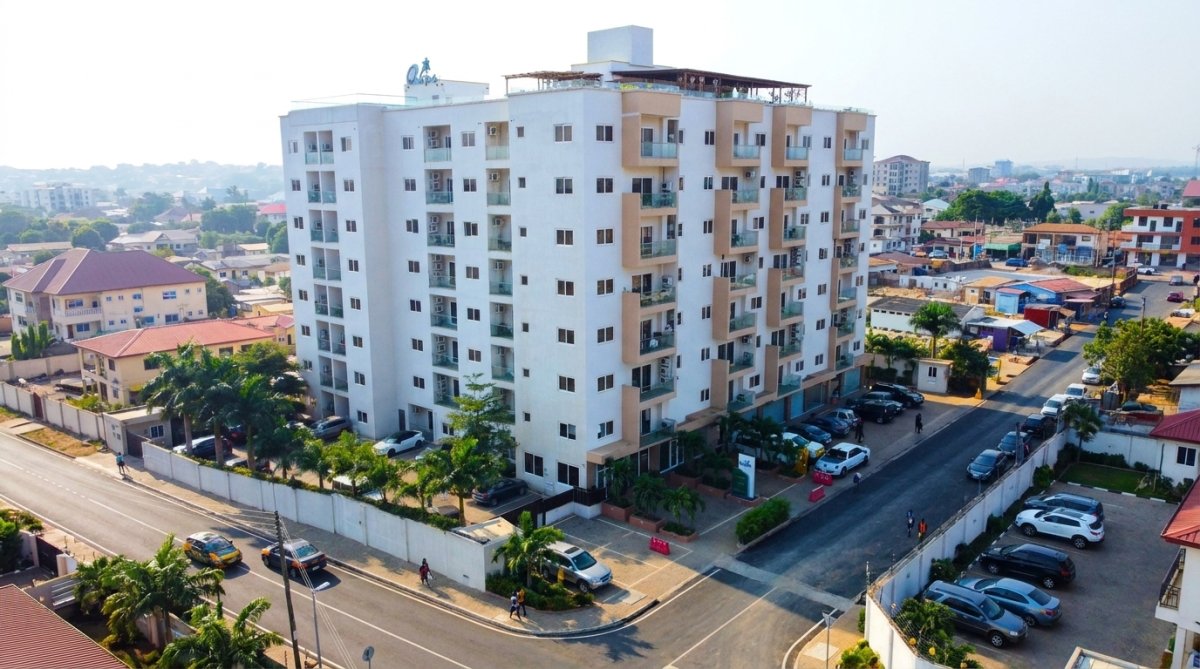
Moving to Accra offers an energetic creative scene, political stability, and an established diaspora community, but relocating without understanding local financial structures leads to severe budget shocks. Anyone planning to live in Ghana must recognize that day to day consumer prices operate on two parallel tracks: affordable locally produced staples and expensive imported lifestyle amenities.
Beyond monthly groceries and transport, the single biggest hurdle for newcomers is the capital outlay required simply to secure housing. While recent government directives have placed a renewed focus on statutory rental limits, the gap between official regulation and market execution remains a defining factor in any relocation budget. Drawing from verified ground figures across residential neighborhoods in Greater Accra, this guide breaks down realistic monthly budgets, the reality of upfront rent advances, utility quirks, and practical money saving strategies.
Quick Facts at a Glance
Geographic Scope: Greater Accra urban zone, covering prime hubs like Cantonments and Osu, mid range suburbs like East Legon and Spintex, and commuter zones like Adenta and Madina.
Average Monthly Budget (Single Person): GHS 8,000 to GHS 18,000 ($550 to $1,200 USD) for comfortable living; GHS 20,000 to GHS 38,000 ($1,300 to $2,500 USD) for upscale expat standards.
Average Monthly Budget (Family of Four): GHS 22,000 to GHS 45,000 ($1,500 to $3,000 USD) excluding international private school tuition.
The Legal Rent Advance Rule: Under Section 25(5) of the Rent Act (Act 220), landlords are legally prohibited from demanding more than six months of advance rent for tenancies exceeding six months.
The Ground Reality: While some landlords now comply with the six month limit, many private owners in high demand areas still informally push for one to two years upfront.
Government Relief Option: The National Rental Assistance Scheme (NRAS) assists eligible residents by advancing upfront rent to landlords while tenants repay through monthly installments.
Key Utilities: Electricity operates via Electricity Company of Ghana (ECG) prepaid meters; municipal water requires backup polytanks and occasional water tanker deliveries.
Insider Warning: Never pay a viewing fee or property deposit to an informal rental agent without a written receipt, physical site verification, and landlord identity confirmation.
Housing Rules: What It Costs to Rent and Live in Ghana
The most significant financial barrier when you prepare to live in Ghana is securing residential accommodation. For decades, tenants across the country were forced to deliver one, two, or even three years of total rent in cash before receiving the keys to an apartment.
The legal position under Ghanaian law is clear: Section 25(5) of the Rent Act, 1963 (Act 220), as amended, strictly caps advance rent at a maximum of six months for residential tenancies longer than six months. Demanding more than six months is an offense punishable by fines of up to 500 penalty units, up to two years imprisonment, or both. The Rent Control Department has deployed dedicated taskforces to crack down on offending landlords, emphasize the mandatory use of Rent Cards, and prosecute violators.
However, the ground reality reflects a persistent tug of war between law and market forces:
Where the Six-Month Rule Works: A growing number of corporate property managers, commercial development companies, and law-abiding landlords now adhere to the six-month advance cap, especially for modern apartments and formal leases.
Where Two Years Are Still Demanded: Due to an urban housing deficit exceeding 1.8 million units, many private individual landlords in fiercely competitive areas (such as East Legon, Dzorwulu, and Osu) still informally demand one to two years upfront. Tenants who push back on the legal cap are often simply turned away in favor of someone willing to pay the multi-year lump sum.
The National Rental Assistance Scheme (NRAS): To bridge this structural divide, the government established the National Rental Assistance Scheme. Under this framework, approved applicants with verified proof of income have their advance rent disbursed directly to the landlord by the scheme, which the tenant then repays in predictable monthly installments.
Rental prices vary sharply by neighborhood profile:
Prime Expat and Diplomatic Corridors (Cantonments, Airport Residential, Labone): One to two bedroom modern serviced apartments cost between GHS 12,000 and GHS 30,000 ($800 to $2,000 USD) per month. These properties often quote rents in foreign currency equivalents, offer 24 hour security, and include dedicated backup generator power.
Mid-Range Commercial and Residential Hubs (East Legon, Dzorwulu, Osu, Spintex): Popular with young professionals, entrepreneurs, and returnees. Standard two bedroom apartments range from GHS 3,500 to GHS 8,000 per month.
Value Commuter Suburbs (Madina, Adenta, Ashaley Botwe, Dansoman): Self contained two bedroom units range from GHS 1,500 to GHS 3,500 per month. While budget friendly, residents must account for heavy peak hour commuter traffic heading toward central Accra.
On top of whatever advance rent you negotiate, factor in an agent commission (typically 10 percent of the total advance paid) and a refundable security deposit equal to one to two months of rent.
Everyday Utilities: Electricity, Water, and Internet
Utility costs in Accra depend entirely on your tolerance for heat, your cooking style, and your building backup infrastructure.
Electricity (ECG Prepaid Meters)
Most residences utilize prepaid smart cards or the ECG PowerApp. You purchase units in advance and load them directly onto the meter:
Modest Usage (Fans, lighting, refrigerator, occasional iron): GHS 250 to GHS 500 per month.
Heavy Air Conditioning Usage (Two or more split AC units running overnight): GHS 1,200 to GHS 2,800 per month.
Generator Backup Fuel: Power fluctuations and localized outages require backup power. Running a private residential diesel or petrol generator can consume GHS 100 to GHS 300 in fuel for every five to eight hours of operation.
Water Supply (Ghana Water Company and Tankers)
Piped municipal water is affordable (GHS 50 to GHS 150 per month), but supply consistency varies significantly across neighborhoods. Most homes rely on an overhead black plastic water storage tank (commonly called a polytank) fitted with an electric booster pump. If municipal pressure drops for extended periods, purchasing a private 1,000 to 2,000 gallon water tanker delivery costs between GHS 300 and GHS 600 per fill.
Home Broadband and Mobile Data
Broadband connectivity in Accra is reliable in major corridors through fiber or fixed wireless:
Unlimited Home Fiber (MTN, Telecel, AT): GHS 400 to GHS 900 per month, offering speeds between 30 Mbps and 100 Mbps.
Mobile Data Bundles: Purchasing 30GB to 60GB of monthly 4G or 5G data via Mobile Money costs roughly GHS 120 to GHS 250.
Food Budgets: Local Open Markets vs Imported Supermarkets
Food expenses in Accra fluctuate dramatically based on where you source your pantry items.
Shoppers who rely on imported European and North American goods at high end supermarkets like Koala, Marina Mall, and Shoprite pay a premium of 40 to 100 percent over origin country prices due to freight and import tariffs. A single shopping run for imported breakfast cereals, dairy butter, cheese, and imported meats easily exceeds GHS 1,500.
Conversely, sourcing fresh vegetables, fruits, tubers, grains, and meats at local open markets like Madina Market, Makola, or Agbogbloshie yields substantial savings:
A weekly basket of fresh tomatoes, peppers, onions, garden eggs, plantains, yam, and seasonal greens costs roughly GHS 250 to GHS 450.
Fresh local whole tilapia or red fish costs GHS 30 to GHS 60 per fish depending on size.
A single person cooking primarily with local ingredients spends between GHS 1,800 and GHS 3,200 per month on groceries.
Dining out reflects the same divide. A filling, authentic meal at a reputable neighborhood chop bar (such as waakye, goat meat stew, boiled egg, and plantain) costs between GHS 25 and GHS 50. Mid range casual cafes in Osu or East Legon charge between GHS 120 and GHS 260 for a main plate and beverage, while luxury fine dining bills range from GHS 400 to GHS 900 per person.
Transportation: Ride-Hailing, Trotros, and Vehicle Maintenance
Accra traffic congestion is notorious, particularly during morning rush hours along the Legon road, Spintex road, and the Kasoa corridor. Your choice of transport impacts both your wallet and your daily schedule.
Ride Hailing Apps (Uber, Bolt, Yango): The default option for most visitors and expatriates without personal cars. Short neighborhood trips within Osu, Labone, or East Legon cost between GHS 20 and GHS 40. Cross city commutes during peak traffic (such as East Legon to central Ridge) cost GHS 60 to GHS 120 each way. Budget GHS 1,200 to GHS 2,500 monthly if using ride hailing as your primary transit mode.
Public Minibuses (Trotros): The most economical transport system in Ghana. Fares range between GHS 4 and GHS 15 per trip depending on distance. While excellent for fixed point to point daytime commutes, trotros are crowded, lack air conditioning, and require local route knowledge.
Personal Vehicle Ownership: Fuel prices fluctuate with international oil benchmarks and currency performance, averaging around GHS 14 to GHS 18 per liter. Monthly commuting fuel for an economy four cylinder sedan typically totals GHS 1,000 to GHS 1,800.
Recommended Monthly Budget Tiers
| Expense Category | Modest Local Living (GHS) | Comfortable Living (GHS) | Upscale / Expat Standard (GHS) |
| Rent (Amortized Monthly) | GHS 1,500 – GHS 3,000 | GHS 4,000 – GHS 8,000 | GHS 12,000 – GHS 25,000 |
| Electricity & Water | GHS 250 – GHS 500 | GHS 800 – GHS 1,600 | GHS 2,000 – GHS 4,500 |
| Groceries & Dining Out | GHS 1,500 – GHS 2,500 | GHS 3,000 – GHS 5,500 | GHS 7,000 – GHS 12,000 |
| Transportation | GHS 300 – GHS 800 | GHS 1,200 – GHS 2,500 | GHS 2,500 – GHS 4,500 |
| Internet & Mobile Airtime | GHS 150 – GHS 300 | GHS 400 – GHS 800 | GHS 800 – GHS 1,500 |
| Healthcare & Leisure | GHS 300 – GHS 700 | GHS 1,000 – GHS 2,000 | GHS 2,500 – GHS 5,000 |
| Total Estimated Monthly | GHS 4,000 – GHS 7,800 | GHS 10,400 – GHS 20,400 | GHS 26,800 – GHS 52,500 |
Before you move, also check the legal entry requirements: our vaccines and entry rules guide covers mandatory yellow fever documentation and recommended immunizations.
Related: Ghana's Gastro Feastival, why domestic tourism is booming, finding Ghanaian food in Belgium, booking trips digitally, Ghana's growing Christmas season economy, the story behind Cafe Chavela, why Ghana still imports energy.




Discussion 0 comments
You must be logged in to write a comment.
Log In Sign UpNo comments yet. Be the first to start the conversation!