

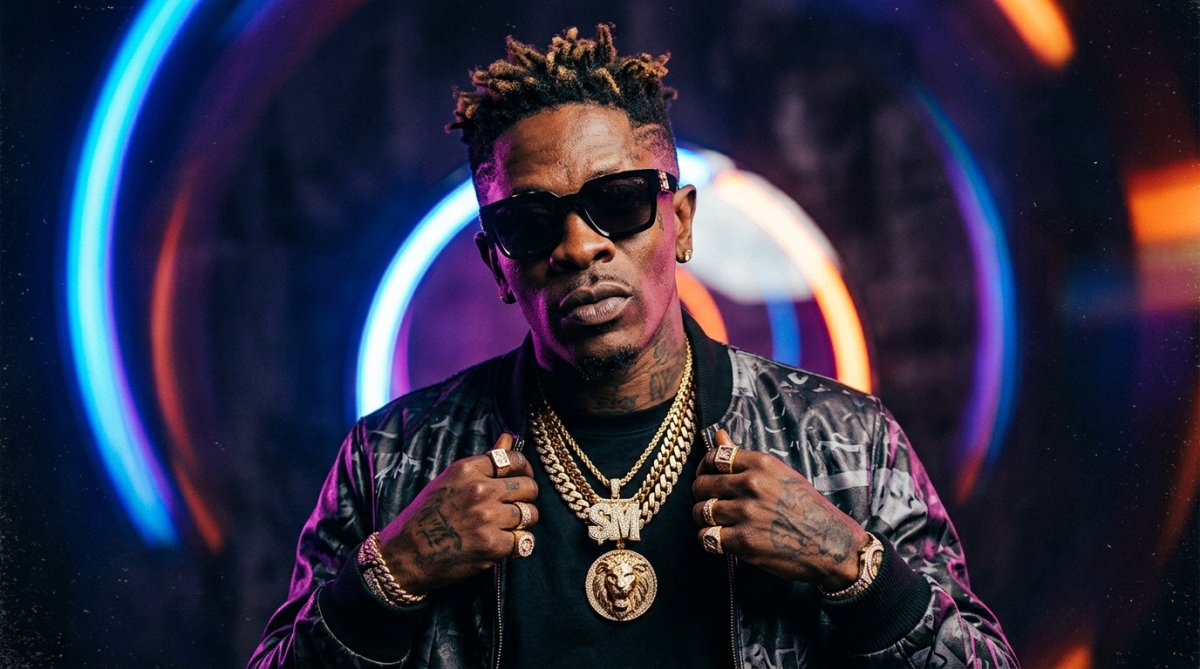
Few figures in modern Ghanaian popular culture are as polarizing, resilient and influential as Charles Nii Armah Mensah Jr., known to the world as Shatta Wale, and this Shatta Wale biography traces the full arc of how he got there. As the artist most credited with building Ghana's modern street-dancehall movement, his career is one of the more remarkable comeback stories in the country's music history: a decade in obscurity, a total rebrand, and a fanbase turned into a distribution engine that eventually carried him onto a Beyonce project.
Shatta Wale Biography: Quick Facts at a Glance
- Full name: Charles Nii Armah Mensah Jr.
- Early stage name: Bandana
- Born: October 17, 1984
- Raised in: Dansoman, Accra
- Education: Seven Great Princes Academy, Dansoman, then Winneba Secondary School
- Label: Shatta Movement Empire
- Fanbase: Shatta Movement (SM)
- Albums: After the Storm (2016), Reign (2018), Wonder Boy (2019), Konekt (2024)
- Major honours: VGMA Artiste of the Year (2014); a record 11 International Reggae and World Music Awards (IRAWMA), the most of any African artist in the show's history
The Bandana Years and a Decade Away
Before he was Shatta Wale, Charles performed as Bandana, scoring a nationwide hit with "Bandana from Ghana" in 2004 while still coming out of his school years at Seven Great Princes Academy in Dansoman and Winneba Secondary School. The song was a genuine radio and cassette-mixtape anthem, but weak management and unpaid royalties left him with little to show for it. He spent much of the following decade away from the industry spotlight before re-emerging.
The 2013 Rebrand and "Dancehall King"
In 2013, Charles dropped the Bandana name and re-emerged as Shatta Wale, trading polished studio sound for raw, self-produced street records. His anthem "Dancehall King" spread organically through Accra's neighbourhoods and transport stations, and at the 2014 Vodafone Ghana Music Awards he won Artiste of the Year, along with Reggae/Dancehall Song of the Year and Most Popular Song of the Year for the same track, a full return from years out of the spotlight.
Shatta Movement and the Album Run
Shatta Wale built his commercial base on a direct line to his fans, branded Shatta Movement (SM), rather than traditional radio and label promotion. After the Storm (2016) ran to 22 tracks and produced street hits including "Kakai" and "Hol' It." Reign (2018), released through Zylofon Music and his own Shatta Movement Empire, launched at a concert at the Fantasy Dome in Accra's Trade Fair Centre in front of more than 18,000 fans and went on to debut at number 6 on Billboard's World Albums chart, a genuine global chart placement for an independently promoted Ghanaian release. Wonder Boy followed in 2019, and Konekt, an 8-track project featuring Tekno and Bounty Killer, arrived in 2024.
The Beyonce Feature
In 2019, Shatta Wale featured alongside Major Lazer on "Already," a track from Beyonce's curated album The Lion King: The Gift. When Beyonce released the companion visual project Black Is King in 2020, Shatta Wale appeared on screen in the "Already" segment, putting Ghanaian dancehall in front of a global audience well beyond the Shatta Movement base.
The Stonebwoy Rivalry and the 2019 TGMA Incident
Shatta Wale's career has run alongside a long public rivalry with fellow dancehall artist Stonebwoy, whose own biography and AFCON 2025 Fan Zone performance cover the other side of that story. The rivalry's most public flashpoint came at the 20th edition of the Vodafone Ghana Music Awards in 2019, when a confrontation between the two camps broke out on stage during the Reggae/Dancehall Artiste of the Year presentation. Both artists were briefly arrested, and Charterhouse stripped both of their 2019 awards and banned them indefinitely, a ban later lifted as part of an industry truce. The full mechanics of how the award show works, including how that night reshaped its own security rules, are covered in our Telecel Ghana Music Awards guide.
Legacy
Beyond the rivalries and the online noise, Shatta Wale was among the first Ghanaian artists to publicly push back on low performance fees and to prove an artist could build real wealth through direct fan support rather than corporate sponsorship. From a forgotten 2004 cassette hit to a Billboard chart entry and a Beyonce feature, his career remains one of the clearest examples of self-built stardom in Ghanaian music.
Related: the Shatta Wale and Stonebwoy feud timeline, Shatta Wale hitting number one on Shazam.

Discussion 0 comments
You must be logged in to write a comment.
Log In Sign UpNo comments yet. Be the first to start the conversation!